A low bumper, damaged suspension, electric battery pack or performance exhaust can turn an ordinary tow into an expensive concern. Understanding the ways flatbeds prevent underbody damage helps you choose the right transport method when your vehicle cannot be driven safely.
For many breakdowns, a flatbed is the lowest-risk option because the entire vehicle is carried off the road rather than pulled with two wheels rolling behind the truck. That matters on Melbourne roads, where kerbs, steep driveways, uneven side streets and long transport distances can all add risk to a disabled vehicle.
Why underbody damage can happen during towing
The underside of a modern vehicle carries far more than exhaust piping. It may include engine and transmission components, plastic undertrays, suspension arms, brake lines, fuel lines, catalytic converters and, in EVs and hybrids, a high-voltage battery pack protected by the floor structure.
Damage can occur when a vehicle is loaded at too sharp an angle, dragged after a mechanical failure, secured incorrectly, or towed with wheels turning when they should not be. Cars with low ground clearance are especially exposed, but standard sedans, SUVs, vans and utes can also be vulnerable after a breakdown. A flatbed reduces these risks through controlled loading and full-vehicle support.
1. Flatbeds keep all four wheels off the road
The biggest benefit is straightforward: once loaded, the vehicle sits completely on the tray. Its tyres, drivetrain and underbody are not travelling over bumps, railway crossings, potholes or cambers on the way to the workshop.
This is particularly useful for automatic, all-wheel-drive and four-wheel-drive vehicles. Depending on the vehicle and fault, towing with only two wheels raised can put unwanted movement through the transmission, transfer case or driveline. A flatbed avoids that issue because no driven wheels need to rotate during transport.
It also gives greater peace of mind for EV and hybrid owners. Battery housings are designed for normal road use, but they should not be subjected to unnecessary contact or impact while a disabled vehicle is being moved.
2. A tilt tray creates a controlled loading angle
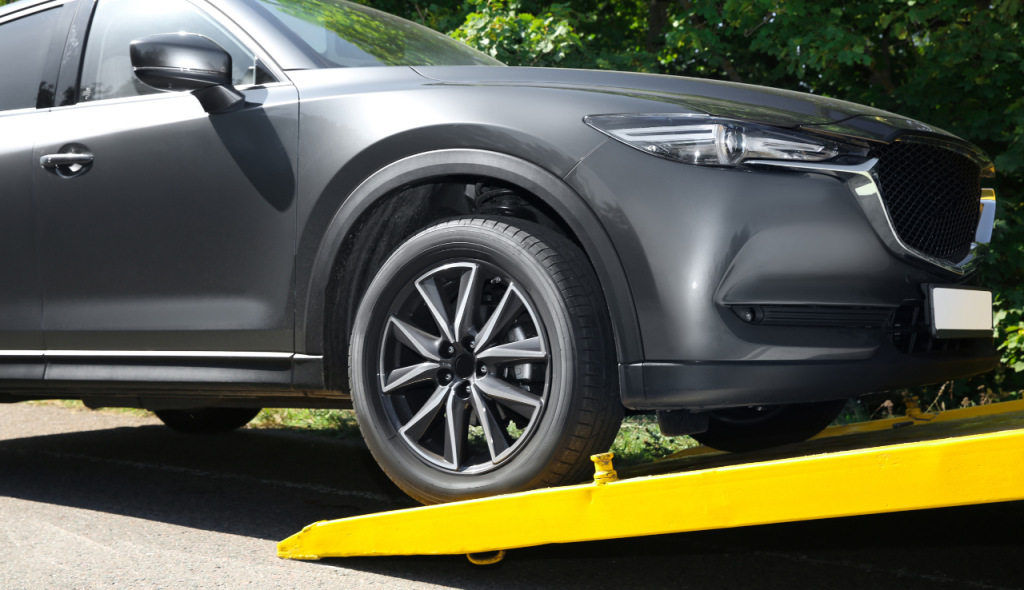
A flatbed tray tilts down to form a ramp. Instead of lifting a vehicle abruptly or dragging it over a fixed edge, the operator can line the tray up carefully and winch the car aboard at a measured pace.
The loading angle still matters. A very low sports car, modified vehicle or car with damaged suspension may need additional ramps, timber blocks or other suitable loading aids to prevent the front lip, exhaust or centre section from scraping. A professional operator assesses this before loading rather than assuming every vehicle will clear the tray in the same way.
Where clearance is extremely limited, loading may take longer. That extra care is worthwhile when the alternative is damaging a bumper, splitter or undertray before the vehicle has even left the roadside.
Extra clearance for low and damaged vehicles
A vehicle that has lost air suspension, has a flat tyre, or has suffered steering or suspension damage often sits lower than normal. Even a car that usually clears a driveway without trouble may not clear a loading ramp in that condition.
Careful tray positioning, gradual winching and clearance aids help manage this. The aim is to keep the vehicle supported and moving in a straight, predictable line, without sudden contact beneath the car.
3. Winch loading avoids driving a faulty vehicle
When a car will not start, has transmission trouble, overheated, or has a warning light that makes driving unsafe, it should not be driven onto a tow truck simply because it can move a few metres. Trying to drive it can worsen the original fault or lead to a sudden loss of control on the ramps.
A flatbed winch allows the vehicle to be loaded while the driver remains in control of the process from outside the danger area. The operator can use the correct recovery point or wheel-lift attachment for the vehicle and keep the pull gradual.
This is also safer for a vehicle with brake, steering or clutch problems. The car does not need to be relied on to climb the tray under its own power, and there is less chance of a rushed manoeuvre causing contact with the tray or roadside.
4. Proper tie-downs hold the vehicle by its wheels
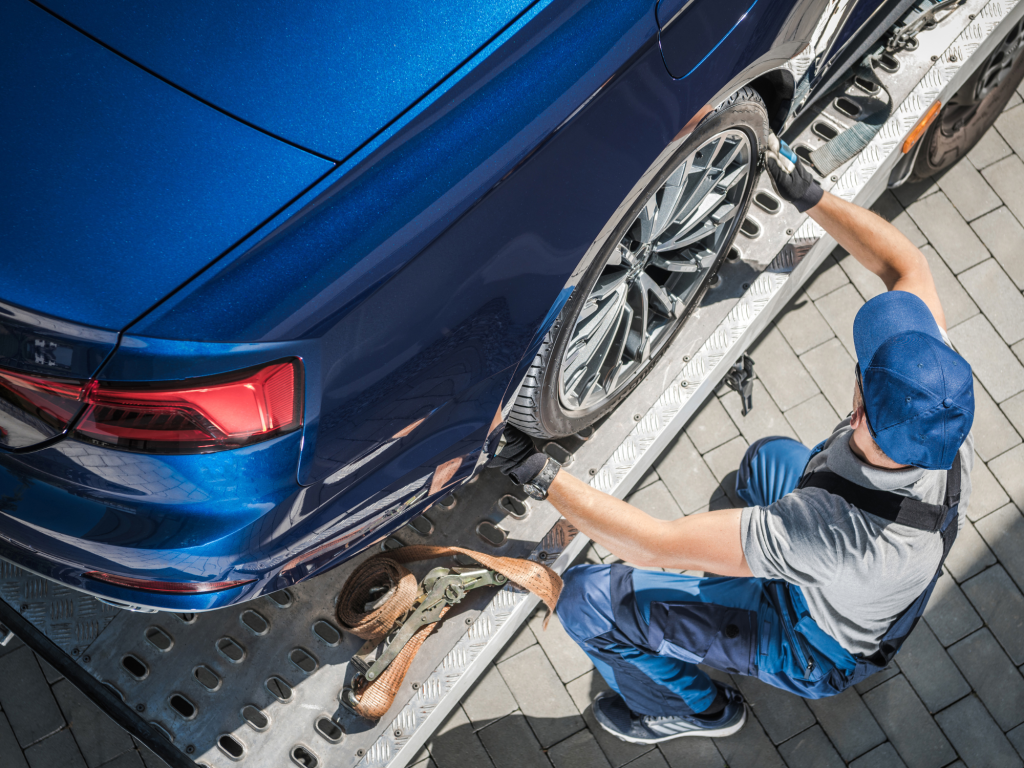
Once on the tray, the vehicle must be secured so it cannot shift during braking, cornering or travel over uneven roads. Modern flatbed towing commonly uses wheel straps or tyre restraints positioned around the wheels, rather than placing chains or hooks against vulnerable suspension or body components.
Wheel-based restraints help keep force where the vehicle is built to handle it. They also reduce the chance of scratching alloy wheels, stressing suspension arms or crushing plastic underbody panels through an unsuitable tie-down point.
The method depends on the vehicle. A specialist vehicle, lowered car or vehicle with a wheel or tyre issue may require a different securing approach. The key is that the operator checks the vehicle’s condition and confirms it is stable before setting off, rather than treating every job as identical.
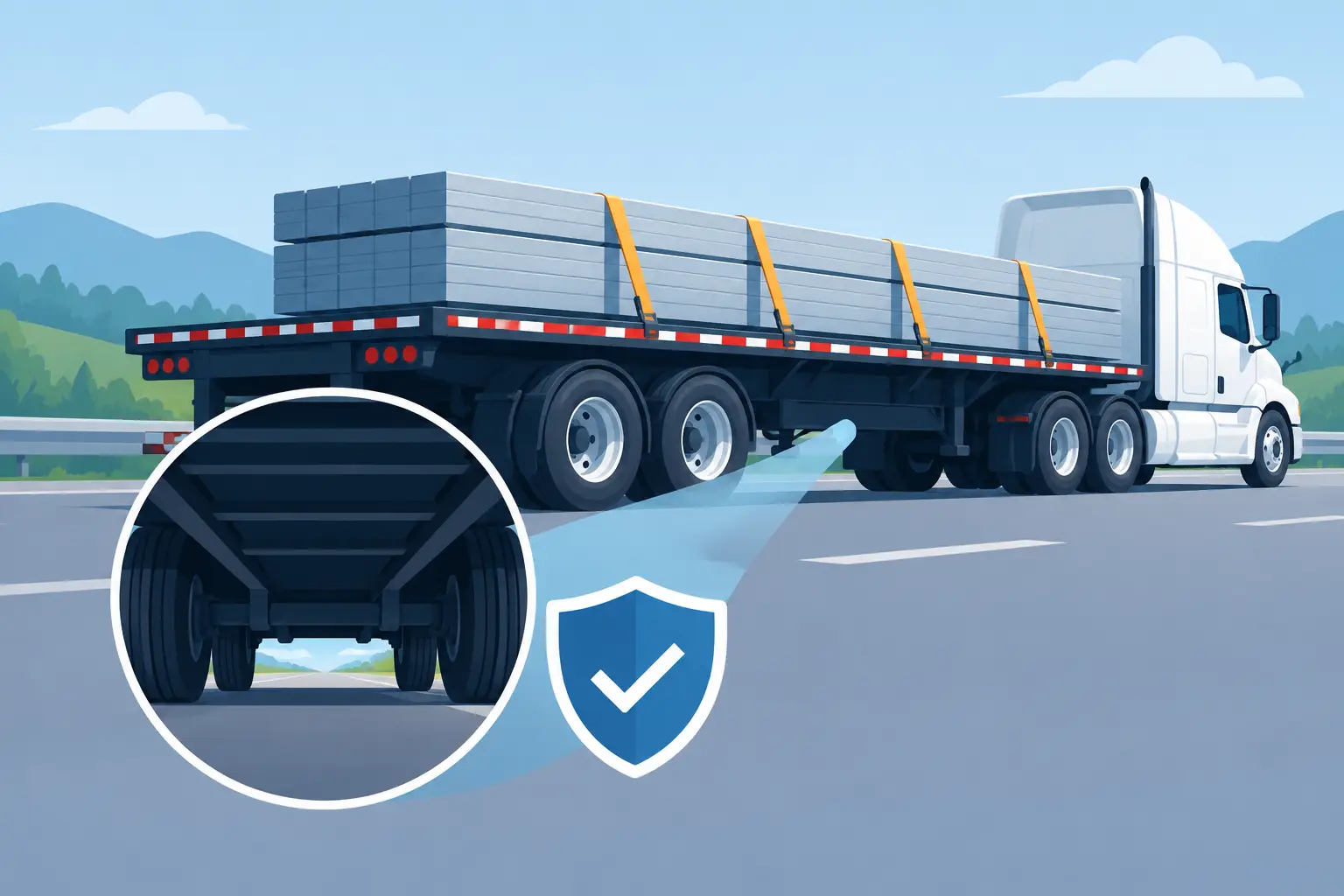
5. The tray supports the vehicle evenly in transit
A flatbed carries the vehicle on its tyres, with its weight distributed across the tray. This differs from a tow method where one end remains on the road and the other is lifted.
Even support is valuable when a car has suspension damage, a broken driveline, a flat tyre or an unknown mechanical fault. It reduces the risk of the vehicle bouncing, bottoming out or placing strain on components that are already compromised.
For long-distance towing, this advantage becomes more significant. The more kilometres travelled, the more road surfaces, turns and traffic conditions the vehicle must pass through. A securely loaded flatbed gives the operator better control over how the vehicle is carried from pickup to destination.
6. It protects vulnerable drivetrains and components
Underbody protection is not only about avoiding a scrape. It is also about preventing damage caused by moving parts that should stay still after a breakdown.
All-wheel-drive, four-wheel-drive, hybrid and EV vehicles can have specific towing requirements. Some must not be towed with their wheels on the ground because doing so may damage drivetrain components or electrical systems. The same can apply to certain automatic vehicles, particularly if the transmission cannot be placed into the required mode.
A flatbed is often the sensible choice when the fault is unclear. Rather than taking a chance with a partially lifted tow, the vehicle can be transported without rotating its wheels or placing it under unnecessary mechanical load.
7. A careful operator can manage the whole roadside setup
The safest tow starts before the vehicle touches the tray. The operator needs space to position the truck, consider traffic flow, account for the slope of the road and identify hazards such as gutters, raised driveways, soft verges and narrow streets.
On a busy Melbourne roadside, that may mean taking a little more time to set up safely. It can also mean explaining why the vehicle needs to be moved a short distance before loading, or why a particular driveway is unsuitable for a direct pickup. Clear communication matters because a rushed setup is where avoidable damage is more likely.
At Onigo Towing, breakdown transport is approached as a careful handling job, not simply a vehicle collection. The right equipment, a clear plan and an upfront explanation of the process can make a stressful breakdown far easier to manage.
When a flatbed may not be the only option
Flatbeds are usually the preferred choice for vehicles with low clearance, drivetrain faults, EV systems, accident-related damage, or long transport requirements. However, the best method depends on the vehicle, its condition, location and destination.
In a tight underground car park, low-clearance area or restricted laneway, a full-size flatbed may not be able to access the vehicle directly. Another suitable method may be needed to move it safely to an accessible loading point. The important thing is not to force a vehicle onto equipment that does not suit the site or fault.
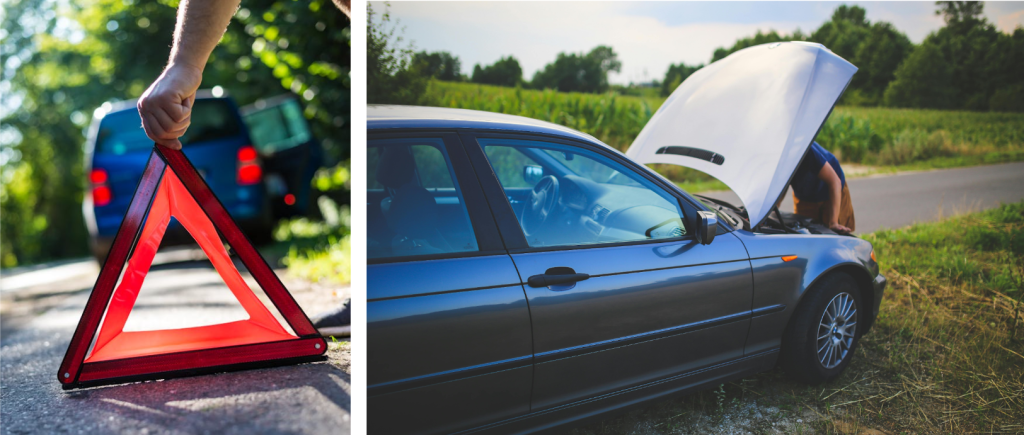
If your vehicle has broken down, tell the towing provider what happened, whether it rolls and steers, whether any tyres are flat, and whether it is lowered, electric, hybrid or all-wheel drive. Those details allow the right truck and loading plan to be arranged before dispatch – helping protect the underside of your vehicle from the first lift to the final unload.