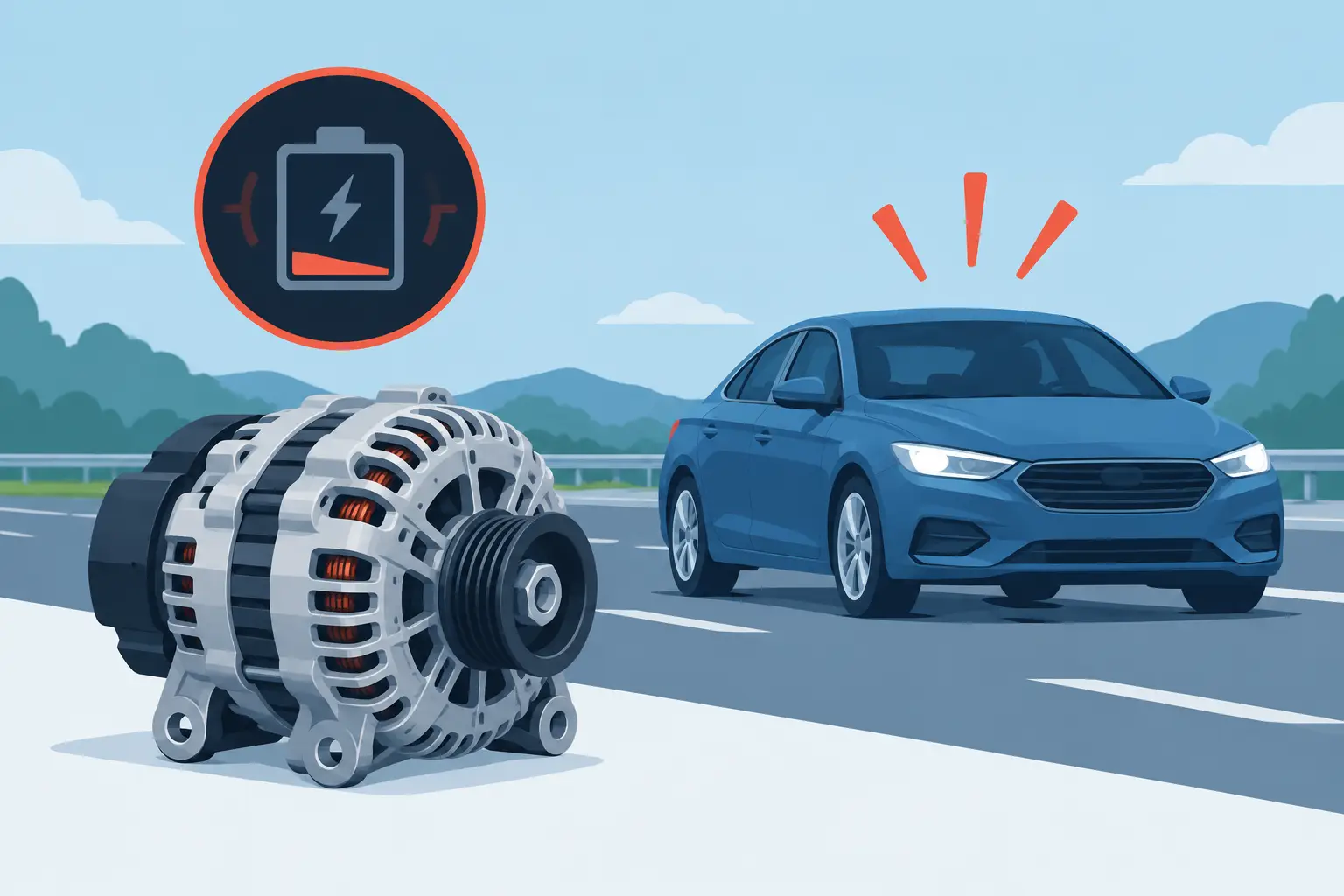
Your car starts normally at home, then the battery warning light comes on in traffic. The headlights begin to fade, the dash flickers and, before long, the engine cuts out. These are classic signs your alternator has failed – and they can leave you stopped with very little warning.
An alternator fault is not always dramatic at first. It may look like a flat battery, a loose connection or an electrical issue that comes and goes. Knowing what to watch for can help you make a safer decision before a short drive turns into a roadside breakdown.
What the alternator actually does
The alternator generates electrical power while the engine is running. It keeps the battery charged and supplies power to systems such as the lights, ignition, dashboard, climate control, power steering and vehicle electronics.
When it stops charging properly, the car runs on the battery alone. A healthy battery may keep things going briefly, but it is not designed to power the vehicle for long. Once its stored charge is depleted, the engine can stall and may not restart.
The cause may be the alternator itself, its voltage regulator, drive belt, wiring or battery terminals. A mechanic needs to confirm the exact fault, but the warning signs below are a good reason to stop taking chances.
8 signs your alternator has failed
1. The battery warning light stays on
The battery-shaped warning light does not always mean the battery is faulty. More often, it means there is a problem with the charging system. If it appears while you are driving and stays on, treat it seriously.
You may still have enough battery charge to reach a safe place nearby, but do not assume you can complete a longer trip. Turn off unnecessary electrical accessories and arrange help rather than continuing across Melbourne hoping the light disappears.
2. Headlights and interior lights dim or pulse
Headlights that become noticeably dim at idle, brighten with revs, or pulse while driving can indicate inconsistent alternator output. Interior lights, the instrument cluster and infotainment screen may also flicker.
Poor lighting can also be caused by a weak battery or a bad earth connection. Either way, reduced headlights at night or in poor weather are a safety issue. Pull over somewhere safe if visibility is affected.
3. Electrical accessories behave oddly
An alternator that is struggling may not provide steady voltage to the vehicle’s electrical systems. You may notice slow electric windows, a weak blower fan, intermittent central locking, a radio that cuts out, or warning messages appearing and disappearing.
Modern vehicles rely heavily on stable electrical supply. On some models, a low-voltage issue can trigger multiple warning lights that look unrelated. Do not assume every warning means a separate major failure, but do take the overall pattern seriously.
4. The engine cranks slowly or will not restart
If the alternator has not been charging the battery, the battery can become too flat to start the engine. You might hear slow cranking, repeated clicking, or nothing at all when you turn the key or press the start button.
A jump-start may get the engine running, but it is not a reliable fix for an alternator failure. If the charging system is not working, the vehicle can stop again shortly afterwards. A jump-start is best used to move out of immediate danger, not to continue a normal journey.
5. The engine stalls while you are driving
A petrol or diesel engine can stall once battery voltage falls below what the ignition, fuel system and engine management system need. Before that happens, you may see warning lights, feel the engine running roughly, or notice steering assistance becoming heavier on some vehicles.
If the engine cuts out, indicate if you can, steer calmly towards a safe stopping point and switch on the hazard lights. Avoid repeated restart attempts, which can drain the remaining battery charge and leave you in a less safe position.
6. You hear a whining, growling or squealing noise
A worn alternator bearing can produce a growling or whining noise from the engine bay. A loose, glazed or failing drive belt may squeal, particularly when starting the car or using electrical loads such as headlights and air conditioning.
Noise alone does not prove the alternator has failed. Belts, pulleys and other engine components can make similar sounds. However, noise combined with a battery light or flickering electrics is a strong reason to stop driving and have the vehicle checked.
7. You smell burning rubber or hot wiring
A slipping belt can create a burnt-rubber smell. An overheating alternator, damaged wiring or electrical short may create a hot plastic or burning electrical smell. Neither is something to ignore.
Pull over as soon as it is safe, turn the engine off and keep clear of traffic. If there is smoke, visible flames or a strong burning smell, move away from the vehicle and call emergency services. Do not open the bonnet if there is active fire or heavy smoke.
8. The battery keeps going flat
A battery that repeatedly goes flat after being charged or replaced may point to an alternator that is not replenishing it during driving. It could also be caused by an electrical drain when the vehicle is parked, a poor battery connection or a battery nearing the end of its life.
The useful clue is timing. If the vehicle starts after charging but becomes flat again following a drive, charging-system testing is needed. Replacing batteries without checking alternator output can become an expensive cycle that does not solve the problem.
Alternator failure or a flat battery?
The two faults overlap, which is why roadside diagnosis can be misleading. A flat battery may result from leaving lights on, an ageing battery, short trips, loose terminals or cold weather. In that case, the car may run normally once the battery is charged and the charging system is confirmed healthy.
With an alternator problem, the vehicle may start after a jump but show the battery light, dim lights or electrical faults while the engine is running. It may then stall as the battery empties. A workshop can test battery condition, charging voltage, belt operation and wiring to identify the actual cause.
Avoid disconnecting a battery terminal while the engine is running to test the alternator. This old shortcut can damage sensitive electronics and is not a safe diagnostic method on modern cars.
What to do if you suspect an alternator problem
If the vehicle is still moving, your first job is getting to a safe location, not diagnosing the fault. Use your indicators early, avoid sudden manoeuvres and pull into a legal, visible place away from moving traffic where possible. On a busy road, stay clear of traffic and do not try to inspect the engine bay on the roadside.
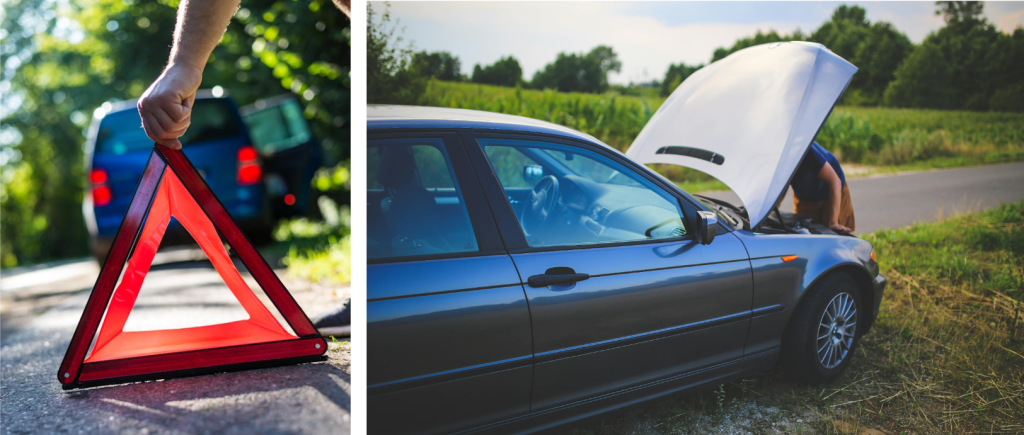
Once stopped, switch on hazard lights. Turn off non-essential power use such as the air conditioning, heated seats, mobile phone chargers and audio system. Keep essential safety items operating where practical, especially at night. If you need to leave the vehicle, do so only when it is safe and stand well away from traffic, preferably behind a barrier.
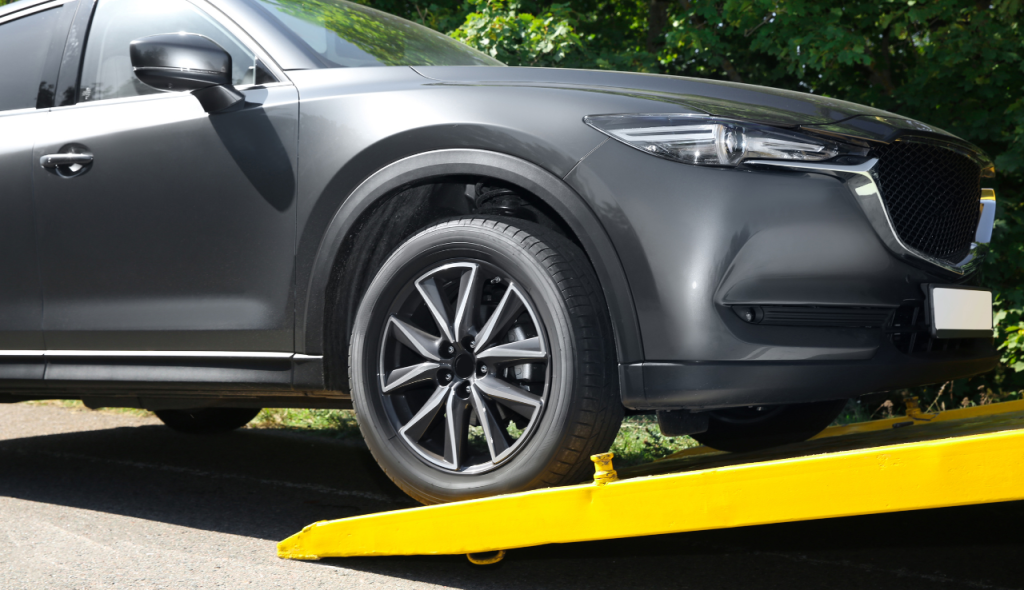
If the car will not restart, the warning light is on, or electrical power is fading, arrange a tow to your preferred mechanic or a safe destination. Continuing to drive can leave you stalled in a live lane, on a freeway shoulder or at a difficult intersection. It can also turn a straightforward charging-system repair into a more stressful recovery.
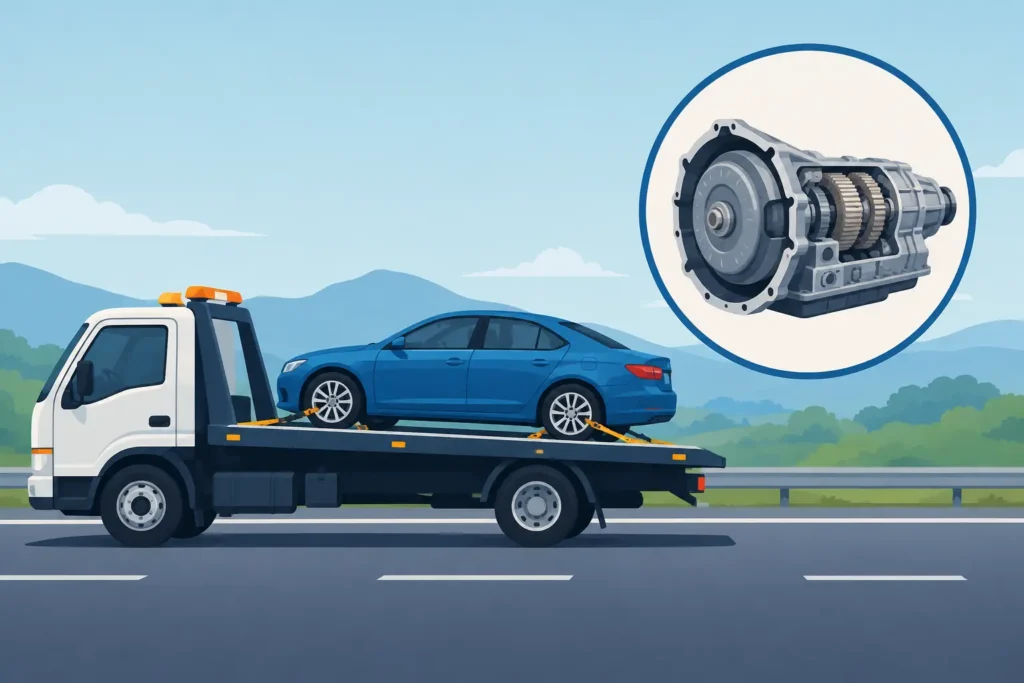
For Melbourne breakdowns, Onigo Towing can provide clear pricing and an ETA before dispatch, then load your vehicle carefully for transport to a workshop, home or other suitable location. Flatbed transport is particularly useful when a vehicle cannot be restarted or has low clearance, all-wheel drive or specialist handling needs.
A note for hybrids and EVs
Most hybrid and electric vehicles do not use a conventional engine-driven alternator. They usually have a DC-DC converter that charges the 12-volt battery from the high-voltage system. A flat 12-volt battery can still prevent the vehicle from starting or releasing into drive, and warning messages can look similar to an alternator fault.
Do not attempt high-voltage repairs at the roadside. Follow the manufacturer’s instructions, avoid improvised jump-starting methods, and arrange appropriate transport if the vehicle will not power up or shows a serious electrical warning.
A battery light, dim headlights or a sudden loss of electrical power is worth acting on early. Getting safely off the road and having the vehicle checked is usually far easier than waiting for the last bit of battery charge to disappear in traffic.