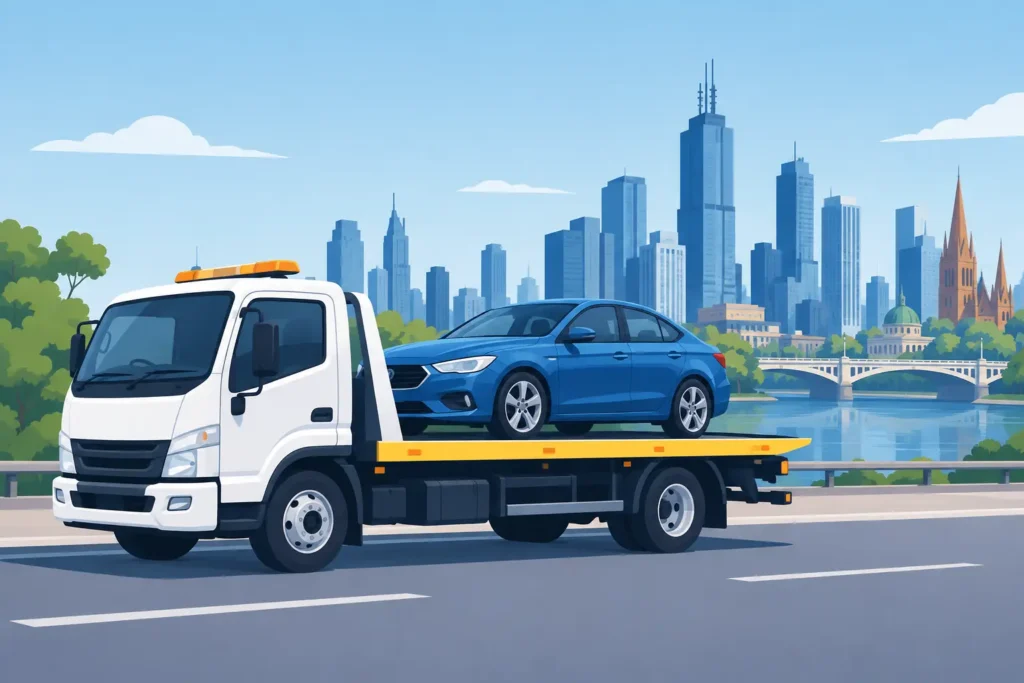
A car can be mechanically safe to tow yet still be difficult to load without damage. A lowered suspension, deep front bumper, splitter, side skirts or long wheelbase can turn a standard loading angle into a costly problem. This low clearance towing guide explains what to do when your vehicle has broken down in Melbourne and needs careful transport.
The key is to tell the tow operator about the vehicle’s clearance before they dispatch. A suitable truck, loading plan and experienced operator matter far more than trying to rush the vehicle onto the nearest tray.
Why low clearance changes the towing job
Low clearance vehicles sit closer to the road, but the concern is not only the distance under the car. The front overhang, rear overhang and wheelbase all affect whether the vehicle can travel up ramps without scraping.
A vehicle with a low front lip may catch as it starts up the ramps. A long, low sedan may clear the start of the ramps but contact the tray at the point where the angle changes. Modified cars can present further issues, particularly where coilovers, aftermarket exhausts, wide wheels or fragile carbon-fibre parts have reduced usable clearance.
This is why a simple question such as “Can you tow a low car?” does not have a one-size-fits-all answer. Most can be transported safely, but the loading method needs to suit the car. The goal is to reduce the approach angle, control the vehicle’s position and avoid contact with any part that was not designed to carry its weight.
Low clearance towing guide: the safest loading approach
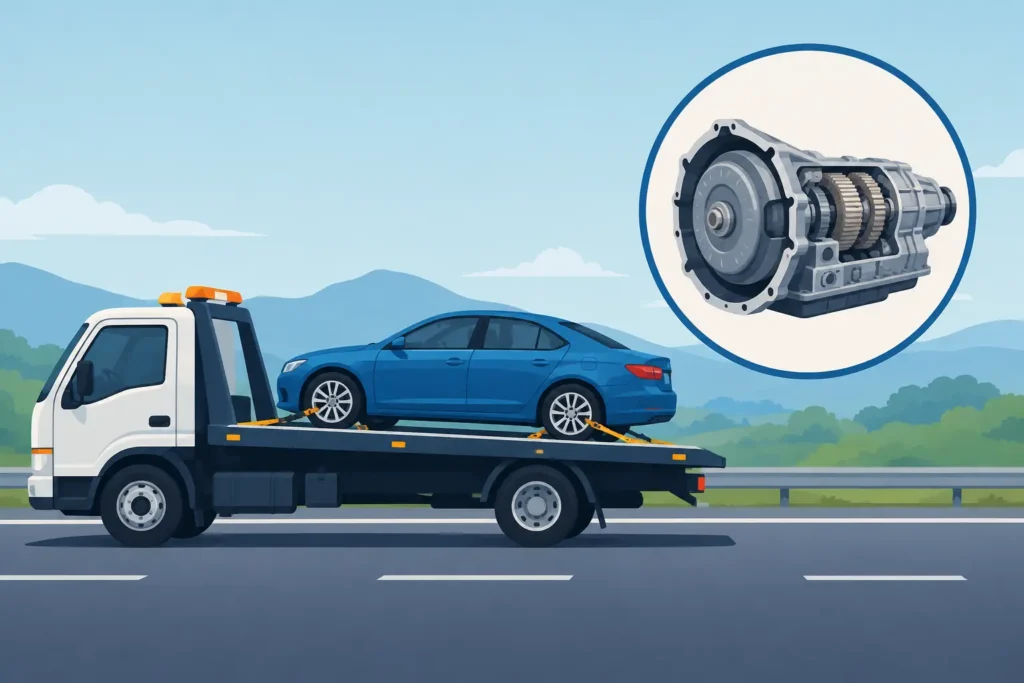
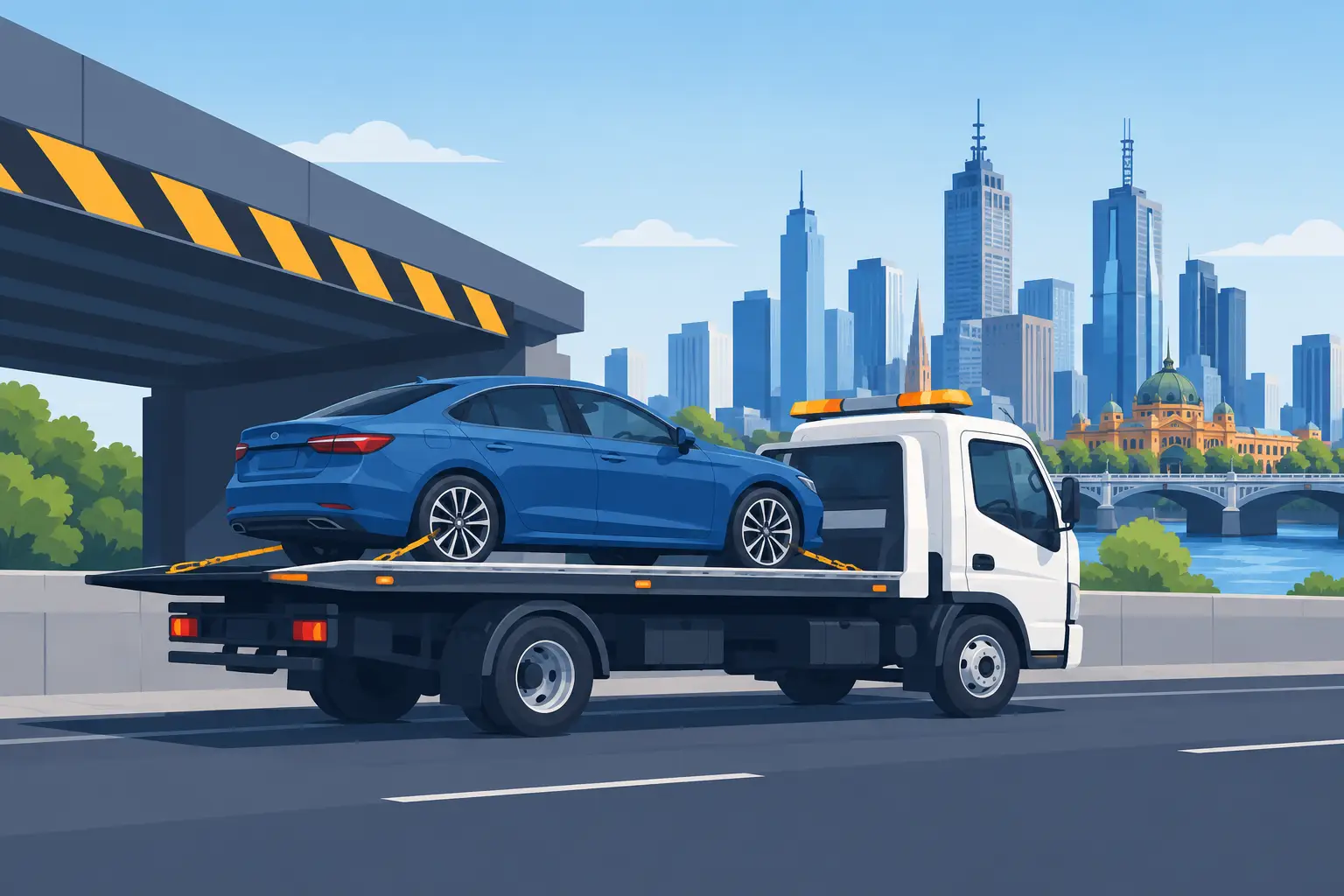
For a non-drivable or low-sitting vehicle, a flatbed or tilt tray is usually the preferred option. It keeps all four wheels off the road and gives the operator greater control during loading, transport and unloading. This is especially useful for performance cars, EVs, hybrids and vehicles with drivetrain faults.
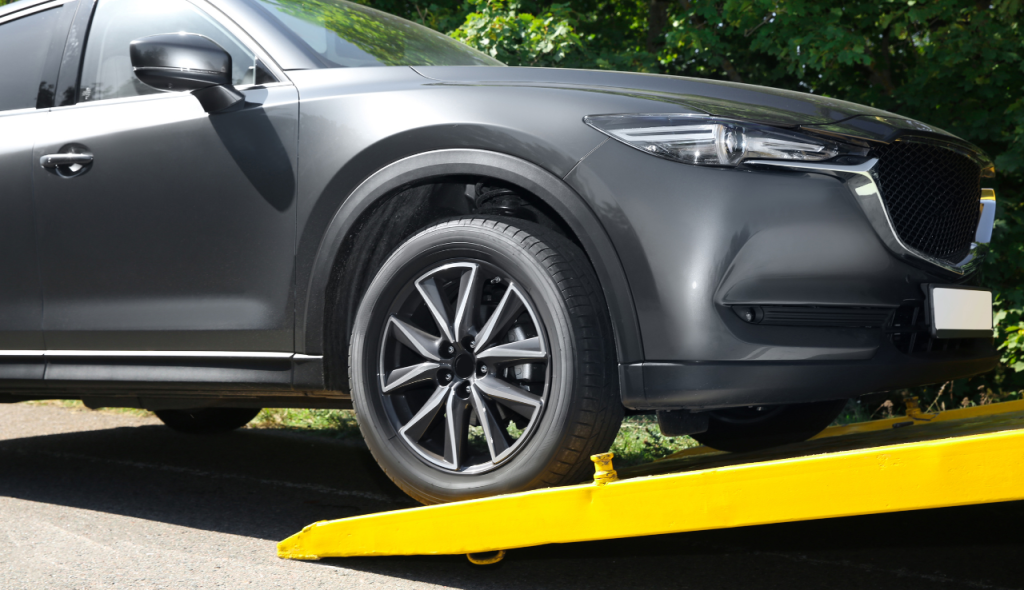
A careful operator may use extended ramps, ramp blocks or other angle-reducing equipment to create a gentler path onto the tray. The exact setup depends on the vehicle, roadside space, tray design and whether the wheels can turn and roll freely. The operator may also need to winch the vehicle slowly rather than drive it onto the truck.
Winching is not a rough process when it is done correctly. The vehicle should be secured from suitable recovery or towing points, loaded at a controlled pace and watched closely for clearance at each change in angle. Where a vehicle cannot roll, has a locked wheel, or has suspension damage, extra equipment or a different loading position may be required.
The safest choice is rarely the quickest-looking one. Taking a few extra minutes to set the ramps and confirm clearances is far better than damaging a bumper, undertray or exhaust while trying to save time.
What to tell the tow operator before dispatch
Clear information helps the right truck arrive and avoids delays at the roadside. When requesting a quote and ETA, explain that the vehicle is low clearance and mention any modifications that affect loading.
You should also advise whether the car starts, rolls, steers and releases its handbrake. Let the operator know if it is parked in a basement, tight car park, narrow street or on an uneven driveway. These access details can be just as important as the vehicle itself, particularly in inner-Melbourne streets where room to position a tilt tray may be limited.
If you know the approximate ride height, share it, but do not worry if you do not have measurements. Photos from the front and side of the vehicle can be helpful when arranging a tow, especially if the car has a very low splitter or visible damage. Be upfront about loose bodywork, flat tyres, wheels that are turned or locked, and any parts sitting close to the ground.
For EVs and hybrids, identify the vehicle as electric or hybrid from the start. These vehicles have specific towing and transport requirements, and the operator needs to plan accordingly. If the vehicle has displayed a warning message, suffered an underbody impact or will not select neutral, say so before the truck is sent.
Do not try to solve the loading angle yourself
When a car is stranded, it is tempting to use timber, household ramps, loose bricks or whatever is nearby to get it onto a truck. That can create an unstable surface, shift under the tyres or cause a person to be injured. It can also make the vehicle harder to load safely.
Avoid asking friends to push the car up ramps or stand near it while a winch is in use. A disabled car can move unexpectedly, particularly on a slope or in wet conditions. Keep passengers, bystanders and pets at a safe distance while the operator prepares the load.
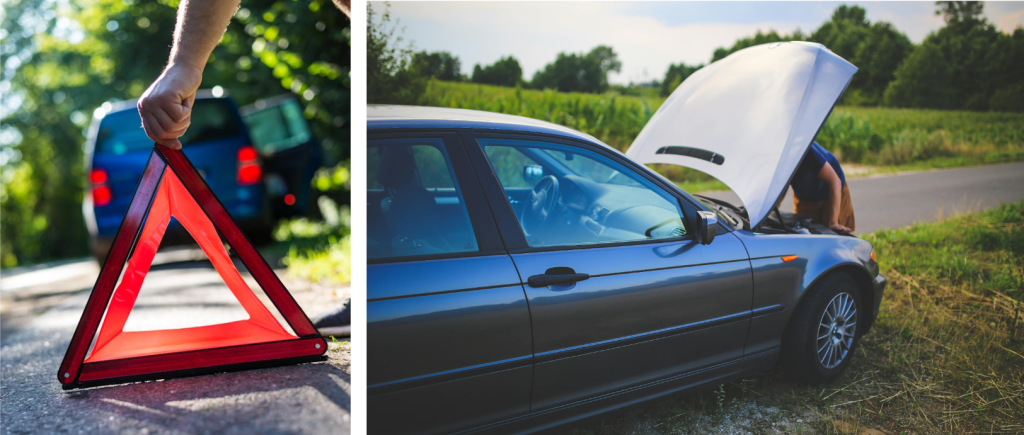
If the vehicle is stopped on a busy road, your first priority is personal safety. Move away from traffic if it is safe to do so, switch on hazard lights and follow any instructions from emergency services or roadside authorities. Do not remain in the vehicle if its location places you at risk.
Tie-downs matter as much as ramps
Getting a low vehicle onto the tray is only half the job. It must then be secured in a way that keeps it stable without placing unnecessary stress on vulnerable components.
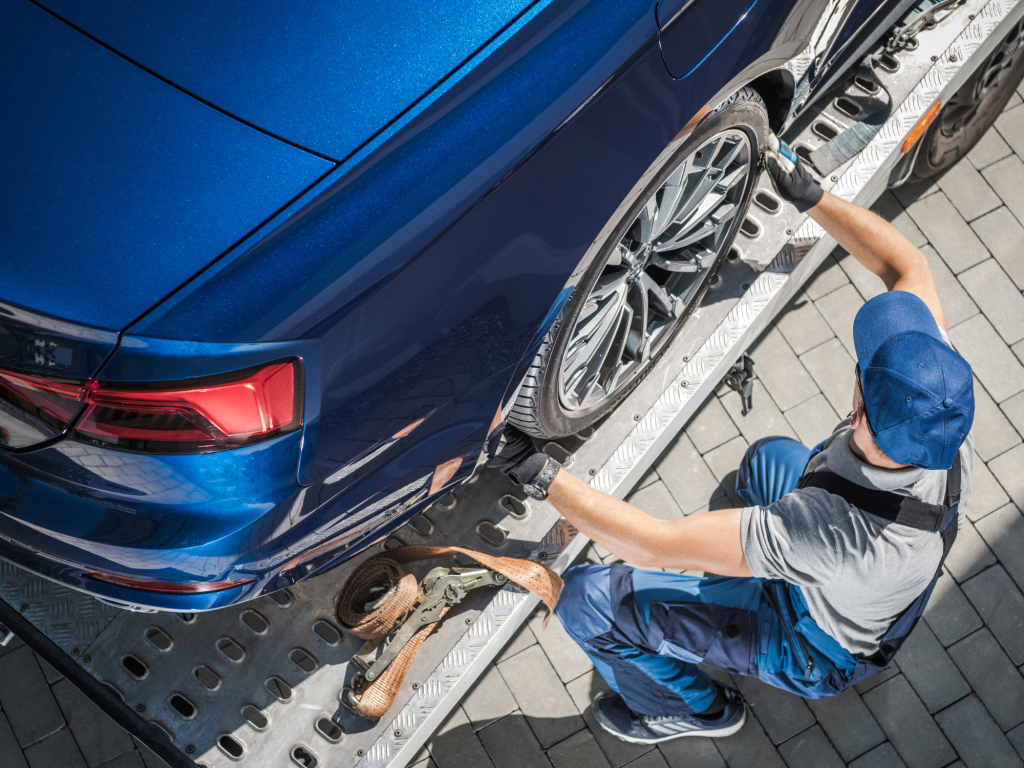
Professional vehicle transport generally relies on wheel restraints and appropriate tie-down points rather than attaching straps to suspension parts, bodywork or other unsuitable areas. The right method depends on the vehicle’s design, condition and manufacturer guidance. A car with expensive alloy wheels, low-profile tyres or specialised suspension deserves the same careful consideration as an everyday vehicle with a mechanical fault.
Ask the operator how the vehicle will be loaded and secured if you have concerns. A professional should be able to explain the plan plainly, including whether a flatbed is suitable and what precautions will be used. Clear communication before loading helps set expectations and gives you confidence that the job is being handled properly.
Special situations that need extra care
Some low clearance breakdowns are more complex than others. A vehicle with a flat tyre may sit lower on one corner, changing the available ramp clearance. A broken suspension component can leave a wheel misaligned or make the car unsafe to roll. A seized brake or transmission fault may prevent it from moving freely.
Cars with air suspension need particular attention. If the system has dropped to its lowest setting after a fault or a flat battery, the vehicle may have far less clearance than usual. Tell the towing provider whether it can be raised, whether transport mode is available, and whether the car has been left sitting low for some time.
Underground car parks are another common challenge. Low roof clearance, sharp turns and restricted access can prevent a standard tilt tray from entering or operating normally. In these cases, the operator may need a different vehicle, a staged recovery plan or an accessible handover point. Honest details at booking prevent an unsuitable truck from arriving first.
Choosing a towing provider for a low vehicle
Look for a towing provider that asks practical questions instead of treating every breakdown as identical. They should confirm the vehicle type, its condition, pickup access, destination and any clearance concerns before dispatching.
Upfront pricing and a realistic ETA also matter. A cheap quote is not useful if the truck cannot safely load the car or if important details were overlooked. For a low-clearance vehicle, the right equipment and careful handling are part of the service, not optional extras.
Onigo Towing focuses on breakdown transport and can arrange careful flatbed towing for Melbourne drivers, including low-sitting, specialty and non-running vehicles. The most useful thing you can do when calling is describe the situation clearly, then let the operator choose the safest loading method.
A breakdown is stressful enough without worrying about scraping the vehicle on its way to the mechanic. Share the clearance details early, keep clear during loading and choose a towing service that treats careful transport as the standard.