A carpark breakdown can feel less serious than stopping on a freeway, but it can create its own risks quickly. Cars continue moving through narrow lanes, pedestrians may step out from between vehicles, and a stalled vehicle can block an exit, ramp or loading area. Knowing how to handle a carpark breakdown safely helps protect you, your passengers and everyone trying to get around you.
The priority is not to diagnose the fault on the spot. Your job is to make the vehicle visible, move it only if it is safe to do so, and arrange suitable help without putting yourself in a more dangerous position.
Make the area safe before checking the car
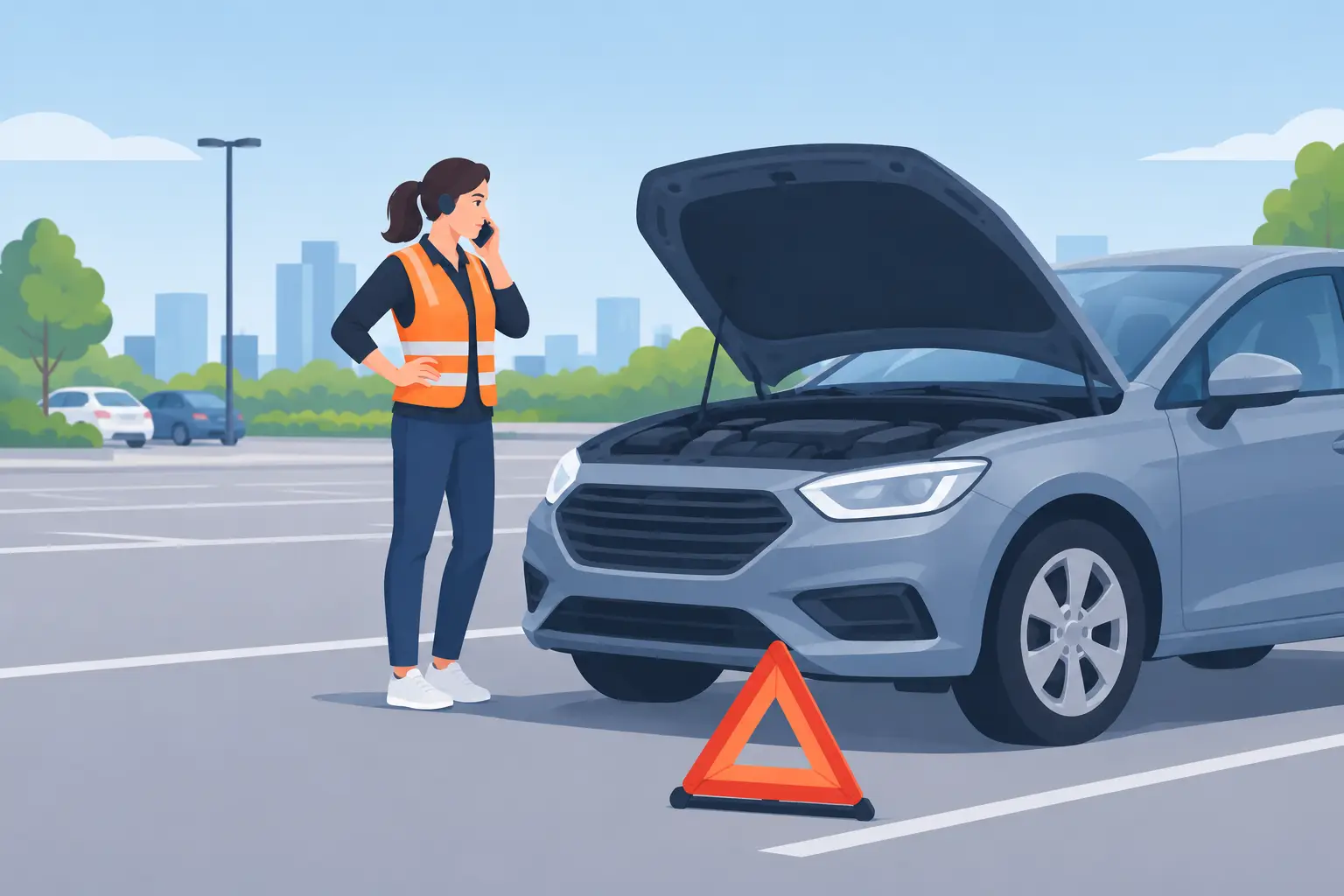
If your vehicle loses power, will not restart or displays a warning light while you are driving through a carpark, ease off the accelerator and steer calmly towards the nearest safe space. A vacant bay, quiet edge of the carpark or area away from a ramp is preferable. Avoid stopping in a thoroughfare, directly behind another vehicle, beside a blind corner or in front of a fire exit if there is any safe alternative.
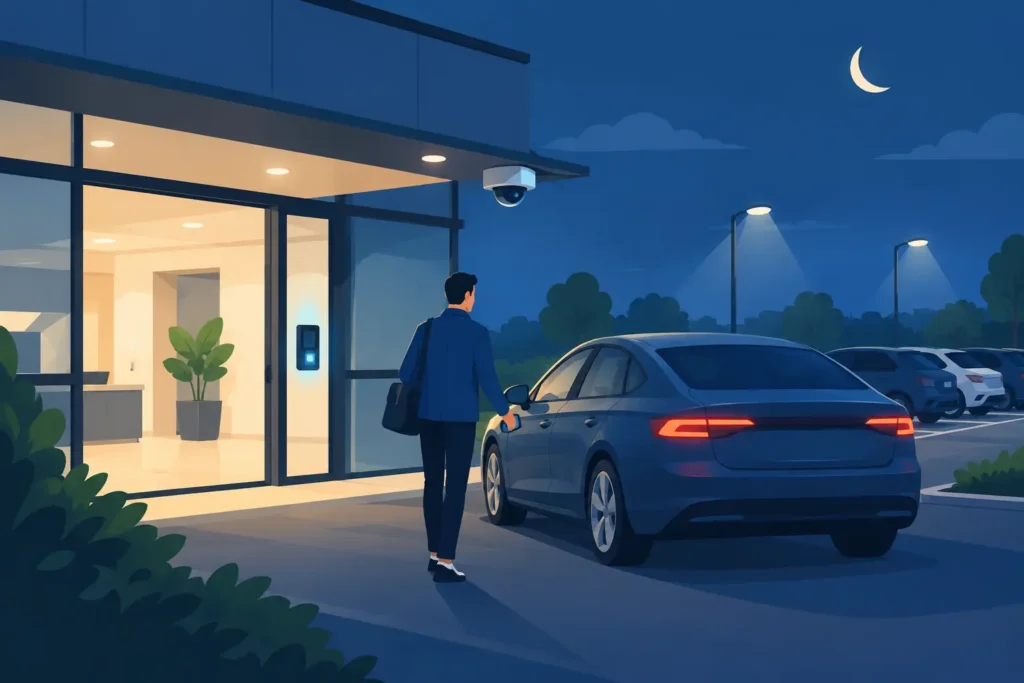
Once stopped, select park, apply the handbrake and switch on your hazard lights. At night, in an underground carpark or poor weather, visibility matters even more. Keep your headlights or parkers on if doing so will not drain an already weak battery further and conditions make the vehicle hard to see.
If smoke is coming from under the bonnet, you can smell fuel, see a fluid leak, or the vehicle has overheated severely, turn the engine off immediately. Do not open the radiator cap or touch hot engine components. Move people away from the vehicle and alert carpark management or centre security if available.
Decide whether to stay inside or move away
Staying in the car with the doors locked is usually safest when you are stopped in a busy traffic lane and there is no protected place to stand. Keep your seatbelt on if moving traffic is close by. If the vehicle is parked safely in a bay or at the edge of the carpark, it may be safer to get out carefully and wait on the footpath, beside a building or in another protected area.
Check mirrors and look over your shoulder before opening the door. In multi-level carparks, drivers can appear suddenly around pillars and ramps. Keep children with you and do not let anyone wait between your vehicle and another parked car.
Do not turn a minor fault into a bigger problem
It is tempting to keep trying the ignition when a car will not start, especially if you are only a few minutes from home. Repeated attempts can flatten the battery further, strain the starter motor or hide the cause of the problem. One or two sensible checks are enough: confirm the vehicle is in park or neutral, check that you have fuel or charge, and look for an obvious warning message.
A flat tyre is another common carpark issue. If the car is parked on level ground, away from moving vehicles, and you have the right equipment and confidence, changing it may be reasonable. But do not work beside an active traffic lane, on a slope, in a cramped underground bay or where the wheel is close to passing vehicles. Calling for assistance is often the safer choice.
For EVs and hybrids, do not attempt roadside repairs to orange high-voltage cables, battery components or electrical systems. A warning message, loss of drive power or charging fault may require a specialist tow rather than a jump-start or improvised fix. The same careful approach applies to performance vehicles, low-clearance cars and motorcycles, where unsuitable loading can cause avoidable damage.
Tell other drivers what is happening
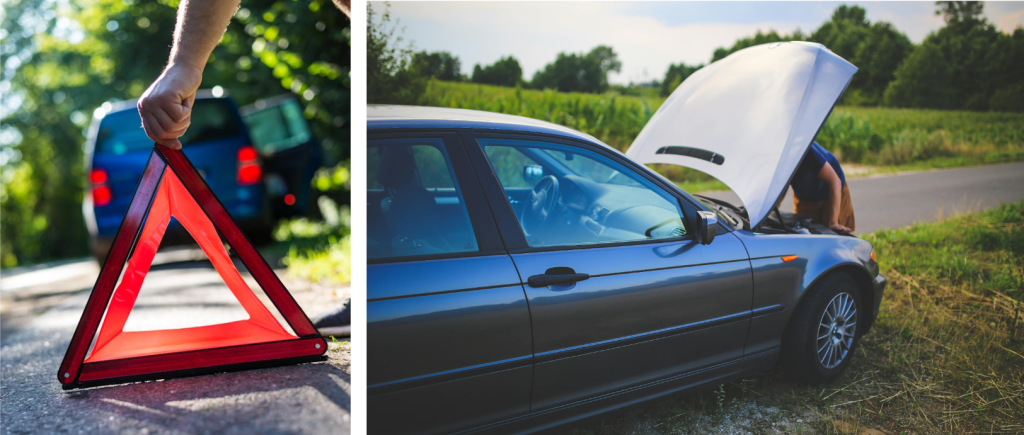
Hazard lights are the first signal, but they may not be enough in a crowded carpark. If you have a warning triangle, use it only when it can be placed without walking into traffic and where carpark rules allow it. In a tight indoor carpark, alerting security or management is usually more useful. They may be able to direct vehicles around the area, help manage congestion or provide access for a tow truck.
Avoid standing in the lane to wave traffic through. Even well-meaning drivers can misread your signals, and you should not need to put yourself in harm’s way to manage the flow of cars. Let carpark staff handle traffic control where possible.
If your vehicle is blocking a boom gate, exit, loading dock or accessible parking area, explain this clearly when you call for help. It can affect the best entry point for the tow truck and help the operator plan a quicker, safer collection.
Arrange the right towing support
When the vehicle cannot be driven safely, towing is usually the cleanest solution. Before calling, note your exact location. Large shopping centres, hospitals, airport carparks and multi-storey buildings can be confusing, so include the level, zone, nearest lift, store entrance, colour marker or bay number. Let the dispatcher know whether the vehicle is in an underground area, has low clearance, is locked, has a flat tyre, or will not select neutral.
Give an accurate description of the vehicle and fault. Mention whether it is an EV, hybrid, motorcycle, ute, van, light truck or modified vehicle. This helps ensure the right equipment is sent rather than creating delays at the scene.
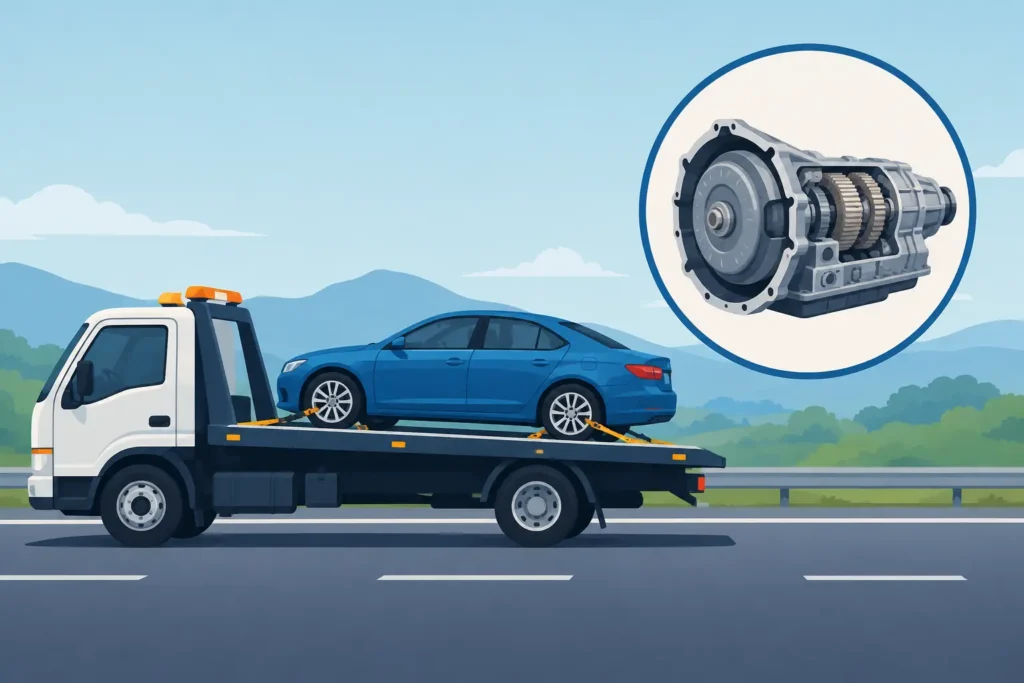
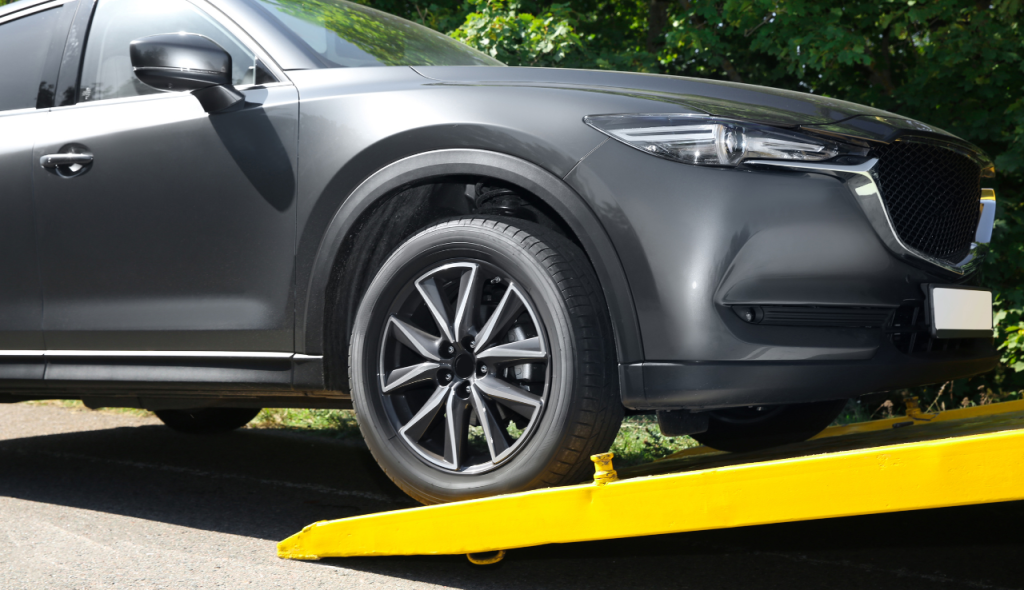
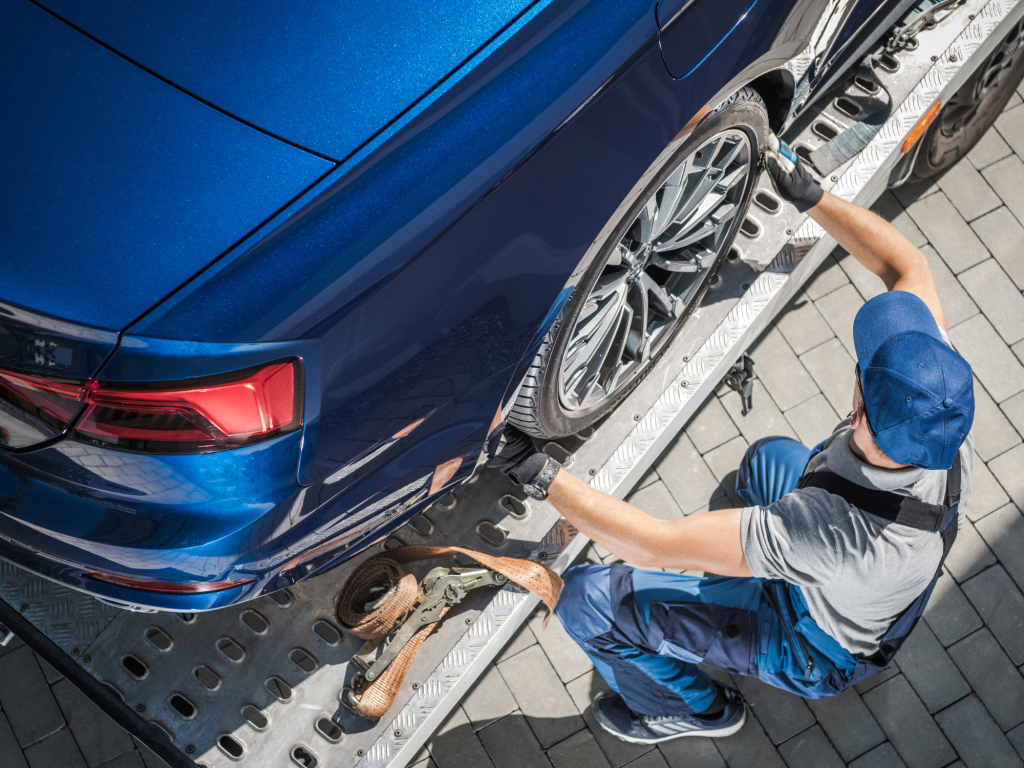
A dedicated breakdown towing provider can also confirm the likely arrival time and price before dispatch. Onigo Towing uses modern flatbed equipment for breakdown transport, which is particularly helpful where a vehicle cannot be driven, has drivetrain issues or needs careful handling. If your vehicle is under warranty, leased or covered by roadside assistance, check whether there are towing conditions or a preferred repair destination before authorising transport.
Prepare for the tow without leaving valuables behind
While waiting, collect your licence, keys, wallet, mobile, medication and any valuables from the vehicle if it is safe to do so. Take a few clear photos of the car from each side, including existing damage and the dashboard warning lights. This is useful for your own records and helps avoid confusion later.
Tell the tow operator where the vehicle needs to go – a trusted mechanic, dealership, home or another secure location. If the workshop is closed, ask whether the vehicle can be left there safely and whether keys need to be placed in a designated key drop. Do not leave keys in an unlocked vehicle or hide them under a wheel arch.
Be careful with jump-starts and battery problems
A dead battery is one of the most common reasons for a carpark callout, particularly after shopping trips, short drives or leaving an interior light on. A jump-start may get the vehicle moving, but it is not always the answer. If the battery is old, the alternator warning light is on, or the vehicle repeatedly loses power, driving away could leave you stranded again in a less convenient place.
Only use jump leads if you know the correct procedure, both vehicles are compatible and the area is safe to work in. Some modern vehicles have specific jump points, and incorrect connections can damage electrical systems. Do not jump-start an EV’s high-voltage battery. Its 12-volt system may be serviceable in some cases, but the vehicle manufacturer’s guidance should be followed.
Know when the situation is an emergency
Call emergency services rather than a towing provider first if there is a fire, serious injury, immediate danger from traffic, a fuel spill, or a vehicle is trapped in a hazardous location. In an enclosed carpark, smoke or fumes can spread quickly. Move away, warn others if safe, and follow instructions from security or emergency responders.
For most mechanical failures, staying calm and giving clear location details will get the right help moving sooner. You do not need to solve the breakdown yourself. Make the area safe, protect the people with you and let a properly equipped tow operator take the vehicle where it needs to go.
A breakdown in a carpark may disrupt your day, but it does not have to become a dangerous or costly ordeal. A few calm decisions at the start can keep everyone safe and make the recovery far more straightforward.