You turn the key, press the start button, and get nothing useful back – maybe a slow crank, maybe a click, maybe just silence. In that moment, a dead battery towing service is not really about the battery alone. It is about getting your vehicle moved safely, quickly, and without making a stressful breakdown worse.
For many Melbourne drivers, the first thought is whether a jump-start will solve it. Sometimes it will. Sometimes it will not. A flat battery can be a simple power issue, but it can also point to a charging fault, an electrical problem, a starter issue, or a vehicle that should not be restarted and driven until it is properly checked. That is where towing becomes the safer option.
When a dead battery towing service makes sense
If your car has simply been left with interior lights on overnight, a jump-start may be enough to get you moving again. But there are plenty of situations where towing is the better call. If the battery has gone flat more than once, the alternator may not be charging properly. If the dashboard is showing multiple warnings, the issue may be broader than the battery itself. If the vehicle starts after a jump but then stalls, that is a strong sign the problem is not resolved.
There is also the practical side. You may be parked in a basement, stuck at work after hours, stranded at home before an early start, or dealing with a vehicle that is unsafe to risk in traffic. In those cases, arranging a tow straight to your mechanic, home, or another destination can save time and avoid a second breakdown later the same day.
For newer vehicles, EVs, hybrids, performance cars, and some European models, the answer is even less straightforward. Incorrect jump-starting can create electrical issues, and not every vehicle should be handled the same way. If there is any doubt, careful transport is often the smarter option.
Why dead battery breakdowns are not always simple
A battery problem sounds minor until it is your vehicle blocking the driveway, sitting dead in a shopping centre car park, or refusing to start on the side of a busy road. The reason these jobs need proper handling is that the cause is not always obvious from the driver seat.
A dead battery can come from age, weather, short trips that never fully recharge the battery, a failed alternator, parasitic drain, corroded terminals, or faults in the starting system. Even if someone gets the engine running temporarily, that does not mean the vehicle is reliable enough to drive.
That is why breakdown towing specialists treat non-start jobs carefully. The priority is not guessing the fault at the roadside. The priority is getting the vehicle out of a vulnerable position and transported without damage.
What to expect from a professional dead battery towing service
The biggest difference between a rushed tow and a proper breakdown response is communication. When your vehicle will not start, you should know the price before dispatch, the estimated arrival time, and what type of truck is coming. You should also be able to explain whether the vehicle is a standard passenger car, motorcycle, van, ute, EV, hybrid, or a low-clearance vehicle that needs extra care.
A proper operator will ask the right questions early. Is the car in a car park, on the street, in a loading zone, or at home? Is the steering locked? Can the gearbox be shifted into neutral? Are there height restrictions? Is the battery issue confirmed, or is the vehicle completely non-responsive? These details matter because they affect access, loading method, and timing.
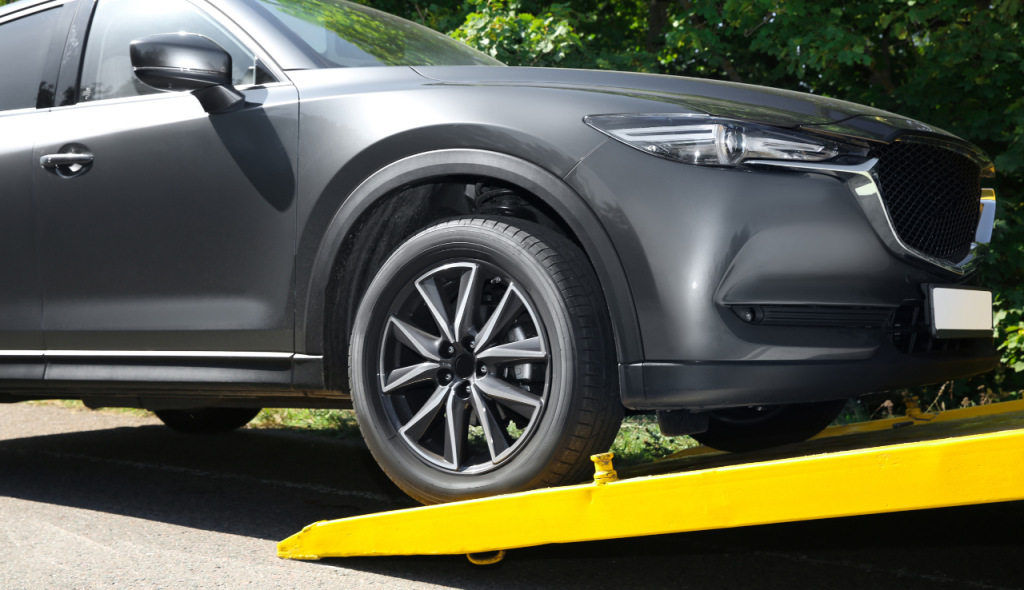
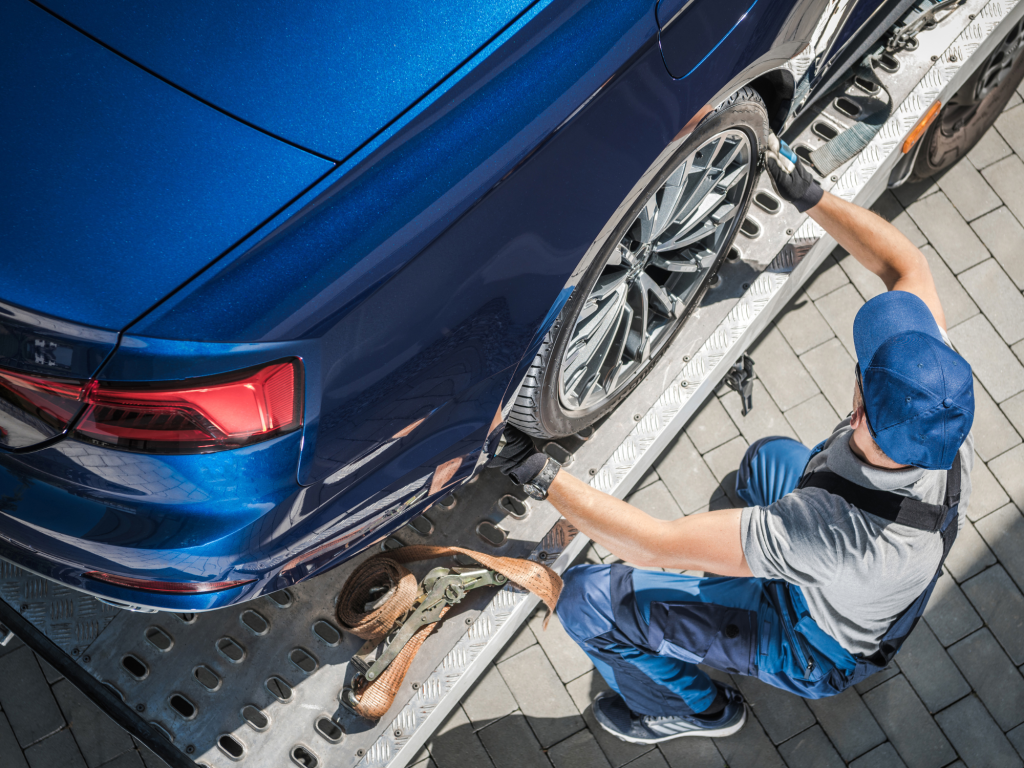
Flatbed towing is often the safest choice for dead battery jobs, especially when the vehicle cannot be started or rolled easily. It keeps the car fully off the road and reduces handling risks. For higher-value vehicles and specialist models, that extra level of care matters.
Dead battery towing service for EVs, hybrids, and specialist vehicles
Not every tow operator is set up for modern vehicles. EVs and hybrids can have different towing requirements, and some should not be moved using basic methods that may be acceptable for older cars. If the 12-volt battery is flat in an EV, the issue can still leave the vehicle immobilised even though the main drive battery is charged.
This is where specialist breakdown towing matters. The vehicle needs to be loaded according to manufacturer requirements, with attention to ride height, weight distribution, tie-down points, and any limitations on wheel movement. The same goes for motorcycles, prestige cars, modified vehicles, and low-clearance performance cars. The tow itself is only half the job. The handling is what protects the vehicle.
For commercial operators, the stakes are also higher. A van or light truck with a battery failure can mean missed jobs, delayed deliveries, or staff standing around waiting. Fast dispatch and a clear ETA help businesses make decisions quickly instead of losing half a day to uncertainty.
How the process should work when you call
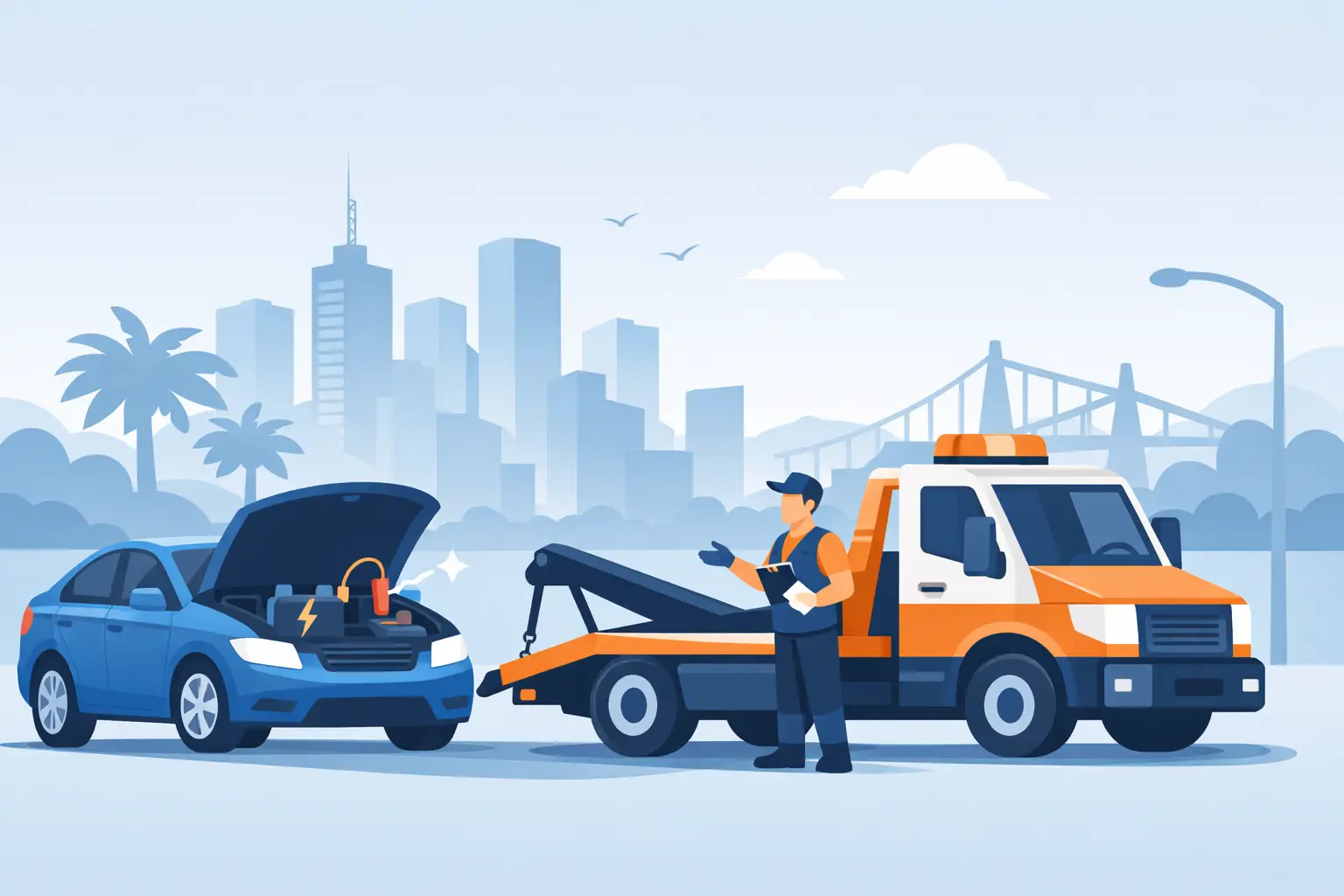
A reliable breakdown towing service should make the next step easy. You call, explain the vehicle and location, receive an upfront price and ETA, then get updates until the truck arrives. Once on site, the operator checks access, confirms the destination, and loads the vehicle with the right equipment.
That sounds basic, but during a breakdown it matters a lot. Clear communication lowers stress. So does knowing your car is going to a mechanic you trust, back home, or to a safer place where the fault can be sorted properly.
In Melbourne, response times can vary depending on traffic, time of day, weather, and where the vehicle is located. A suburban home driveway is one thing. A tight apartment basement, roadside shoulder, or shopping centre car park is another. Good dispatch is honest about that. Fast help matters, but realistic updates matter just as much.
Choosing the right dead battery towing service in Melbourne
If you are comparing providers, look past generic claims and focus on whether they actually handle breakdown towing day in, day out. A company that specialises in non-starts and mechanical failures is usually better prepared than a general operator juggling accident work, impounds, and recovery jobs.
You want straightforward pricing before the truck is sent, not vague estimates that change later. You want modern equipment, careful loading, and an operator who understands that dead battery jobs can involve locked steering, electronic gear selectors, basement clearance issues, or vehicles that cannot be moved conventionally.
It also helps to choose a local Melbourne operator that knows the suburbs, traffic patterns, and common access challenges. That local knowledge can save time when the vehicle is in a difficult spot or needs to be moved to a nearby workshop quickly. Onigo Towing is built around that kind of breakdown response – practical, careful, and focused on getting stranded drivers moving again with as little fuss as possible.
When not to risk a jump-start
There is nothing wrong with trying the obvious fix when the situation is simple and safe. But there are times when it is better not to keep attempting restarts or jump-starts. If you smell burning, see damaged battery terminals, notice smoke, have repeated electrical faults, or the vehicle has already failed again after a jump, it is time to stop experimenting.
The same applies if you are in an unsafe location, alone at night, carrying family, or driving a vehicle with specialist electrical systems. Saving a tow fee is not much comfort if the car stops again in traffic or suffers avoidable damage from the wrong handling.
A calm, professional tow gives you a cleaner next step. The vehicle gets where it needs to go. A mechanic can diagnose the real issue. And you avoid the uncertainty of wondering whether the battery was the problem at all.
When your vehicle will not start, the best decision is often the one that removes risk, not just the one that seems quickest. Get it moved properly, get a clear answer on the fault, and give yourself one less thing to worry about.