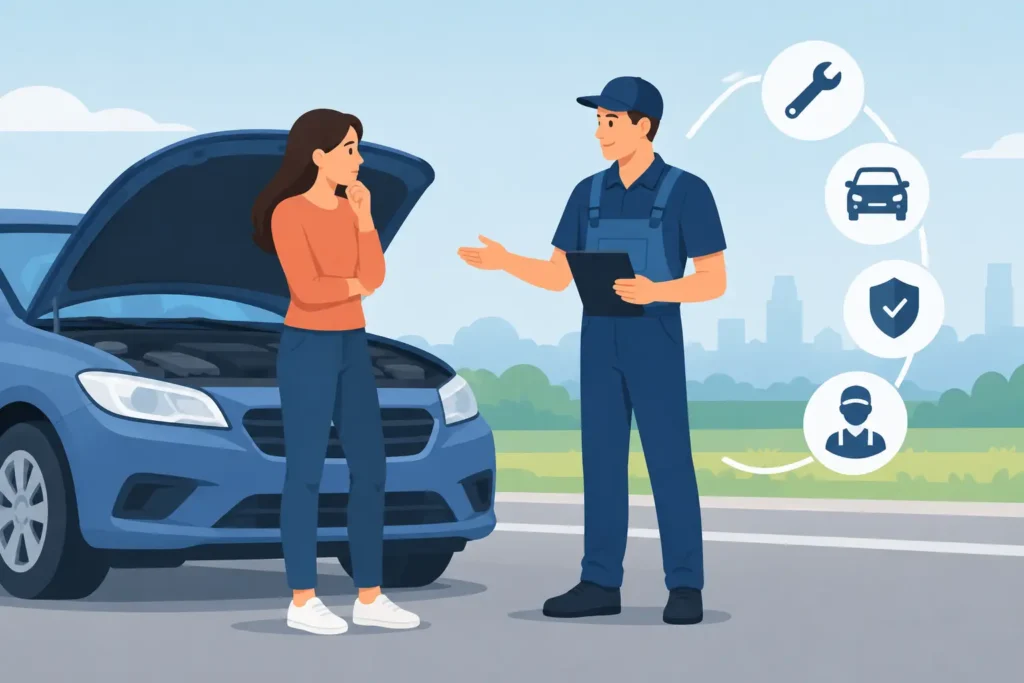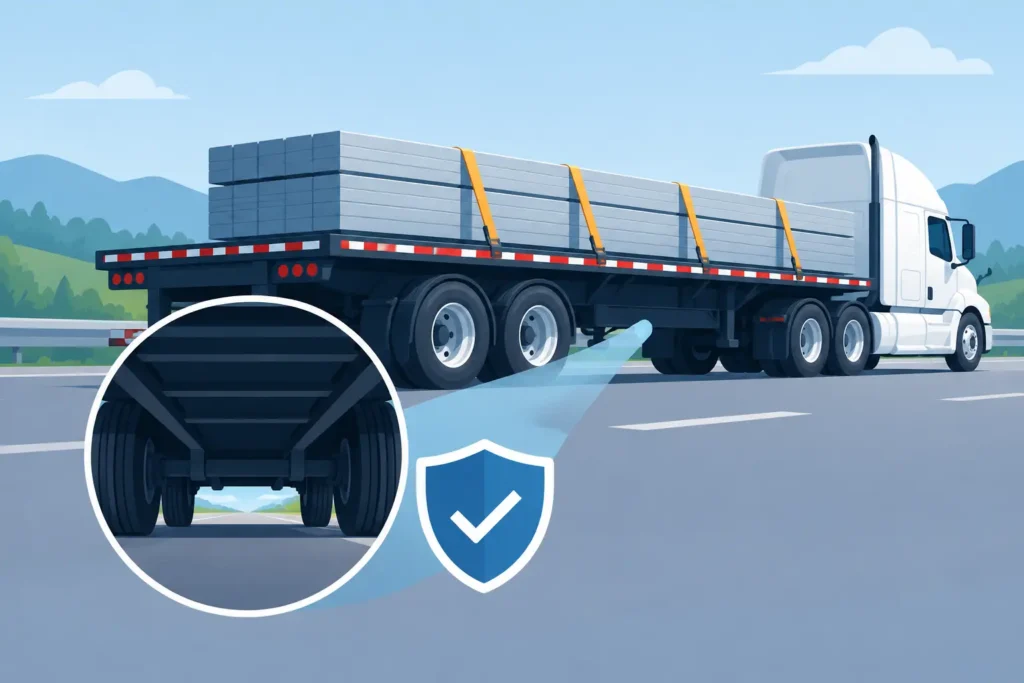
A broken-down work van does more than interrupt a trip. It can leave tools, stock, appointments and staff stuck on the side of the road. This guide to towing commercial vans explains what to do first, what information a tow operator needs, and how to protect the vehicle and its contents while getting it to a repairer.
Start by making the roadside safe
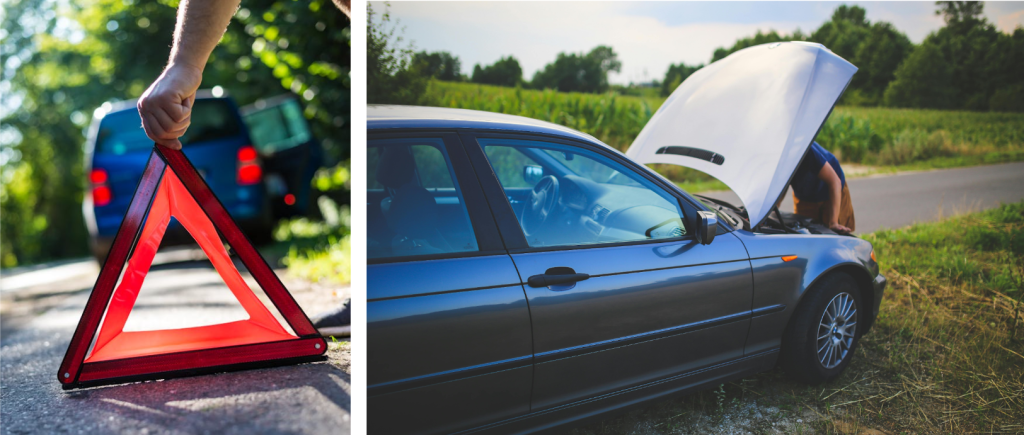
If the van loses power, develops a serious warning light, overheats or will not restart, your first job is to get out of danger. Pull as far left as conditions safely allow, switch on the hazard lights and keep clear of moving traffic. On a busy Melbourne road, do not stand between the van and passing vehicles or attempt repairs in an unsafe position.
If you have passengers, move them to a safe location away from traffic where practical. Keep children well away from the road edge. If the van is stopped in a dangerous location, such as a live lane, blind corner or freeway shoulder, tell the towing dispatcher exactly where you are and describe the immediate risk.
Avoid repeatedly trying to start a van that has a mechanical fault. A flat battery is one thing, but continued cranking can worsen issues with the starter, electrical system or engine. If there is smoke, a fuel smell, leaking fluid, steam from the bonnet or a burning smell, switch the ignition off and stand back. Tell the dispatcher before they arrive.
Know what makes commercial van towing different
Commercial vans are often heavier than passenger cars, especially when loaded. A short-wheelbase empty van and a high-roof delivery van full of stock are very different towing jobs. The operator needs to account for the van’s weight, length, height, drivetrain, ground clearance and condition before selecting equipment.
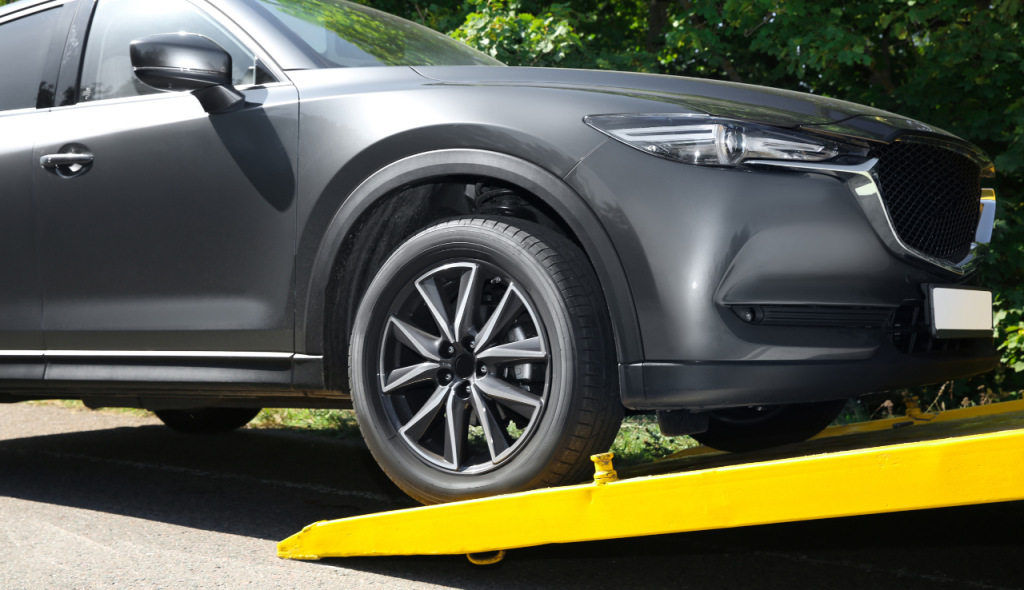
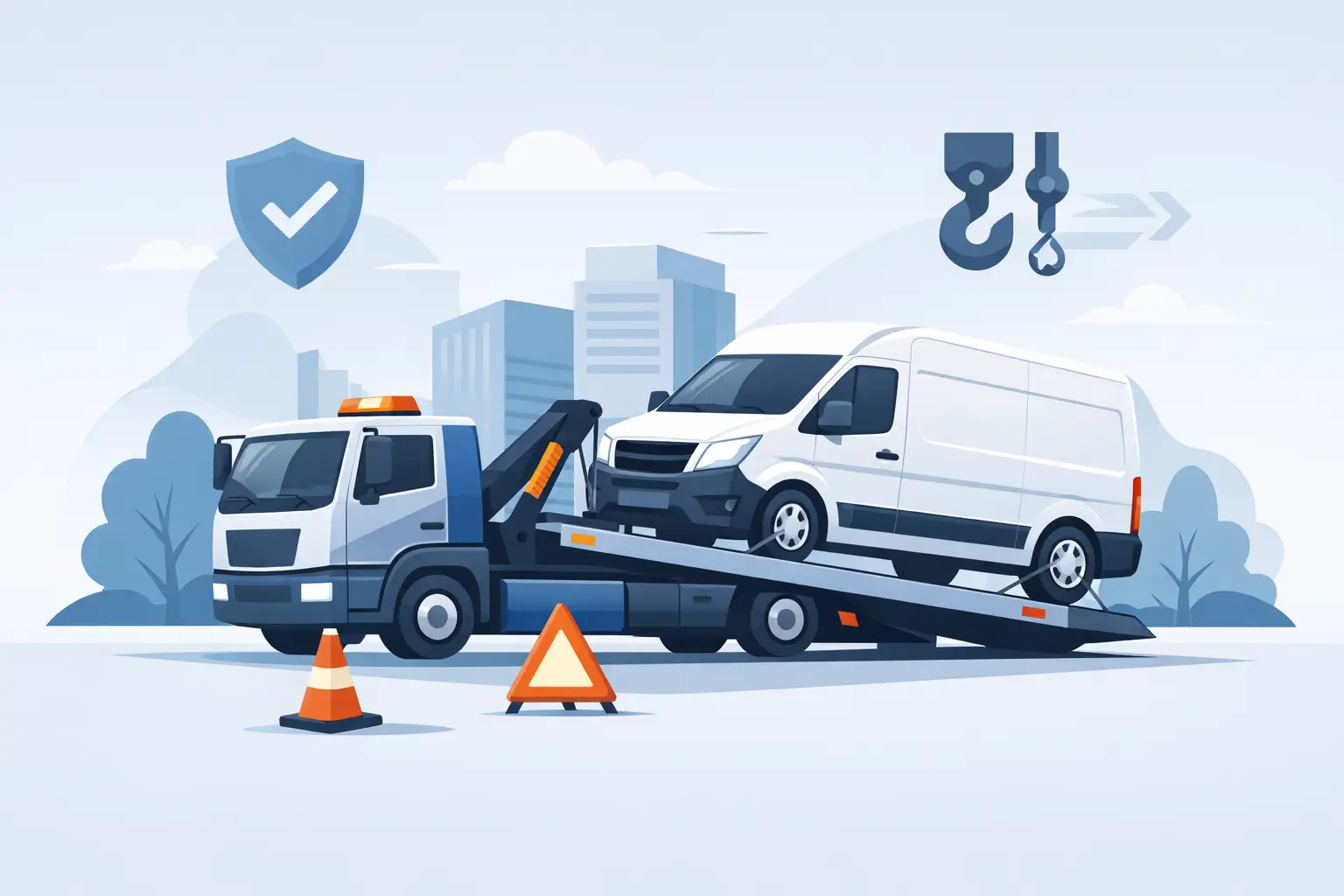
A flatbed truck is commonly the safest option for a breakdown tow. It keeps all four wheels off the road and reduces further wear on the drivetrain, tyres and suspension. This is particularly relevant for automatic vans, EVs, hybrids and vans with unknown mechanical faults. Towing with drive wheels on the road can cause expensive damage if the manufacturer’s procedure is not followed.
The right method still depends on the van. A vehicle with severe suspension damage, locked wheels, a low front bumper, a heavy payload or restricted access may require additional equipment or a different loading approach. A professional operator will assess this rather than forcing a quick hook-up.
Payload changes the plan
Before requesting a tow, consider what is in the cargo area. Trade tools, parcel cages, refrigeration equipment, shelving, generators and building materials can change the van’s overall weight and centre of gravity. Loose items can also shift during loading or transport.
Tell the towing company whether the vehicle is loaded and give a realistic description of the cargo. You do not need to know the exact weight, but it helps to say whether it is empty, lightly loaded, carrying tools, or full of stock. If the load is unusually heavy, tall or hazardous, this must be disclosed before dispatch.
Do not overload a van and expect a tow truck to solve the problem. If the vehicle exceeds its legal mass limits, the load may need to be removed or transferred before transport. That protects everyone involved and avoids creating another roadside safety issue.
Information to give when booking a van tow
Clear information helps the dispatcher send suitable equipment the first time. When you call, have the van’s make, model, registration and approximate location ready. Mention the direction of travel, the nearest cross street or landmark, and whether you are in a car park, driveway, loading dock, underground area or on a main road.
Explain what went wrong in plain terms. For example, the van will not start, it has a flat tyre with no spare, the engine overheated, the gearbox has failed, or it has gone into limp mode. If the vehicle can roll, steer and release the handbrake, say so. If it is blocked in, has wheel damage or is carrying a load, say that too.
The destination matters as well. Provide the full repairer address, not just the workshop name. If the van needs to go home, to a depot or to another Melbourne suburb, confirm that before the truck is dispatched. A clear upfront price and estimated arrival time are far easier to provide when the job details are accurate.
Prepare the van without creating more damage
Once help is on the way, secure the vehicle and its contents. Take valuable tools, paperwork, mobile devices, cash and loose stock with you if it is safe to do so. Close and lock storage compartments, but keep the keys available for the tow operator. If your business has fleet cards, service records or access passes in the van, remove them unless the repairer needs them.
If the cargo must remain inside, secure it as best you can. Heavy toolboxes and equipment should not be free to slide. Let the operator know about any rear step, ladder rack, roof load, towbar, lowered suspension or body modifications, as these can affect loading angles and clearance.
Take a few photos of the van before it is loaded, especially if it is a fleet vehicle or has existing damage. This is sensible record-keeping, not a sign that you expect a problem. A careful towing provider will also inspect the vehicle, discuss any obvious damage and use appropriate tie-down points.
Do not attempt to attach ropes, chains or straps yourself unless directed by a qualified professional. Modern vans can have underbody covers, sensors, battery systems and components that are easy to damage with incorrect attachment. The visible metal underneath is not always a safe recovery point.
Choosing the right tow operator for a commercial van
When a van is off the road, the cheapest quote is not always the lowest-cost decision. Delays, poor communication and improper loading can quickly cost more than a clear, professional service. Look for an operator that handles breakdown towing, gives an upfront price before dispatch and asks practical questions about the van’s condition and load.
It also helps to ask whether the vehicle will be transported on a flatbed and whether the operator can manage your particular access situation. A van parked in a tight inner-city lane, a basement car park or a construction site may need a more considered approach than one stopped in an open suburban street.
For fleet managers, consistency matters. Keep a simple internal checklist with registration details, vehicle heights, preferred repairers and after-hours contacts. Drivers can then make one call with the right information instead of trying to find it while under pressure.
Watch the height and access limits
High-roof vans, roof racks and ladder carriers need special attention. Measure or confirm the total height if the vehicle regularly enters car parks, loading bays or warehouse areas. Height restrictions can prevent a standard tow truck from accessing the van, and a roof-mounted load may need to be removed before the vehicle can be moved.
Be honest about access. A narrow laneway, soft verge, steep driveway or low overhead clearance can affect what equipment can attend. It is far better to identify these issues during booking than after a truck arrives.
What happens during loading and transport
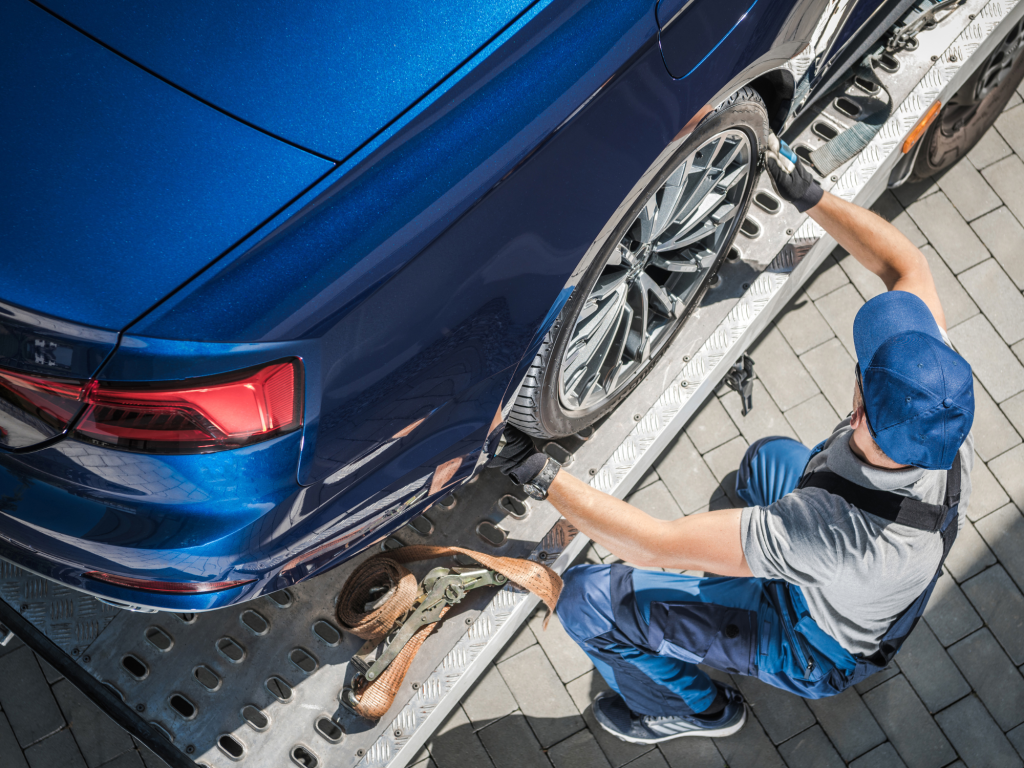
A careful tow starts with an inspection. The operator will check the condition of the wheels, steering, transmission position and surrounding area, then position the truck to create a safe loading path. The van is winched onto the tray in a controlled manner and secured using suitable wheel restraints and tie-down procedures.
You should not need to guess what is happening. The operator should explain where the van is going, confirm the destination and let you know if any issue affects the original plan. For a non-running van, keys may need to travel with the truck or be handed directly to the repairer. Confirm this before leaving the scene.
If you need tools or stock from the van after it reaches the workshop, arrange access with the repairer. Do not assume that the workshop will be open after hours or that the vehicle can be unloaded immediately. A quick phone call can prevent an inconvenient return trip.
Keep your business moving after the tow
Once the van is safely delivered, notify affected customers early. A short, honest message that a vehicle has suffered a mechanical issue is usually better than silence. If the van is part of a larger fleet, reassign urgent jobs, update dispatch and arrange a replacement vehicle or equipment transfer where needed.
Keep the towing invoice, repair assessment and any roadside notes together. Patterns matter. Repeated battery failures, overheating, tyre damage or gearbox warnings can point to a maintenance issue that needs attention across the fleet.
For commercial drivers across Greater Melbourne, Onigo Towing can provide a clear ETA, upfront pricing and careful flatbed transport when a work van cannot continue. The goal is simple: get the vehicle off the roadside safely, protect what it carries and give you a clear next step while the repair is arranged.