A transmission fault, flat battery or non-start can leave you stranded with one urgent question: can you tow an automatic car? Usually, yes – but the way it is towed matters far more than the distance. Towing it incorrectly can turn a manageable breakdown into costly transmission, drivetrain or tyre damage.
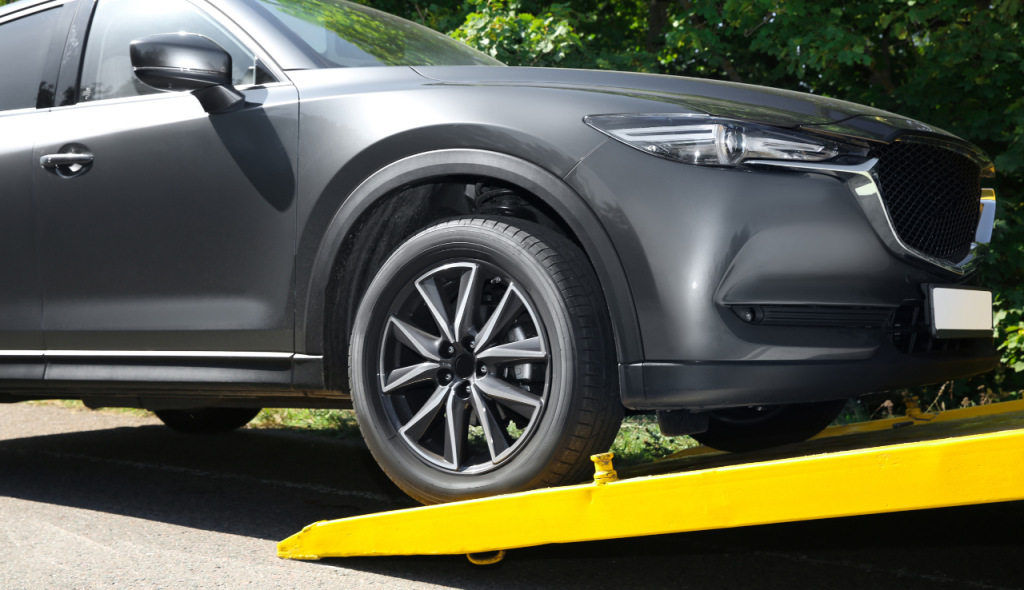
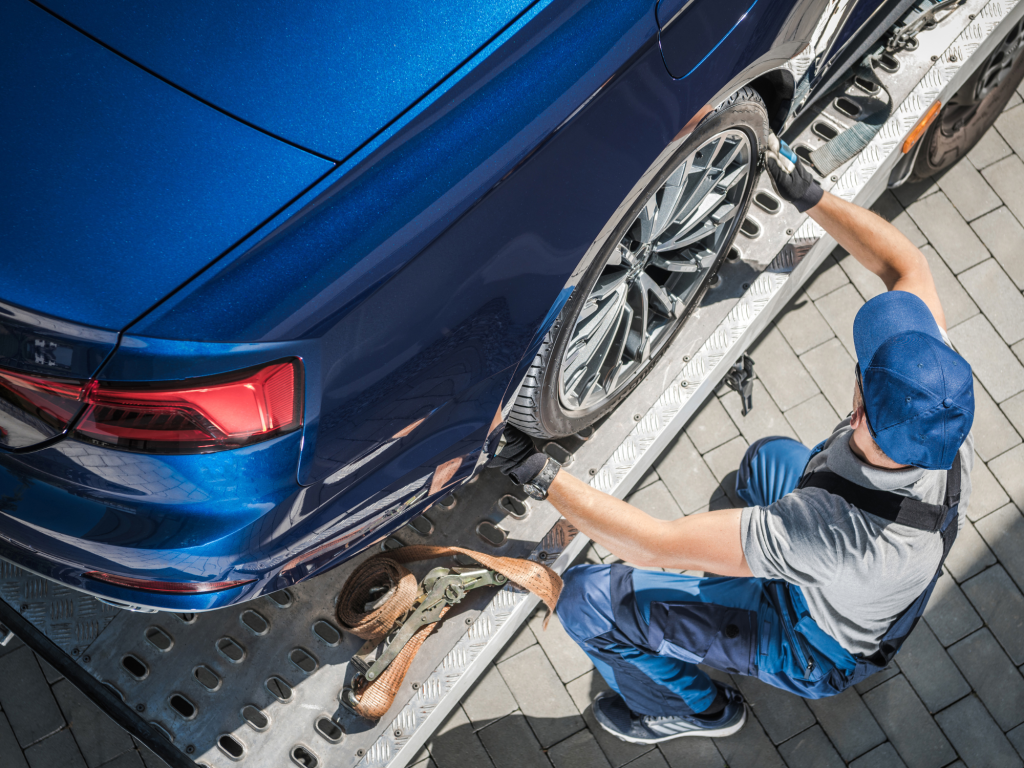
For most automatic vehicles, a flatbed tow truck is the safest answer. Your car is loaded fully off the road, secured at the wheels and transported without its driven wheels rotating. That removes the guesswork, particularly when you are dealing with a modern automatic, CVT, hybrid, EV, all-wheel drive vehicle or performance car.
Can you tow an automatic car in neutral?
Putting an automatic car in neutral does not automatically make it safe to tow. This is one of the most common and expensive misconceptions after a breakdown.
In many conventional automatic transmissions, the transmission is lubricated by a pump driven when the engine is running. When the engine is off and the vehicle is being pulled along, internal parts may still rotate without receiving the lubrication they need. Heat and friction can build quickly, even if the selector is in neutral.
Some older vehicles may have limited emergency towing allowances, often at a low speed and for a very short distance. But those limits vary by make, model and transmission type. They may also depend on the engine running, the condition of the vehicle and whether the driven wheels are off the ground. Your owner’s manual is the authority for your specific car, not a general rule found online or advice based on another vehicle.
If the transmission has failed, the vehicle has no electrical power, or you do not know why it stopped, do not assume neutral makes it towable. Request a flatbed instead.
Why flatbed towing is the safest option
A flatbed carries the vehicle with all four wheels clear of the road. For an automatic car, this is usually the method that provides the best protection because the transmission, differential and driveline are not forced to turn during transport.
It is especially recommended for vehicles with a CVT, dual-clutch transmission, all-wheel drive or four-wheel drive. The same applies to hybrids and EVs, which may have specific transport procedures because of their electric motors, high-voltage systems and regenerative braking components. A flatbed is also the sensible choice for lowered cars, prestige vehicles and cars with suspected suspension, wheel or steering damage.
A professional operator will assess whether the car can be winched on safely, use the appropriate loading angle, and secure it using wheel straps rather than taking shortcuts with unsuitable attachment points. This matters if the car is locked in park, has a flat tyre, a damaged wheel or a dead battery that prevents normal gear selection.
For a breakdown in Melbourne, that careful approach helps protect your car from the moment it leaves the roadside until it reaches your mechanic, home or preferred repairer.
When a wheel-lift tow may be suitable
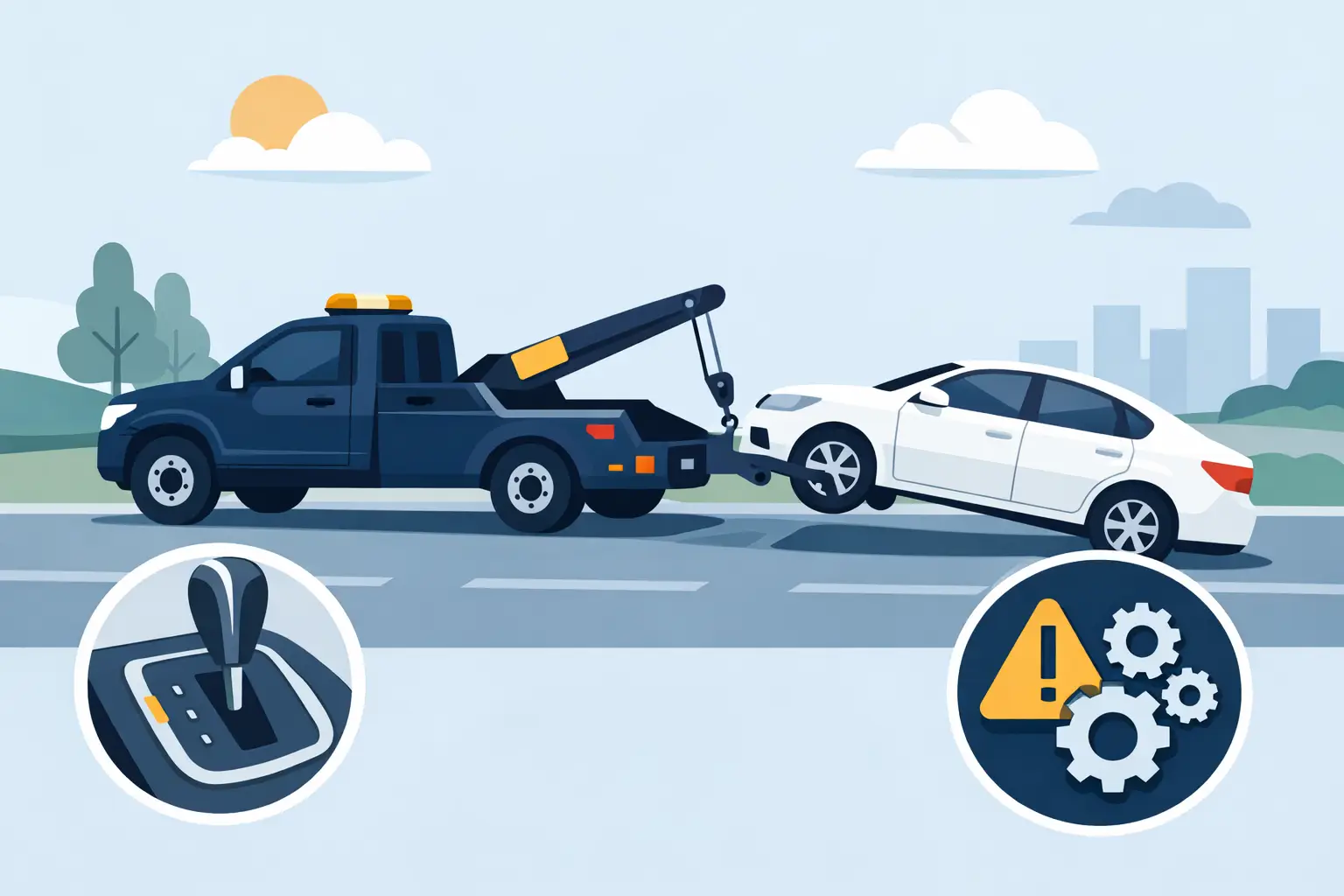
A wheel-lift truck can be suitable for some automatic cars, but only when it lifts the correct end of the vehicle and the manufacturer allows it. The key is keeping the driven wheels off the road.
For a front-wheel-drive vehicle, that generally means lifting the front wheels. For a rear-wheel-drive vehicle, it generally means lifting the rear wheels. The non-driven wheels can then roll behind the truck. However, this is not a blanket approval: steering must be properly secured where required, the vehicle must be in a safe condition to move, and the tow operator still needs to follow the vehicle manufacturer’s instructions.
All-wheel drive and four-wheel drive vehicles are different. Because power may be sent to all four wheels, lifting only one end can damage the centre differential, transfer case or other drivetrain components. These vehicles should normally travel on a flatbed, with all wheels off the ground.
The same caution applies to many modern automatic systems. A CVT or dual-clutch transmission may have stricter towing requirements than an older torque-converter automatic. If there is any uncertainty, a flatbed avoids the risk.
Do not tow an automatic car with a rope or chain
A friend offering to pull your vehicle a few streets with a rope can feel like the quickest solution. It is rarely the safest one.
Aside from the transmission risk, rope towing leaves little control over braking, steering and stopping distance. If your engine will not start, you may have reduced brake assistance and heavy steering. Hazard lights, indicators or brake lights may not work properly if the battery is flat. A sudden stop can also damage towing eyes, bumpers or the vehicle doing the pulling.
On busy Melbourne roads, this is not a risk worth taking. It can create danger for you, your passenger, other road users and the person trying to help. A proper tow truck has the equipment to load, restrain and transport a disabled vehicle safely.
What to do while you wait for a tow truck
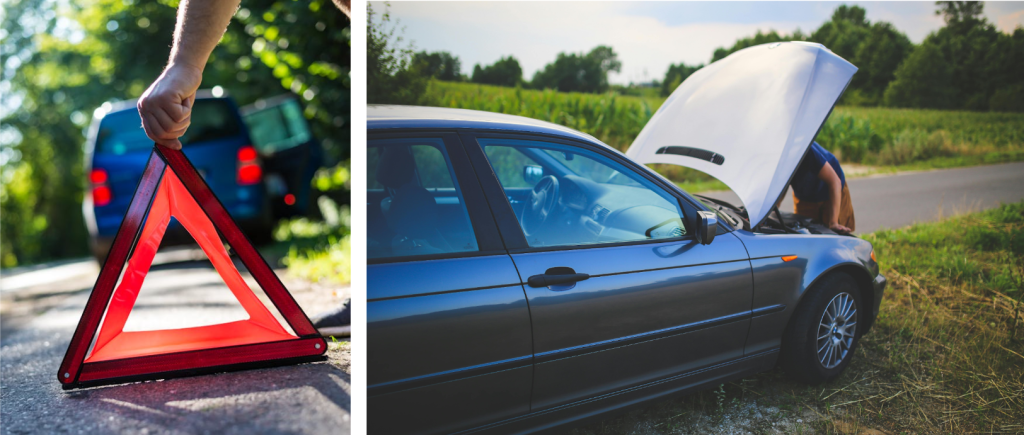
Your first job is to get yourself safe, not to diagnose the transmission at the kerb. If possible, move out of live traffic and onto a safe shoulder, service road or car park. If the car cannot move, turn on your hazard lights and stand well away from traffic when it is safe to exit.
Avoid repeated attempts to start the vehicle if you can smell burning, see smoke, notice a fluid leak or receive a transmission warning message. Continuing to drive or trying to force the selector through the gears can make the original problem worse.
When you call for towing, give clear details about the vehicle and its condition. Let the dispatcher know the make and model, whether it is front-wheel drive, rear-wheel drive, all-wheel drive or four-wheel drive if you know it, and whether it is an EV or hybrid. Explain if the car is stuck in park, has a flat battery, has locked wheels, has a flat tyre, sits low, or is in an underground car park. These details help ensure the right truck and equipment are sent first time.
Before the truck arrives, take your valuables and important items from the vehicle. Keep your keys available, along with any wheel-lock key if the vehicle has locking wheel nuts. If you are leaving the car at a repairer after hours, confirm where it should be placed and how the keys should be handed over.
Ask the right questions before the tow
A reliable towing provider should be able to tell you how your automatic vehicle will be moved and where it can be taken. You do not need to know every mechanical detail, but you should feel comfortable asking whether a flatbed is being used and whether the operator has been told about any drivetrain or access issues.
It is also reasonable to ask for the price and estimated arrival time before dispatch. Clear communication matters when your car is disabled and you are trying to organise work, family or a repair appointment.
Onigo Towing handles breakdown transport with modern flatbed equipment and can assess the safest loading method based on your vehicle and situation. For specialty, hybrid, EV and performance vehicles, providing the right information upfront gives the operator the best chance to protect the car from the roadside onwards.
The practical rule for automatic vehicles
If you remember one thing, make it this: do not let an automatic car roll on its driven wheels unless the manufacturer specifically permits it and the towing setup meets those conditions. Neutral alone is not a safeguard.
A flatbed may take a little more planning than a quick pull from another car, but it is usually the lower-risk choice. When you are already dealing with a breakdown, careful transport is one less problem waiting for you at the workshop.