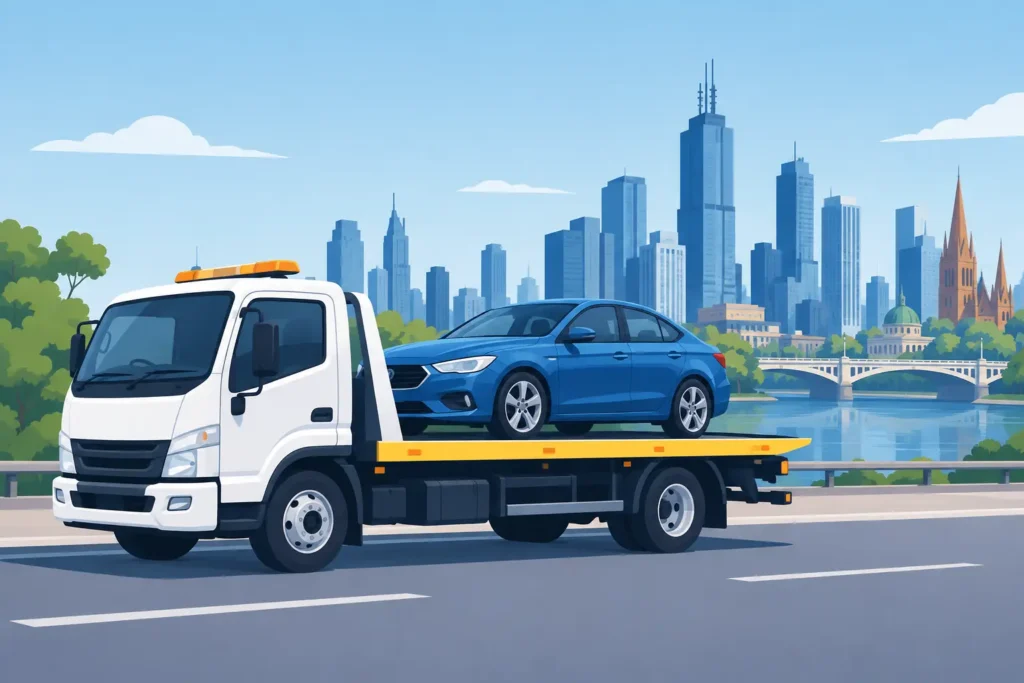
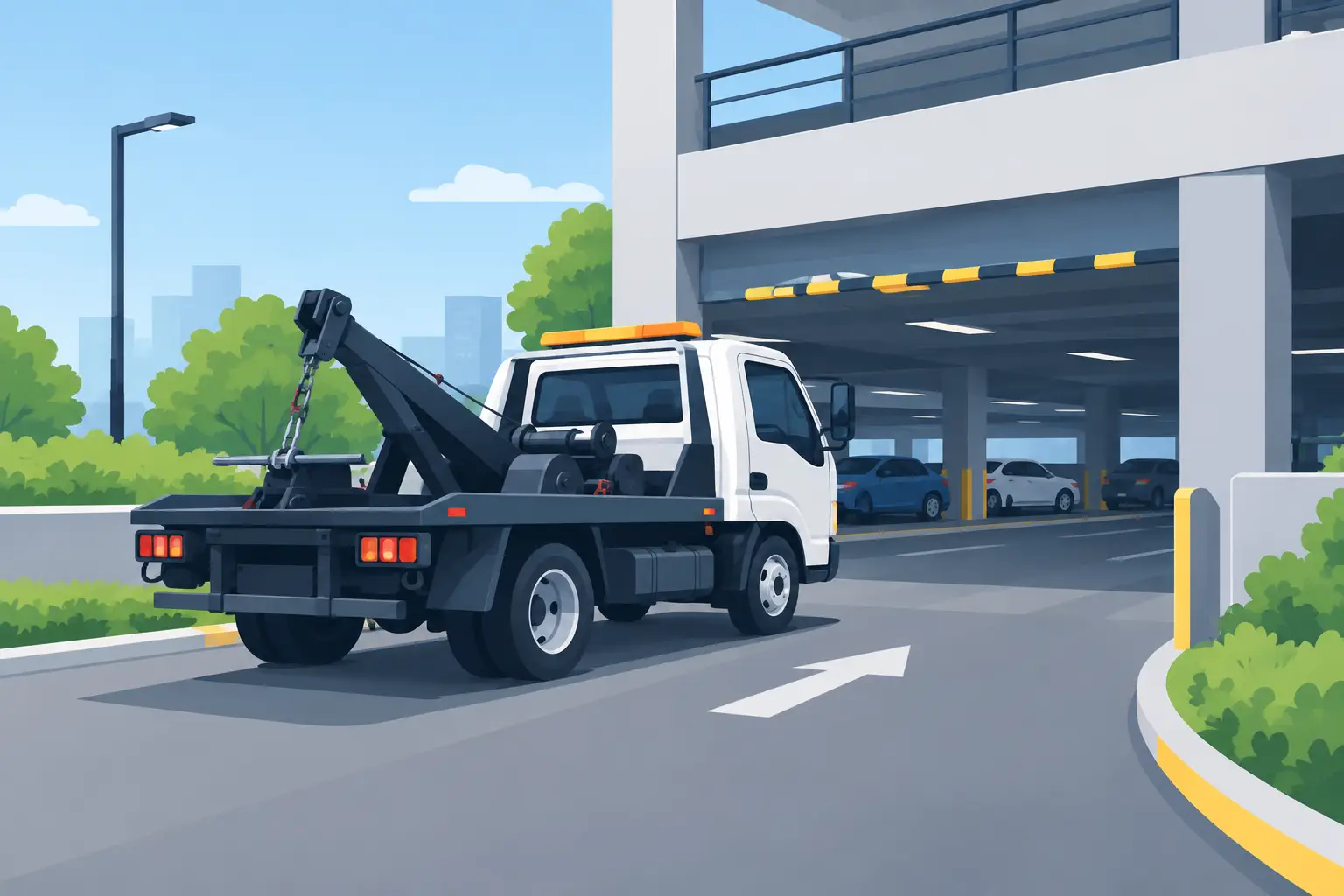
A breakdown in an underground carpark creates a different problem from a breakdown on the street. Can tow trucks enter carparks? Sometimes, yes – but only when the vehicle, clearance, access route and site rules allow it to be done safely. A tow truck should never be forced into a low or tight space simply to reach a stranded vehicle.
For Melbourne drivers, the quickest way to avoid delays is to give dispatch clear details before the truck is sent. The more accurate the information, the better the chance of sending the right equipment first time.
Can tow trucks enter carparks safely?
Many tow trucks can access open-air and multi-level carparks, particularly when there is enough height and room to turn. Underground carparks are more restrictive. Their entry ramps, low ceilings, sharp corners, narrow lanes and low-hanging services can prevent a standard flatbed from entering, even where a passenger car fits easily.
The deciding issue is not simply whether the carpark has a boom gate. It is whether the tow truck can travel in, position safely beside or in front of your vehicle, load it without striking anything, and leave with the vehicle secured.
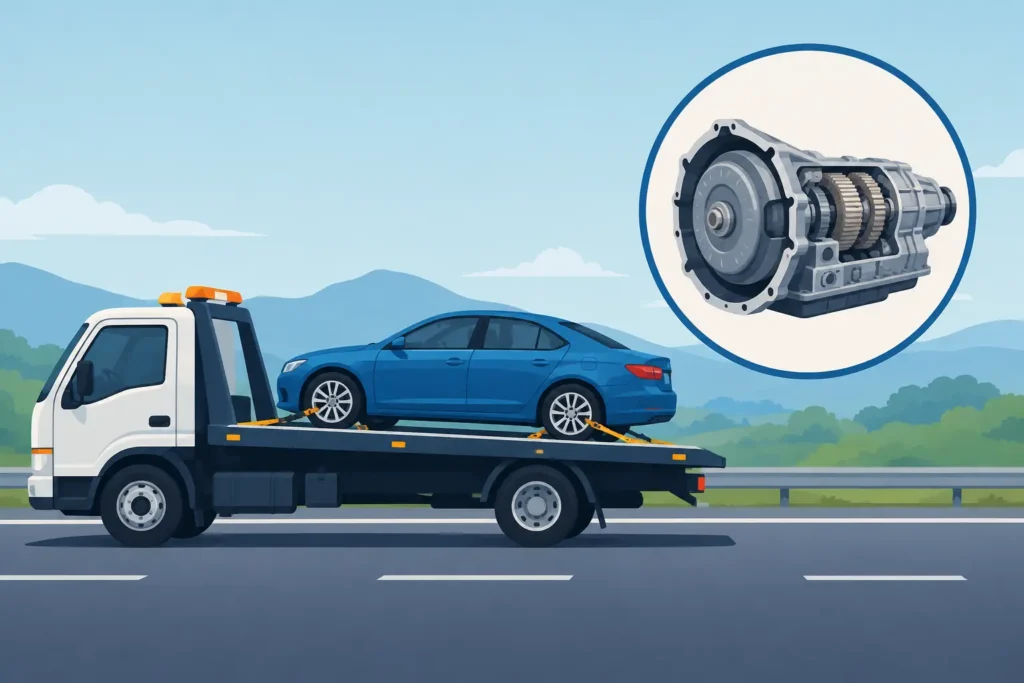
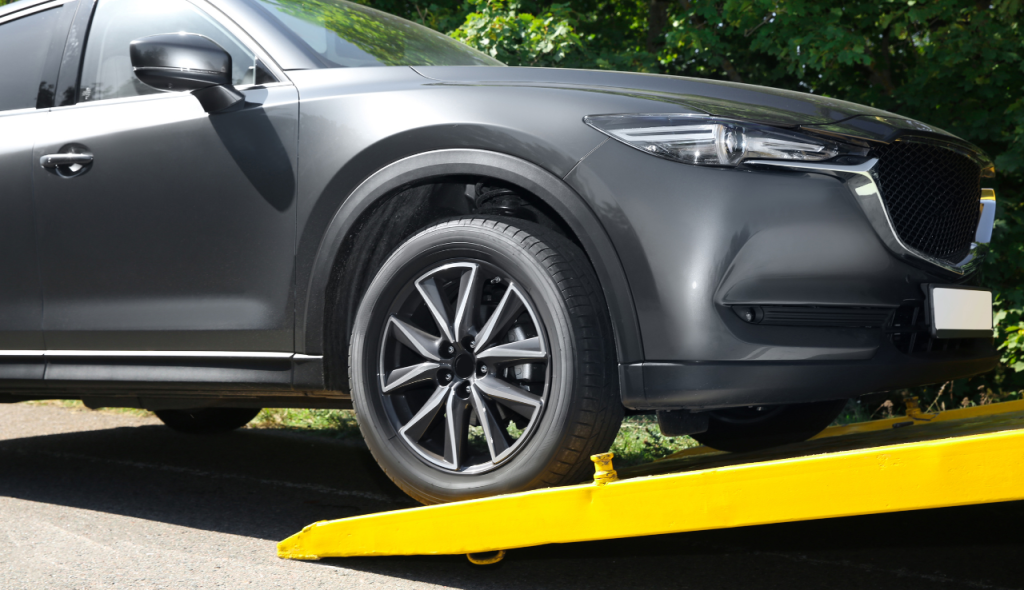
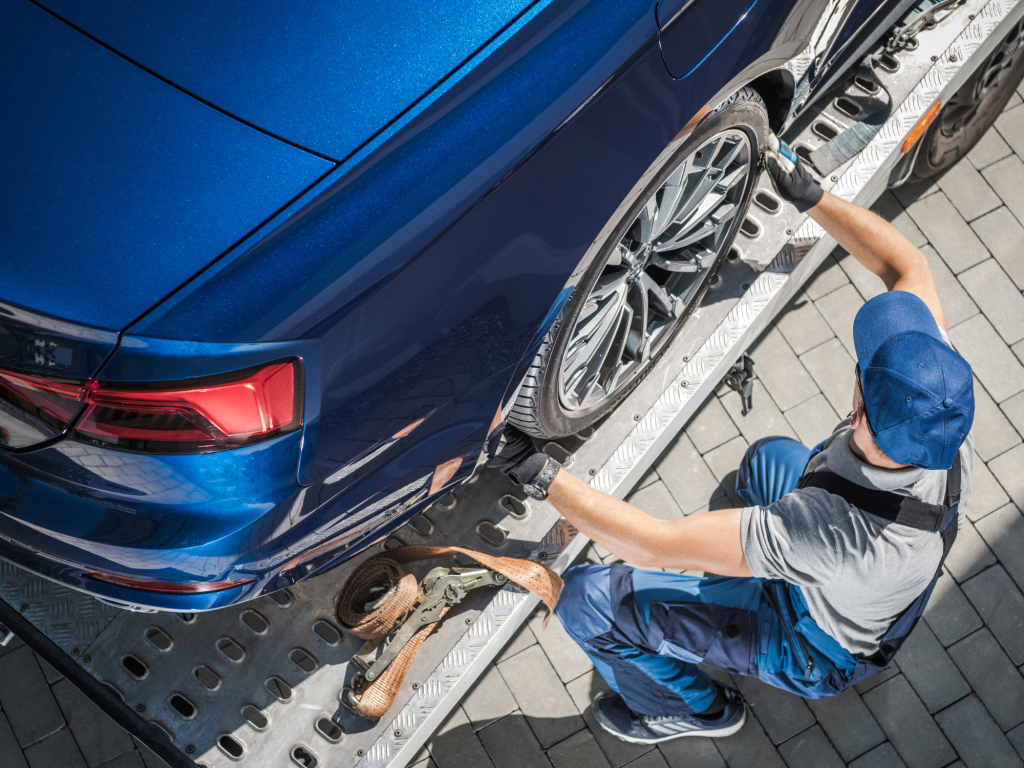
A modern flatbed is often the safest option for a non-running car, EV, hybrid, performance vehicle or vehicle with drivetrain damage. It keeps all four wheels off the ground and reduces the risk of further damage. However, flatbeds are taller and longer than most cars, which means they are not suitable for every basement or compact parking structure.
Smaller recovery equipment may be able to get closer in some situations, but that does not make every carpark recovery possible. The vehicle’s condition matters too. A locked transmission, flat battery, damaged wheel, electronic parking brake or steering fault can make it unsafe to manoeuvre a car through tight spaces.
Height clearance is the first thing to check
Look for the clearance sign at the carpark entrance. Do not estimate it from memory. A few centimetres can decide whether a tow truck can enter safely, especially where ramps rise immediately after the sign or where pipes and sprinklers sit lower inside.
If you can, tell dispatch the stated height clearance and whether the vehicle is on the ground level, a basement level or an upper deck. Photos of the entry sign, ramp and the area around the vehicle can also be useful when arranging a tow.
Keep in mind that clearance can vary within the same carpark. The main entrance may have adequate height, while a lower basement level, a turning point or an exit ramp does not. Older apartment blocks and inner-city carparks often have tighter clearances than newer retail sites.
Width, turns and ramps matter too
A carpark can have enough height but still be unsuitable for a tow truck. Narrow driveways, steep ramps, blind corners and tight turning circles may stop a truck from reaching the vehicle or exiting with it loaded.
Steep ramps need particular care. A loaded truck has a different angle and length to an empty one, and the vehicle being towed must not scrape its bumper, underbody or exhaust when transitioning onto or off a ramp. For low cars, modified vehicles and some EVs, this risk can be higher.
There may also be bollards, speed humps, ticket machines, planter boxes, roller doors or parked vehicles limiting the workable space. A professional operator will assess these conditions rather than taking a chance with your car or the property.
Carpark rules and access permissions
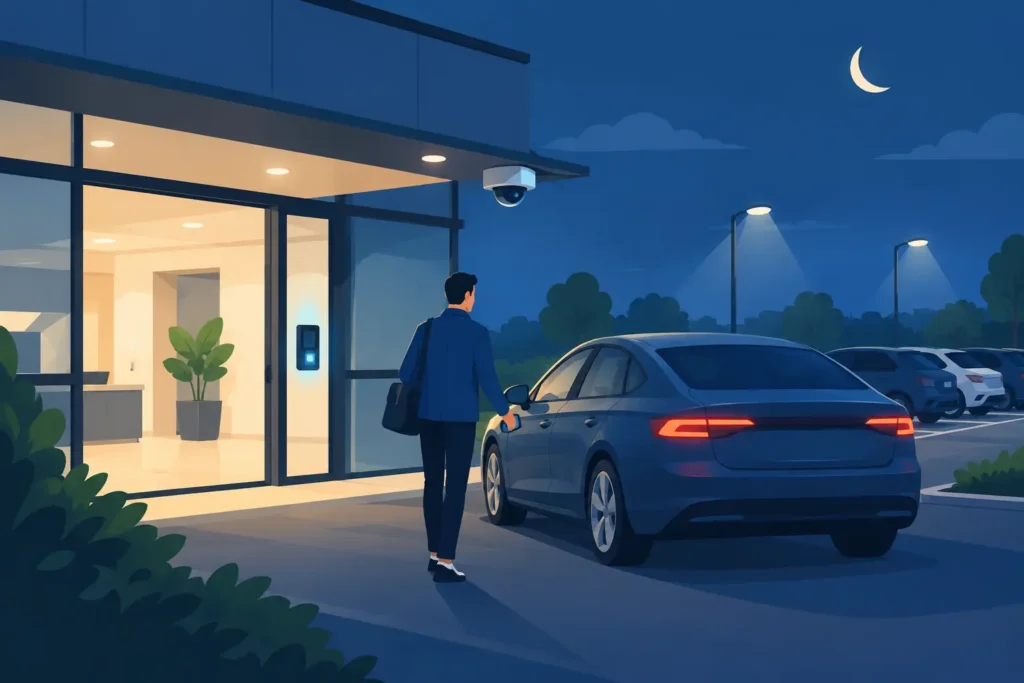
Apartment, office, hotel and shopping centre carparks are usually private property. The building manager, concierge, security team or centre management may control access, gates and loading areas. They may need to let the tow truck through, open a second gate or direct it to a designated recovery point.
If your vehicle is in a secure residential building, contact the building manager or security as soon as possible. Ask whether they can provide access for a tow truck and whether there are restrictions on vehicle size, operating hours or the use of common areas.
This is especially helpful after hours. A driver can arrive promptly, but a locked roller door or unattended boom gate can still hold up the job. Where possible, have your remote, swipe card or building contact ready.
What happens if the tow truck cannot enter?
If it is not safe for the truck to enter, there are still options. The right method depends on where the vehicle is parked, its condition and whether it can be moved without causing more damage.
If the vehicle can roll and steer safely, it may be possible to move it to an accessible area such as the street, loading bay or open-air visitor parking. This should only be done with permission and only if it is safe. Never push a vehicle up a steep ramp, into traffic or through a busy carpark on your own.
Where the car cannot be driven or rolled out, specialist equipment, a site-approved recovery plan or another vehicle-handling method may be needed. In some cases, the safest outcome is to arrange access at a different point or time. It can be frustrating, but avoiding a rushed recovery protects your vehicle, other parked cars and the building itself.
For EVs and hybrids, do not assume the vehicle can simply be pushed into neutral. Some models have specific transport modes or electronic requirements, particularly with a flat 12-volt battery. Tell the towing provider the make, model and whether the vehicle can select neutral before anyone attempts to move it.
Details to give dispatch before a carpark tow
A short, accurate description helps the towing provider assess access and send suitable equipment. Before you call, gather these details if possible:
- The carpark address and whether it is residential, commercial, retail or hospital parking.
- The entry height shown on the clearance sign and the basement or level where the vehicle is located.
- Whether there are tight ramps, sharp turns, roller doors, gates or security access requirements.
- Your vehicle make, model, registration and condition, including whether it starts, rolls, steers and can select neutral.
- Any damage or special requirements, such as a flat tyre, locked wheels, low ground clearance, an EV battery issue or a performance vehicle.
It is also worth mentioning if the car is blocking a lane, bay access or an exit. That information helps the driver plan the safest approach and gives you a clearer ETA.
Do not risk damage to save a few minutes
When a vehicle breaks down in a carpark, it is understandable to want it removed immediately. But the fastest-looking option is not always the safest. Trying to squeeze a large truck under a low beam, tow a car around a blind corner, or drag a vehicle with locked wheels can create a much larger problem.
A careful operator will be upfront if access is limited and explain the practical options. That is a better result than discovering the clearance issue after the truck arrives, or worse, damaging your vehicle while trying to make the job work.
Onigo Towing focuses on breakdown towing and clear communication, so the aim is to understand the access conditions before dispatch wherever possible. A few photos and the right details can prevent an unnecessary second attendance and get your vehicle moving sooner.
If you are stranded in a carpark, start with the clearance sign, your vehicle’s location and its condition. Then provide those facts clearly when arranging help. A safe plan may take an extra minute to organise, but it gives your vehicle the careful handling it needs.