A breakdown is stressful enough without worrying that the trip to the mechanic could cause more damage. Understanding how flatbed towing protects cars helps you choose the right transport method when your vehicle will not start, has a mechanical fault, or is not safe to drive. Rather than towing with two wheels on the road, a flatbed carries the whole vehicle securely on a level tray.
For many Melbourne drivers, that difference matters. It protects the driveline, avoids unnecessary kilometres on damaged tyres or wheels, and gives the operator greater control when loading low, electric, hybrid, performance and specialty vehicles.
How Flatbed Towing Protects Cars During Transport
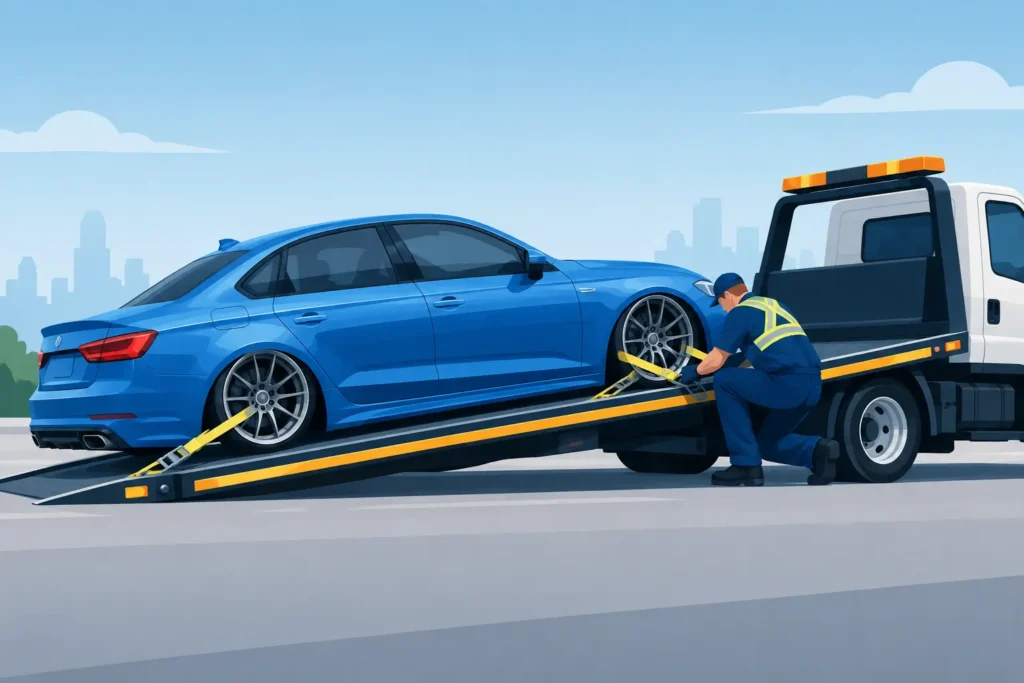
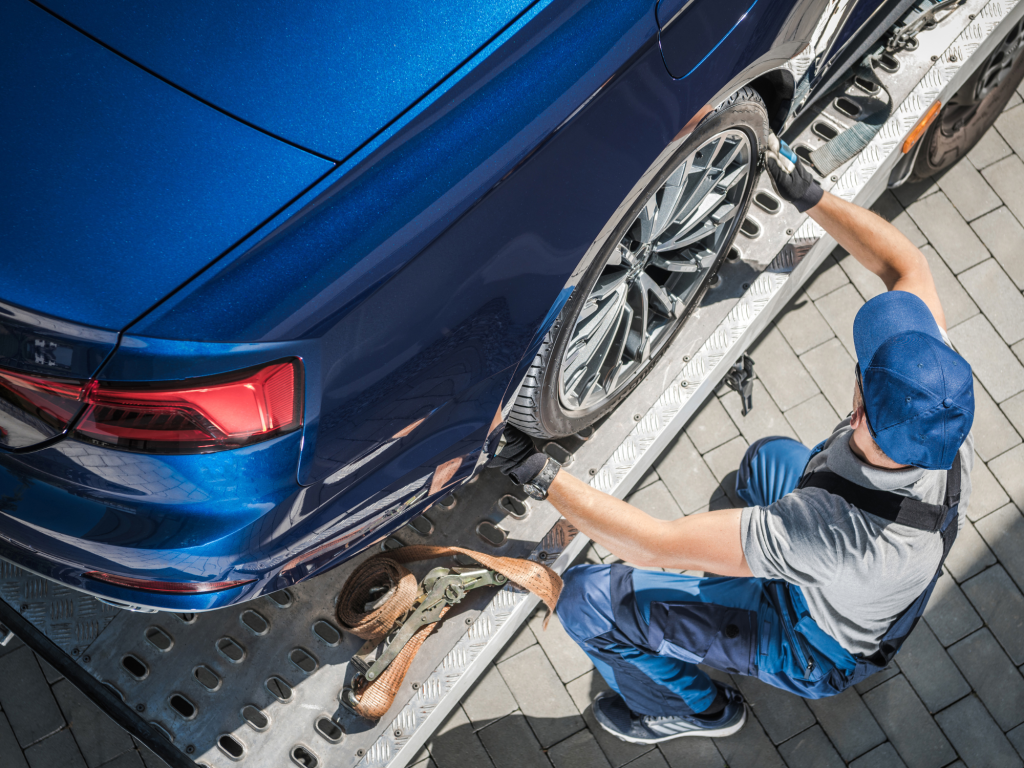
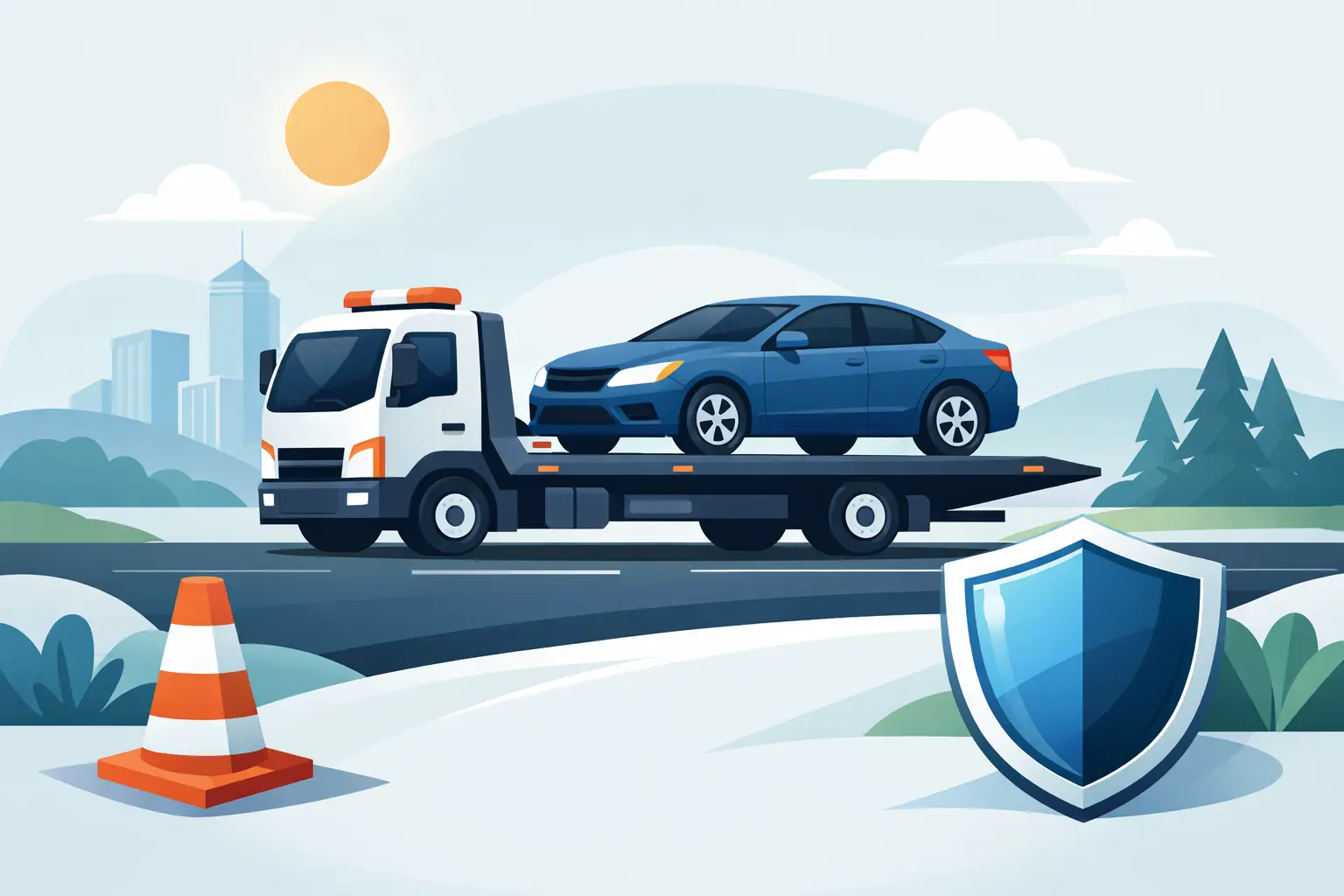
A flatbed tow truck uses a hydraulic tray that lowers or tilts towards the road. The vehicle is winched or driven carefully onto the tray, then secured at all four wheels before the tray is returned to its travelling position. Once loaded correctly, no part of the vehicle needs to roll along the road.
That is the main advantage. A vehicle with a fault stays still from pickup to drop-off, whether it is going to your preferred mechanic, back home, or further across Victoria. The transport method reduces the chance that an existing breakdown issue becomes a larger repair bill.
It avoids drivetrain damage
Not every vehicle can be safely towed with its driven wheels on the road. Front-wheel-drive cars, rear-wheel-drive vehicles, all-wheel drives and four-wheel drives all have different requirements. With some vehicles, towing in the wrong configuration can turn internal components even when the engine is off.
This can create heat and wear in transmissions, differentials, transfer cases or other drivetrain parts that rely on normal operation and lubrication. All-wheel-drive and many electric vehicles are particularly important examples because their systems are more complex and manufacturer instructions can be strict.
A flatbed removes this concern because all four wheels are off the road. It is usually the safest choice when the driveline condition is unknown, the car cannot be placed in neutral, or the manufacturer specifies full transport.
It keeps a damaged vehicle from rolling
After a mechanical failure, a car may have a puncture, seized wheel, damaged steering component, brake problem or suspension issue. Rolling that vehicle behind a tow truck can place extra stress on parts that are already compromised.
On a flatbed, the tyres do not need to carry the vehicle down the road. This is especially useful after a tyre failure on the Monash, a wheel issue on a suburban street, or a breakdown that has left the car sitting unevenly. The tow operator can assess the condition at pickup and use the safest loading approach rather than assuming the vehicle can roll normally.
It reduces clearance risks for low cars
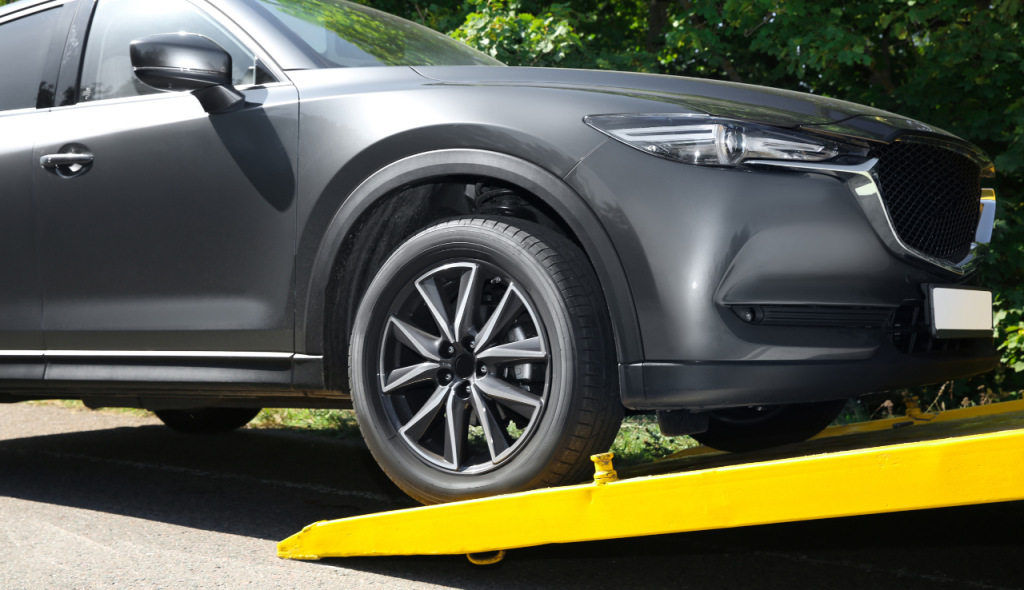
Lowered vehicles, sports cars, prestige vehicles and some EVs can be vulnerable to scraping at the front bumper, undertray, side skirts or exhaust. A rushed loading job with the wrong angle can cause damage before the tow truck has even left the kerb.
Modern flatbed equipment provides a controlled loading angle, and experienced operators can use suitable ramps or loading aids where required. Careful winching also helps when a vehicle cannot be driven onto the tray. There is no one method for every car, so vehicle height, damage location and access all need to be considered before loading begins.
Secure Wheel Restraints Matter as Much as the Tray
A flatbed is protective only when the vehicle is secured properly. Professional loading involves more than putting a car on a tray and heading off. The operator needs to position the vehicle correctly, apply suitable wheel restraints, check clearances and confirm that the vehicle is stable before transport.
Wheel restraints are designed to hold the tyres in place without relying on improvised attachment points. This helps reduce movement while the truck brakes, turns or travels over uneven roads. It also avoids putting unnecessary load on suspension, steering or body components.
For a standard passenger car, this process is usually straightforward. For a performance car, classic vehicle, motorcycle, van, ute or light truck, it may require a different setup. Weight distribution, wheel size, ground clearance and the condition of the vehicle all affect how it should be loaded and restrained.
Protection starts before the vehicle moves
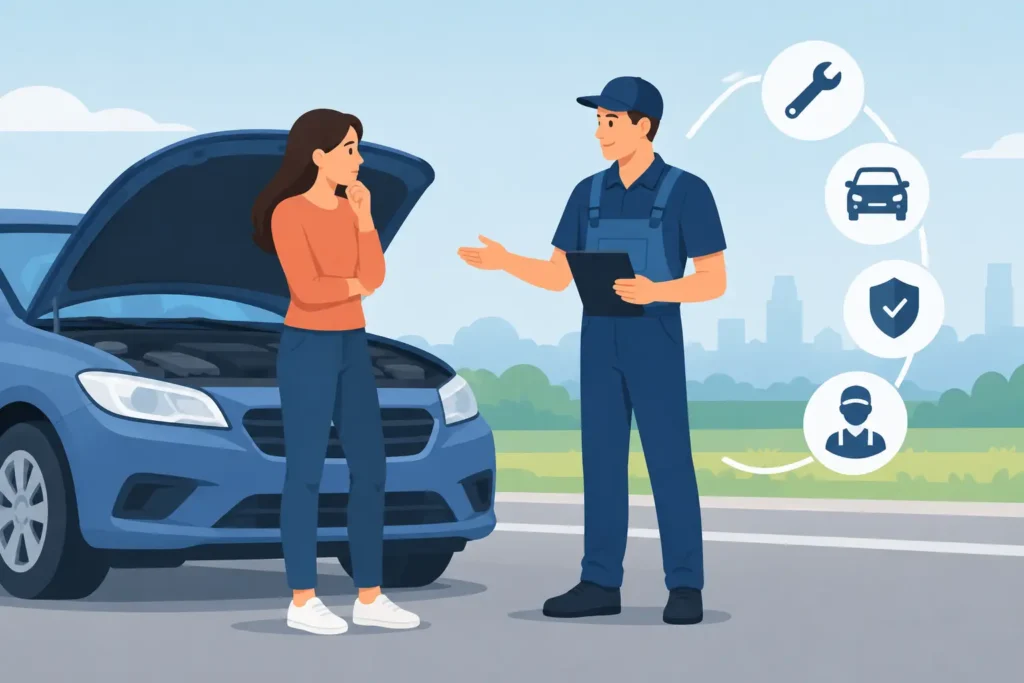
Careful towing begins with the dispatch conversation. When you call for help, details such as the make and model, the fault, whether the wheels turn, the vehicle’s location and its destination help the operator send suitable equipment.
For example, a car with a dead battery in an underground car park may present an access issue. A vehicle with locked wheels needs a different loading plan from one that simply will not start. An EV that has displayed a drivetrain warning should not be treated like an ordinary petrol car without checking its transport requirements.
Clear information does not slow down the response. It helps prevent the wrong truck arriving and lets the towing team prepare for safe, efficient loading.
Flatbed Towing Is Often Better for EVs and Hybrids
Electric and hybrid vehicles are becoming more common across Greater Melbourne, and they need informed handling after a breakdown. Their battery systems, electronic parking brakes and driveline layouts vary between models. Some should never be towed with any wheels on the ground except in very limited circumstances.
Flatbed transport is generally the conservative choice because it keeps the wheels stationary and the vehicle level. It also gives the operator space to secure the car without interfering with sensitive underbody areas. Where a vehicle has suffered a battery, charging or electrical fault, the owner should tell the towing provider exactly what warning messages appeared and whether the vehicle can be shifted into neutral.
That does not mean every EV requires the same procedure. Manufacturer guidance and the vehicle’s condition still matter. But a properly equipped flatbed gives more options and a greater margin for care than a quick tow with the wheels rolling.
When a Wheel-Lift Tow May Be Suitable
Flatbed towing is not the only legitimate method. A wheel-lift tow can be suitable for certain short-distance jobs, accessible locations and vehicles where the undriven wheels can safely remain on the road. It can also be practical where tight access makes a flatbed difficult to position.
The right choice depends on the vehicle, the fault and the pickup environment. A narrow laneway, a congested car park, a steep driveway or a low-clearance garage can change what is possible. The important point is that the method should be selected for your vehicle, not simply because it is the quickest option for the tow operator.
If there is any doubt about driveline safety, tyre condition, steering damage or ground clearance, flatbed transport is generally the more protective option. A reputable provider will explain the plan and be honest if access conditions require a different approach.
What Drivers Can Do Before the Tow Truck Arrives
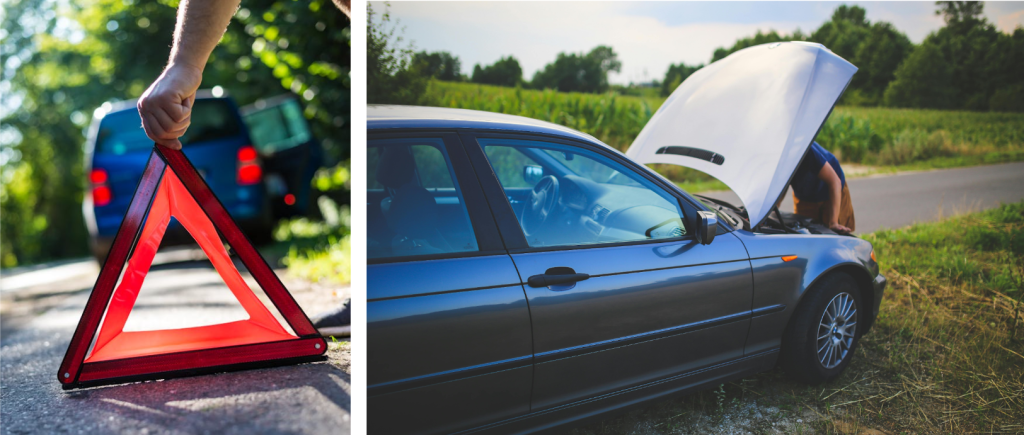
You do not need to diagnose the fault or prepare the car yourself, but a few simple steps can make pickup safer. If possible, park away from moving traffic, switch on hazard lights and wait behind a barrier or on the footpath rather than beside the vehicle. Do not keep trying to start a car that has overheated, has an oil warning light, or is making severe mechanical noises.
Take your valuables, house keys and work equipment from the cabin if the vehicle is going directly to a workshop. Let the towing provider know about low suspension, an EV or hybrid system, locked wheels, a flat battery, a parking brake issue, or any damage that may affect loading.
At pickup, confirm the delivery address and ask what will happen if the mechanic is closed. Good communication prevents a simple breakdown from becoming an after-hours storage problem.
Choosing Careful Breakdown Transport in Melbourne
The lowest quote is not always the lowest-risk option, particularly when your vehicle has a complex fault or is valuable to you. Ask whether the provider uses modern flatbed equipment, how the vehicle will be secured, and whether the price and estimated arrival time are confirmed before dispatch.
Onigo Towing focuses on breakdown transport, with 24/7 dispatch for cars, motorcycles, vans, light trucks, EVs, hybrids and specialty vehicles across Greater Melbourne. The aim is straightforward: provide clear information, careful loading and a safe trip to the destination you choose.
When your car has stopped, the best next step is often the simplest one: keep yourself safe, provide accurate details, and arrange a towing method that protects the vehicle for the repair ahead.