A lowered car can be perfectly reliable until a flat battery, overheating issue or mechanical fault leaves it stranded. To protect lowered cars towing safely, the loading method matters just as much as the destination. A car that clears driveways only just can scrape its front bar, splitter, undertray, exhaust or side skirts if it is pulled onto the wrong truck the wrong way.
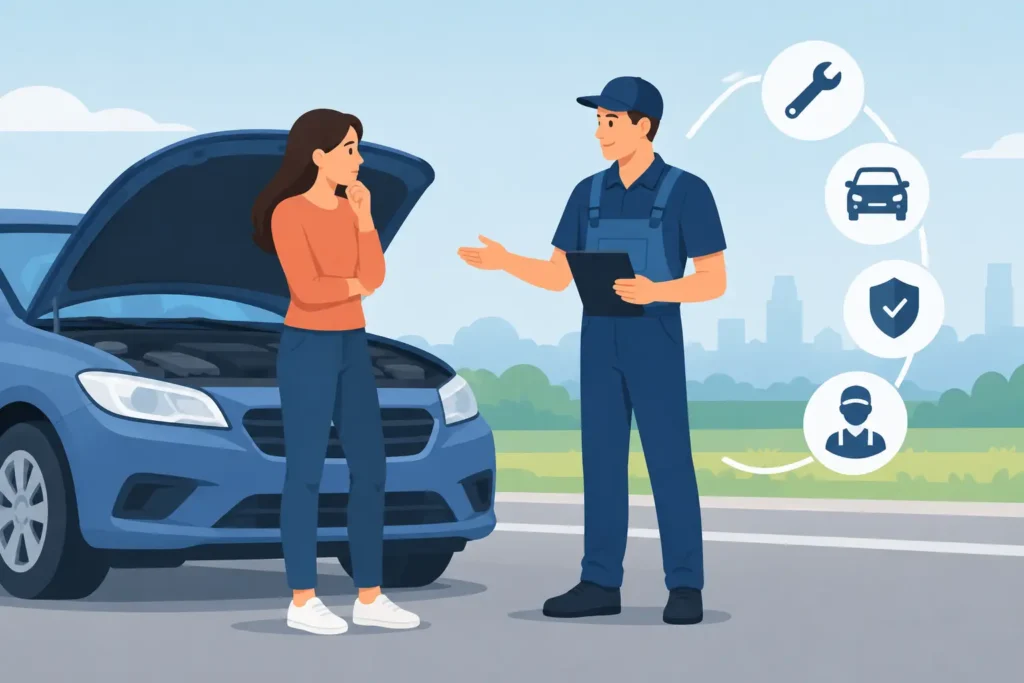
If your car has reduced ride height, do not assume every tow setup is suitable. Tell the operator before dispatch what has been modified and ask how the vehicle will be loaded. A careful breakdown tow starts with that conversation, not when the truck arrives.
Why lowered cars need a different towing approach
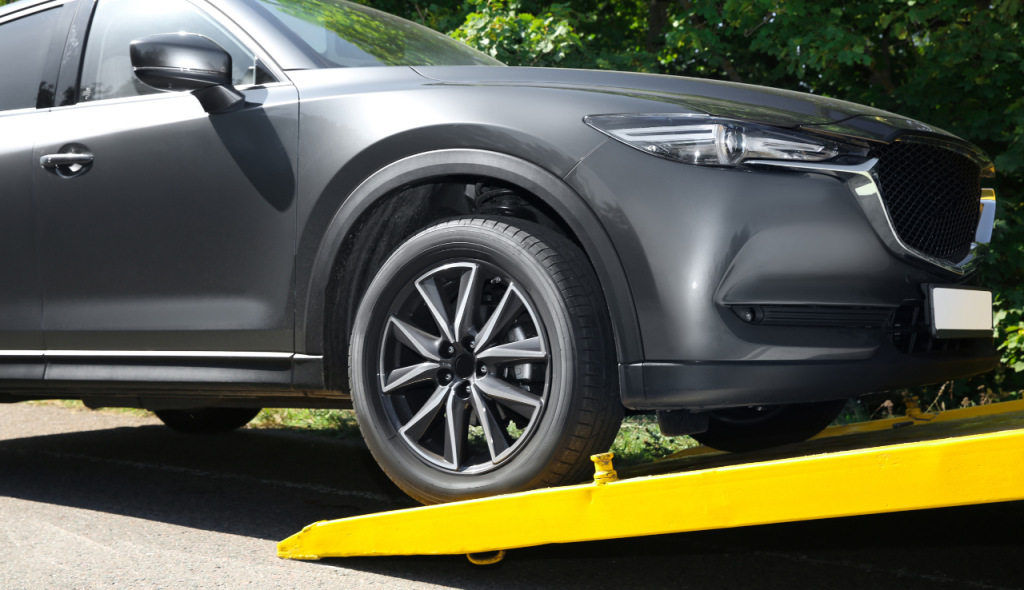
Lowering springs, coilovers, air suspension and body kits reduce the space between the vehicle and the road. That can improve appearance and handling, but it also changes the approach and departure angles. The point where the wheels meet a tilt tray or flatbed can be too steep for a low front bumper, long wheelbase or low exhaust.
The risk is not limited to cosmetic damage. Dragging a bumper can crack mounting points. A crushed undertray can expose components underneath the car, while an incorrectly positioned tie-down can damage suspension arms, brake lines or wheel finishes. Performance cars may also have wide tyres, low-profile wheels and limited approved tie-down points.
This does not mean a lowered car cannot be towed. It means the job needs suitable flatbed equipment, the right loading aids and an operator willing to take the extra time required.
Tell the tow operator exactly what is different
When requesting assistance, provide clear details rather than simply saying the car is “low”. Let the dispatcher know whether it has a front lip or splitter, aftermarket side skirts, an unusually low exhaust, air suspension, wide wheels, a long wheelbase or a locked steering wheel. If the vehicle cannot roll, is stuck in park, or has a flat tyre, say so as well.
Photos can help where you are arranging a non-urgent collection, but a good description is often enough for an emergency breakdown. Mention the make, model and approximate ride height, then explain where it is parked. A car in a tight underground car park, narrow lane or steep driveway may need a different plan from one waiting safely on a level suburban street.
Be upfront about modifications. A towing operator cannot protect clearance they have not been told about. Clear information before dispatch also helps avoid delays, unsuitable equipment and surprise charges once help arrives.
Flatbed towing is usually the safer choice
For most lowered vehicles, a flatbed or tilt-tray truck is the preferred option because all four wheels travel off the road. This reduces wear on the drivetrain and avoids the risks associated with towing a vehicle with only one axle raised. It is especially relevant for all-wheel-drive cars, EVs, hybrids and performance vehicles with specific manufacturer towing requirements.
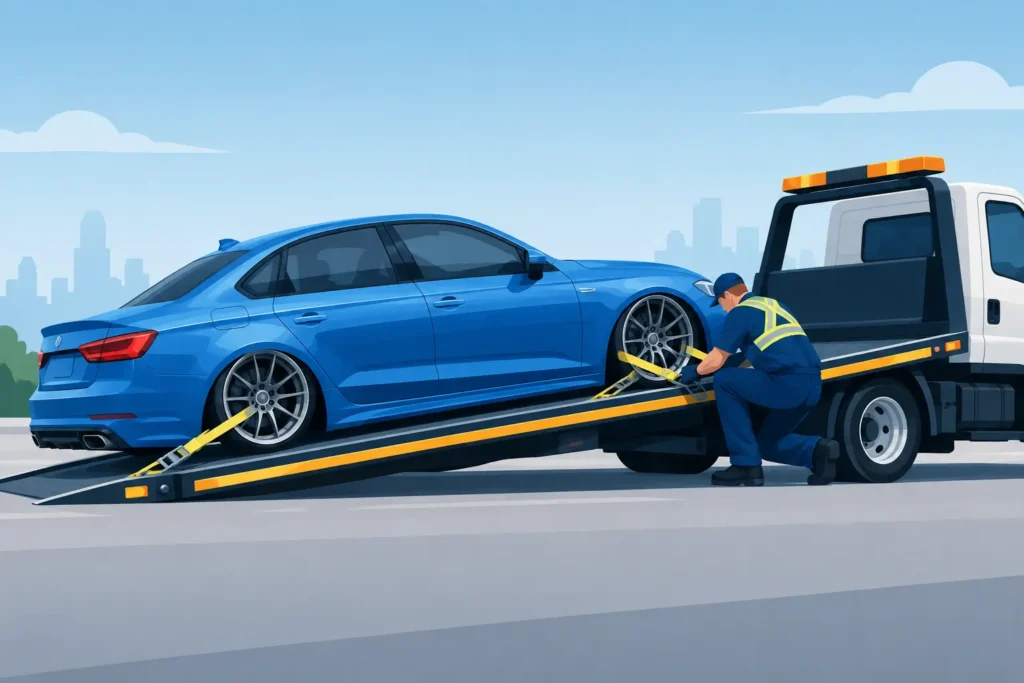
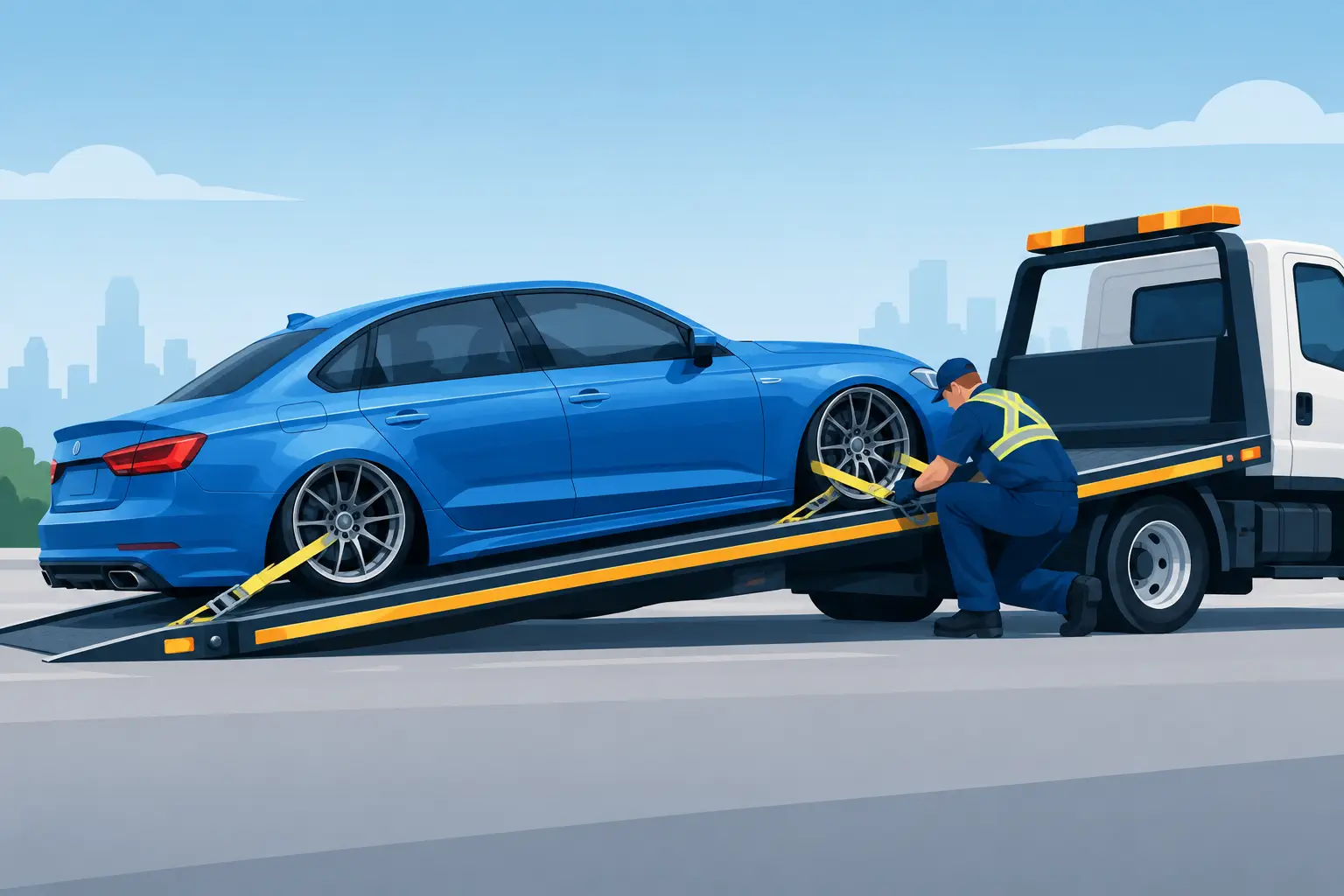
The key issue is the loading angle. A flatbed may be appropriate, but a standard ramp angle may still be too sharp for a low car. An experienced operator can reduce that angle by adjusting the tray position and using loading ramps or timber boards where appropriate. These provide a gentler transition for the front wheels, giving the bumper and underbody more clearance.
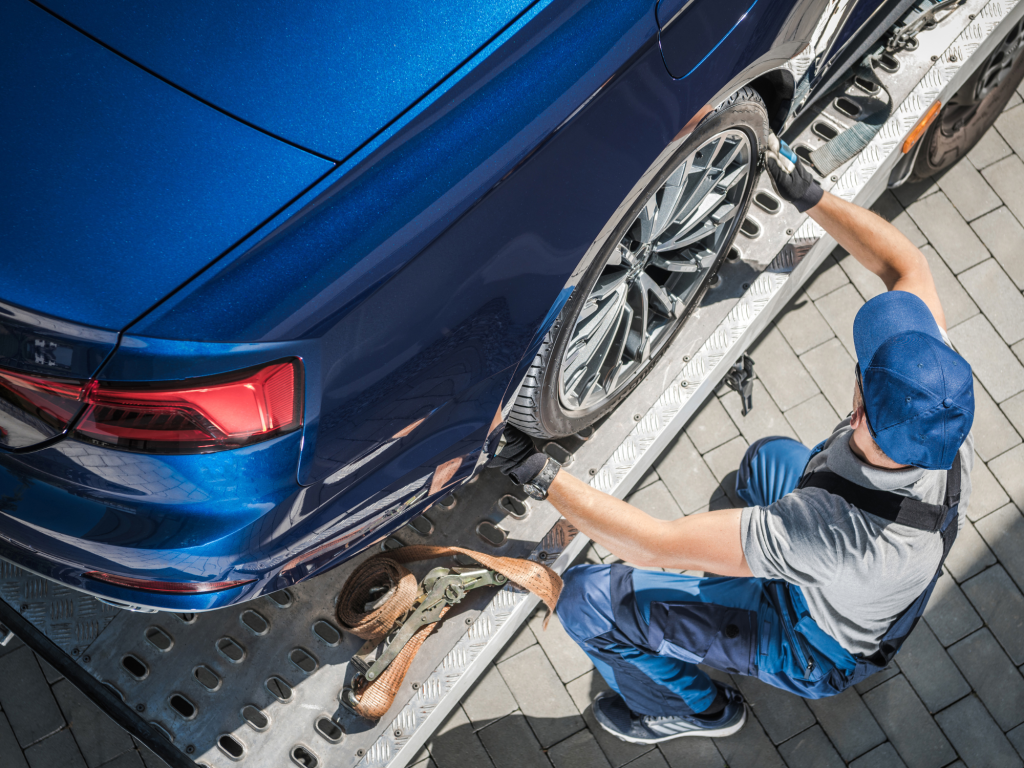
The vehicle should be winched onto the tray in a controlled manner rather than driven up aggressively. Slow loading gives the operator time to watch the front lip, wheel arches, exhaust and underside. It also prevents sudden movement if the vehicle has a mechanical issue, poor brakes or limited traction.
Why wheel straps are preferable
Where suitable, wheel straps secure the tyres rather than relying on chains or hooks attached to random parts underneath the car. Correctly fitted wheel straps reduce the chance of damage to bodywork, suspension and brake components while keeping the vehicle stable on the tray.
That said, every vehicle is different. Wide wheels, low-profile tyres, unusual wheel designs and very low guards can affect the best restraint method. The operator should inspect the vehicle and use approved securement points and equipment suited to its condition.
Check the car before loading begins
You do not need to supervise every part of the tow, but a brief walk-around is sensible when conditions allow. Point out existing scratches, damaged panels, loose bumper sections or any part that sits especially close to the ground. If the car has an air suspension setting, confirm whether it is able to raise itself and whether it is safe to do so.
Remove or secure loose items near the vehicle if they could be hit during loading. If a front splitter is already loose, tell the driver. The same applies to a damaged exhaust, hanging undertray or flat tyre. These issues do not stop a careful tow, but they affect how the vehicle needs to be handled.
Before the truck moves, check that the vehicle is centred on the tray and that no part of the body, exhaust or undercarriage is resting against the deck. The driver should also account for clearance when leaving the roadside, negotiating steep driveways and entering the destination.
Avoid these common mistakes with lowered car towing
The fastest-looking solution is not always the safest one. These mistakes can turn a straightforward breakdown into an expensive repair:
- Accepting a tow without mentioning the car is lowered or modified.
- Letting the car be loaded at speed to save a few minutes.
- Assuming a tow ball, control arm or body panel is a safe recovery point.
- Using a wheel-lift arrangement without confirming it suits the vehicle and drivetrain.
- Leaving the car in gear, with the handbrake on or steering locked when it needs to roll.
- Asking the driver to enter a steep driveway or underground car park without discussing clearance first.
If you are unsure, ask the operator to explain the loading plan. A professional tow driver will not take that as a challenge. It is a reasonable question when your vehicle has limited clearance or valuable aftermarket parts.
What to do if the car has air suspension
Air suspension can make towing easier, but only if the system is working and the vehicle manufacturer’s guidance allows it. Some cars can be raised into a service or transport mode. Others lower automatically after being switched off, have jack modes that prevent self-levelling, or require specific procedures before a wheel is lifted.
Tell the operator whether the suspension is currently raised, lowered or faulty. Do not repeatedly start the vehicle or force suspension settings if there is a warning light, damaged tyre, battery issue or mechanical fault. The safest option may be to load the car at its current height with ramps and careful tray positioning.
EVs and hybrids deserve the same level of care, with added attention to their towing instructions, battery condition and underside protection. Their battery packs are mounted low in the vehicle, so avoiding underbody contact is essential.
Choose a breakdown towing specialist, not just the nearest truck
When your vehicle will not start on the side of the road, it is tempting to book the first available tow. For a lowered car, ask a few direct questions before agreeing: Is a flatbed available? Can the truck accommodate a low-clearance vehicle? Will ramps or angle-reduction equipment be used if required? Is the quoted price confirmed before dispatch?
A clear answer is a good sign. So is an operator who asks about vehicle height, drivability and access before arriving. At Onigo Towing, this planning is part of careful breakdown transport across Melbourne, particularly where a low car, performance vehicle or specialty vehicle needs extra attention.
Price matters, but a cheaper tow can cost far more if a front bar, undertray or alloy wheel is damaged during loading. Choose a service that gives you an ETA, confirms the method and communicates if site conditions change.
Protect lowered cars towing from the moment help is called
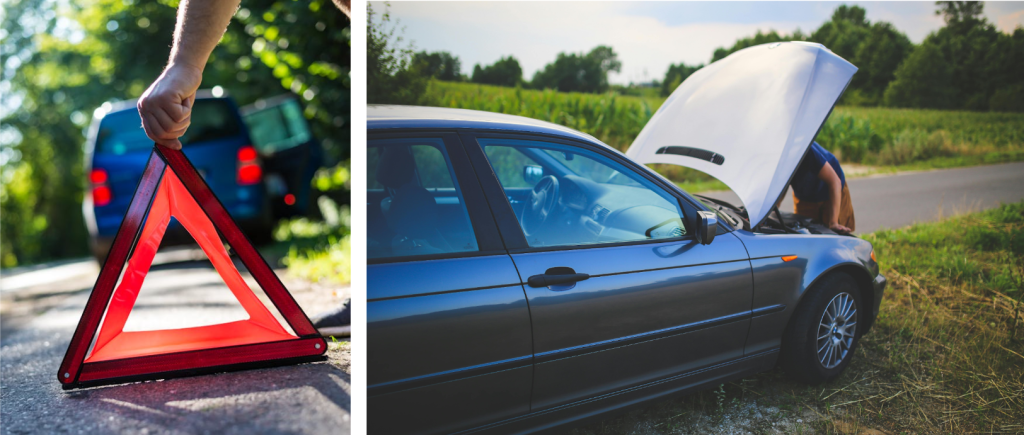
If it is safe, park on the flattest available surface and avoid stopping with the front of the car facing a deep gutter, raised driveway or sharp kerb. Turn on your hazard lights, move away from traffic and do not attempt to push the vehicle onto makeshift ramps beside a busy road.
When the tow truck arrives, share the key details again and let the operator assess the space. Careful loading may take a little longer than a standard tow, especially in poor weather, tight streets or low-clearance car parks. That extra care is worthwhile when it prevents damage to the parts that make your car yours.
A lowered vehicle deserves a towing plan built around its clearance, not a one-size-fits-all loading method. Ask the right questions, give accurate information and choose a provider that treats careful handling as part of the job.