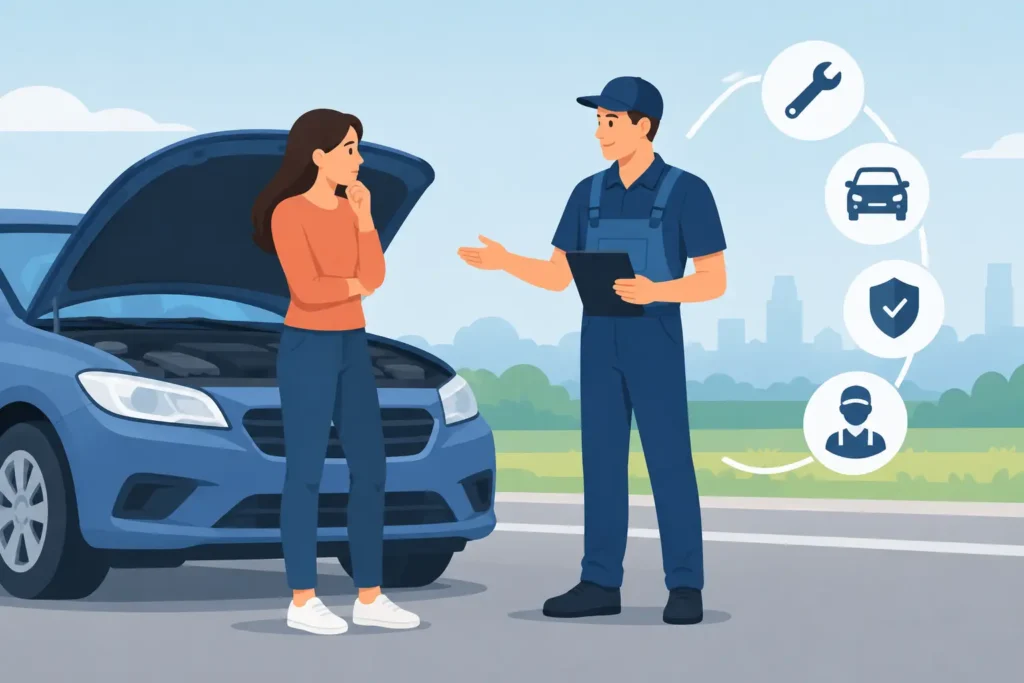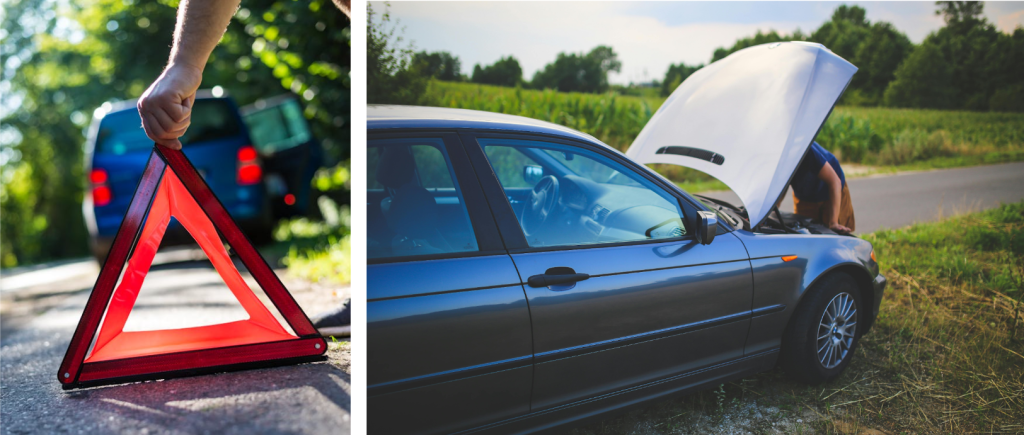
A breakdown rarely happens at a convenient time. You may be stopped on a busy Melbourne road, outside your home before work, or in a car park with a vehicle that simply will not start. Knowing what happens during tow truck pickup can take some of the pressure out of the moment and help you prepare before the truck arrives.
For a breakdown tow, the process should be clear: confirm where you are, assess the vehicle, load it safely, secure it properly and transport it to the agreed destination. A professional operator will keep you informed at each stage rather than leaving you guessing.
Before the tow truck arrives
The pickup process starts when you request assistance. The dispatcher will usually confirm your location, vehicle type, the fault or issue you are experiencing, and where the vehicle needs to go. This helps ensure the right truck and equipment are sent from the start.
Be as specific as you can about your location. A street name is helpful, but details such as the nearest cross street, travel direction, car park level, landmark or suburb can save time. If you are on a freeway or a busy arterial road, tell the dispatcher which side of the road you are on and whether you are in a safe position.
You should also mention anything that changes how the vehicle needs to be handled. This might include a locked steering wheel, flat tyres, low ground clearance, an automatic transmission that cannot be shifted, an EV, a motorcycle, a performance vehicle, or a van carrying tools. These details affect loading method, required equipment and the estimated time on site.
A reliable towing provider should give you a clear price and estimated arrival time before dispatch where possible. If access, vehicle condition or destination details could affect the price, that should be explained upfront rather than appearing as a surprise later.
While waiting, move yourself and any passengers to a safe place if it is safe to do so. Turn on hazard lights, keep clear of moving traffic and do not stand between your vehicle and passing cars. On a high-speed road, your safety matters more than retrieving belongings from the vehicle.
When the tow truck reaches you
The driver will first confirm that they have the correct vehicle and destination. They will assess where the vehicle is sitting, how much room is available to load it, and whether the area is safe to work in. On a narrow street, underground car park or busy roadside, this assessment is essential.
The driver should inspect the vehicle’s condition before loading. This may include checking for existing marks, panel damage, flat tyres, loose parts or issues that could affect the tow. Photos may be taken as a record. This is not about making the process difficult. It protects both you and the towing operator by documenting the vehicle’s condition before transport.
You may be asked for the keys, or to remain nearby while the vehicle is prepared. If the car can be placed in neutral and the steering can be unlocked, loading is generally more straightforward. If it cannot, the driver may use dollies, skates or another suitable method to move it without dragging or damaging the drivetrain.
If you have personal items to collect, do so before loading where practical. Check the glove box, centre console, boot and any phone mounts or chargers. Remove valuables and make sure pets, passengers and loose cargo are out of the vehicle. For commercial vans and utes, secure tools and equipment so they cannot move during transport.
How the vehicle is loaded
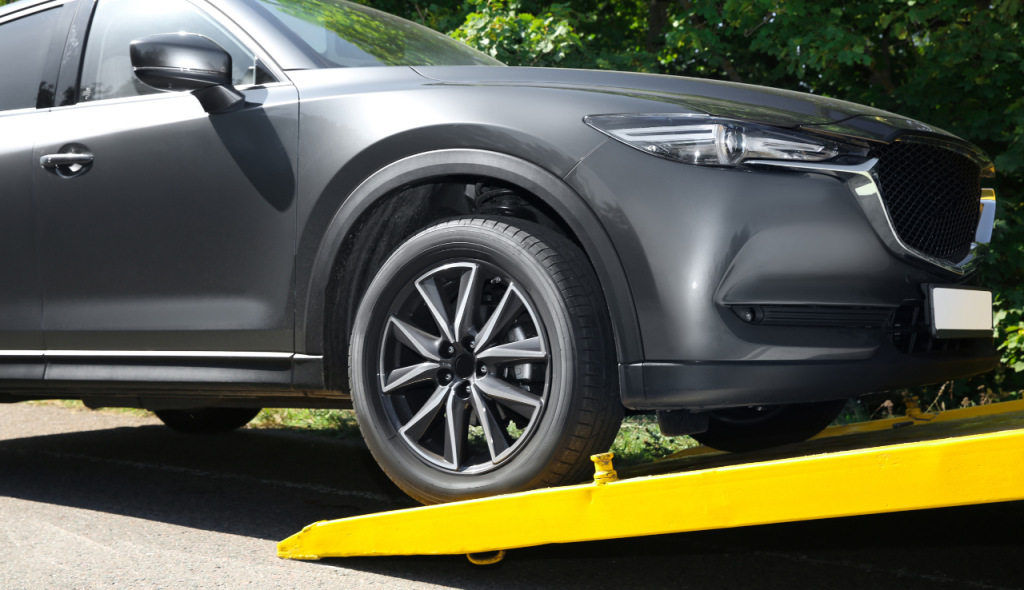
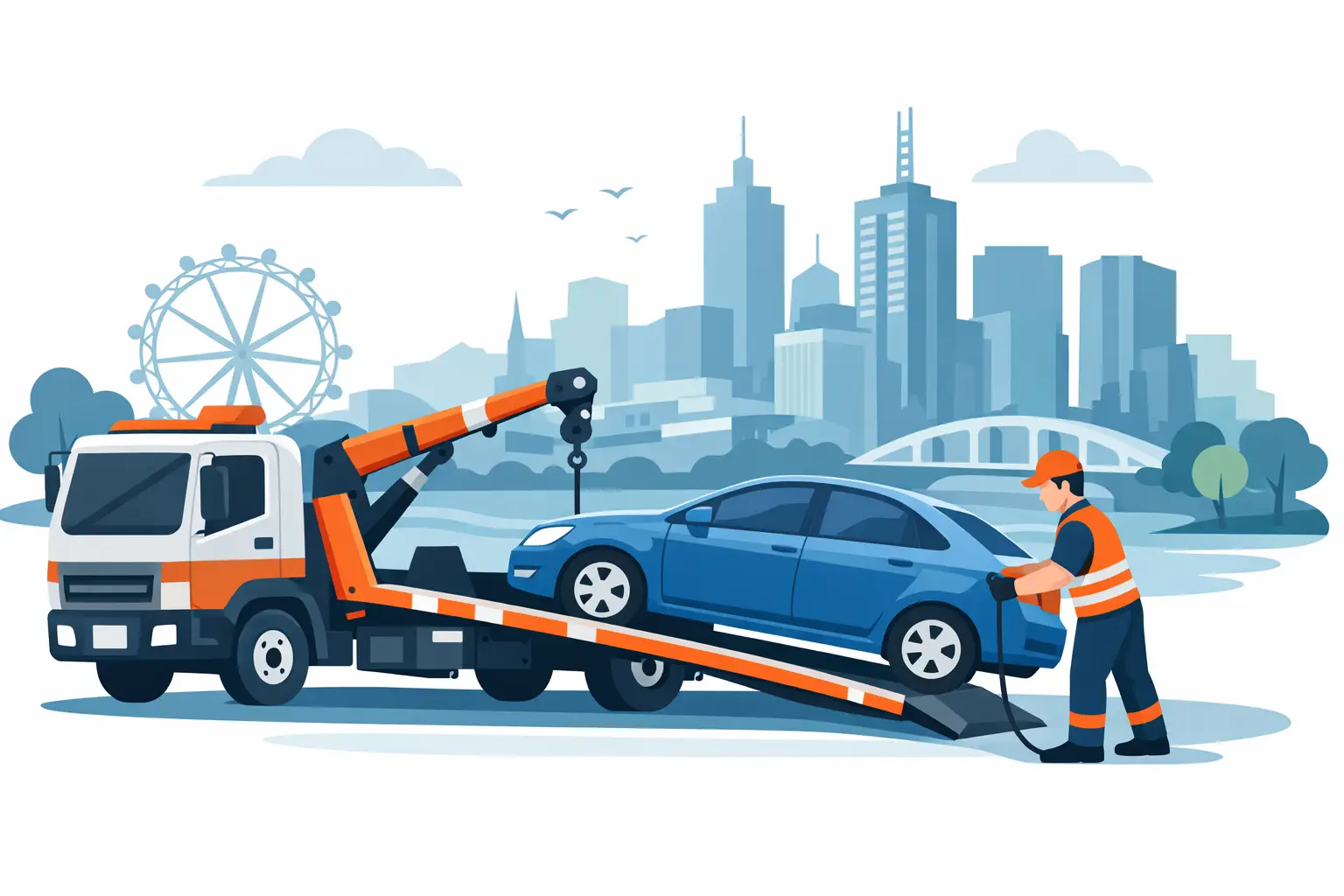
For many breakdown jobs, a flatbed truck is the preferred option because all four wheels can be carried off the road. This is particularly useful for EVs, hybrids, all-wheel-drive vehicles, low-clearance cars, prestige vehicles and cars with mechanical faults that make conventional towing unsuitable.
The driver will position the truck, lower or tilt the tray, then attach the vehicle using the appropriate recovery points or wheel restraints. They should not simply hook onto a convenient part under the bumper. The right attachment point depends on the vehicle and its condition.
A winch is commonly used to guide the vehicle onto the tray in a controlled way. The driver may ask you to stand back while this happens. Keep a safe distance and follow their directions, particularly if the vehicle is on an incline or close to traffic.
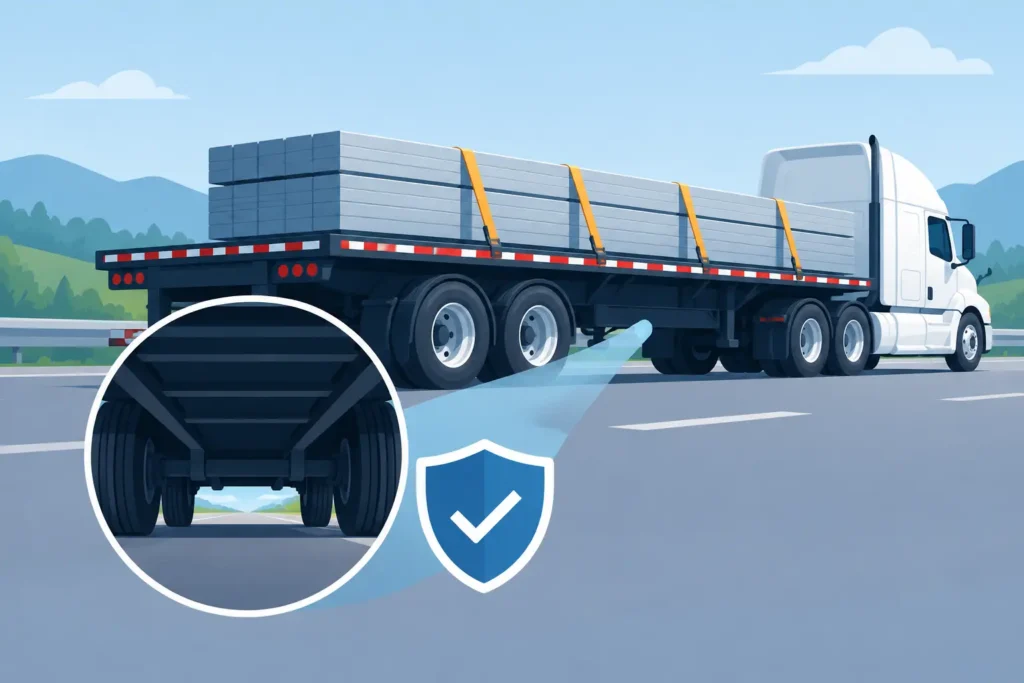
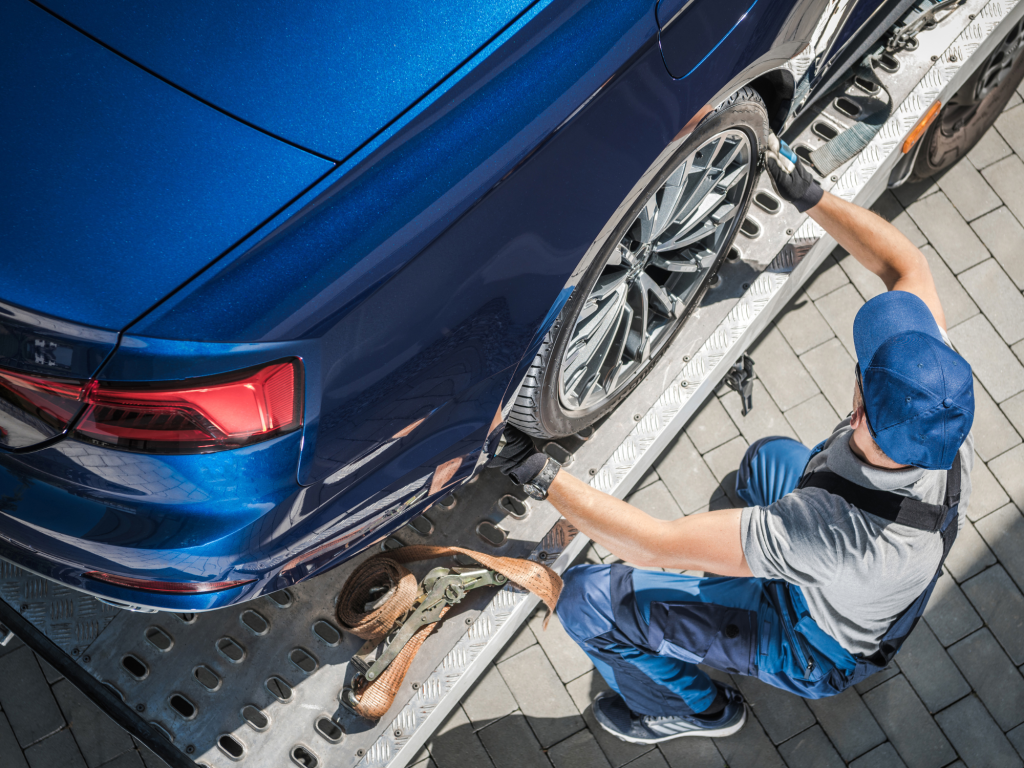
Once the vehicle is on the truck, it is secured with rated wheel straps, tie-downs or other approved restraints. The driver checks that the vehicle is stable and that nothing is likely to rub against bodywork, suspension components or brake lines. For motorcycles, specialist straps and secure positioning are particularly important to prevent movement in transit.
Why loading method matters
There is no single towing method that suits every vehicle. A wheel-lift may be appropriate for some short, straightforward moves, while a flatbed is often the safer choice for a non-running vehicle or one with drivetrain concerns. The best method depends on the car, the fault, access conditions and the distance being travelled.
EVs and hybrids need extra attention because incorrect towing can damage motors, driveline components or high-voltage systems. If you drive one, tell the dispatcher when you call. The same applies to lowered cars, vehicles with air suspension, classic cars and vehicles with unusually wide tyres.
Careful loading is not just about avoiding visible damage. It is about protecting mechanical components that may already be vulnerable after a breakdown.
Paperwork, destination and payment
Before the truck leaves, the driver will confirm the delivery address and make sure it is the correct mechanic, dealership, home address or storage location. If the workshop is closed, check whether the vehicle can be left there and where the keys need to go. Some workshops have an after-hours key drop, while others require the vehicle to be delivered during business hours.
You may be asked to approve a towing authority or job record. Read it before signing, especially the pickup location, vehicle registration, destination and quoted service. If anything is different from what you discussed, ask the driver to clarify it on the spot.
Payment arrangements vary, but the amount and method should be discussed clearly. For an urgent breakdown, clear pricing before dispatch gives you one less issue to manage at the roadside.
If you are travelling with the tow truck, confirm that before the job begins. Passenger arrangements depend on the truck, available seating, safety requirements and the driver’s route. If you cannot travel in the truck, organise a lift, rideshare or collection from a friend or family member while the vehicle is transported.
During transport and delivery
The driver will take the vehicle to the agreed destination, using a route suitable for the truck and load. You do not need to follow closely behind, especially if your vehicle is being taken to a mechanic and you have another safe way to travel.
At delivery, the vehicle is unloaded carefully and placed in the safest practical position. At a workshop, this may be in a designated drop-off area. At home, it may be on the driveway or another accessible location. If the vehicle cannot be driven, the exact placement matters, as moving it again may require further equipment.
The driver should check the vehicle after unloading and finalise the job record. If keys are being left with a workshop, make sure you know where they have been placed and advise the workshop that the vehicle has arrived. Take a photo of the vehicle at delivery if you will not be there in person.
What you can do to make pickup quicker
The fastest pickup is usually the one where the tow operator has accurate information before arriving. Keep your mobile on, answer calls from the dispatcher or driver, and send clear location details if requested. If you are parked in a complex, gated property or underground area, explain height limits, entry instructions and any access issues.
Have your registration, destination and preferred contact details ready. If you know your vehicle has special towing instructions in the owner’s manual, mention them. You do not need to diagnose the mechanical problem yourself. A simple description such as “won’t start”, “overheating”, “flat battery”, “gearbox issue” or “flat tyre and no spare” is enough to help plan the job.
For Melbourne drivers dealing with an unexpected mechanical failure, a dedicated breakdown towing service such as Onigo Towing should make the process feel controlled, not complicated. The right operator will explain what is happening, use suitable equipment and treat your vehicle as carefully as they would expect their own to be handled.
If your car is safely loaded and you have confirmed where it is going, you have already solved the hardest part of the breakdown. Keep the tow receipt and job details handy, then let your mechanic focus on getting you back on the road.