A lowered car can turn a routine breakdown into a damage risk before it even reaches the workshop. Low bumpers, splitters, side skirts, exhausts and suspension components sit closer to the road, leaving very little room for an unsuitable towing method. Safe towing for lowered cars starts with recognising that ground clearance is not a minor detail – it determines how the vehicle must be loaded, secured and transported.
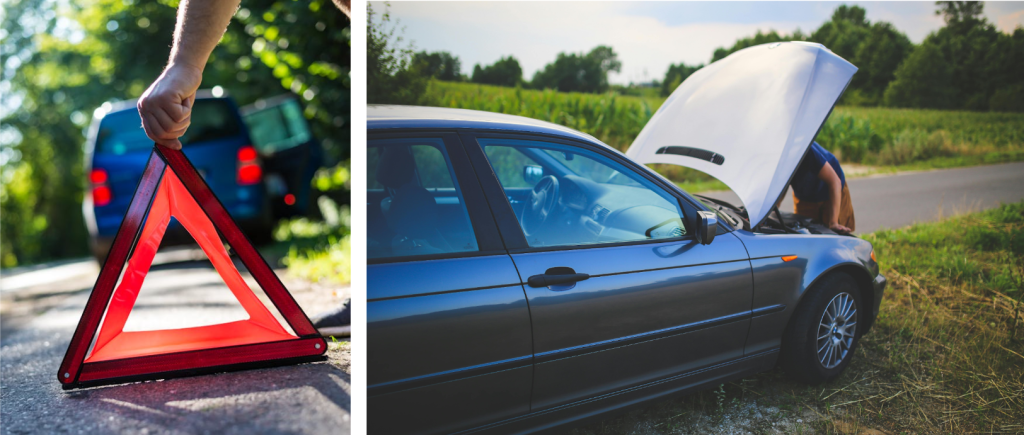
If your car will not start, has a flat battery, overheating issue or mechanical fault, tell the towing operator that it is lowered before dispatch. A clear description of the vehicle, including whether it has an aftermarket body kit, air suspension or a very low front lip, helps ensure the right truck and loading equipment arrive.
Why lowered cars need a different towing approach
Standard-height vehicles often have enough clearance to roll onto a tow tray with minimal adjustment. A lowered vehicle may scrape its bumper or underbody at the transition from road to ramps. Even if the visible bodywork clears, the chassis rails, exhaust, sump, transmission pan or suspension arms may not.
The risk is not limited to cosmetic scuffs. For performance cars and modified vehicles, an incorrect approach angle can crack a splitter, damage carbon-fibre trim, pull loose undertrays or place pressure on parts that were never designed to carry the vehicle’s weight. A wheel-lift tow can also be unsuitable for many lowered cars, particularly where the vehicle is undriveable or clearance is extremely limited.
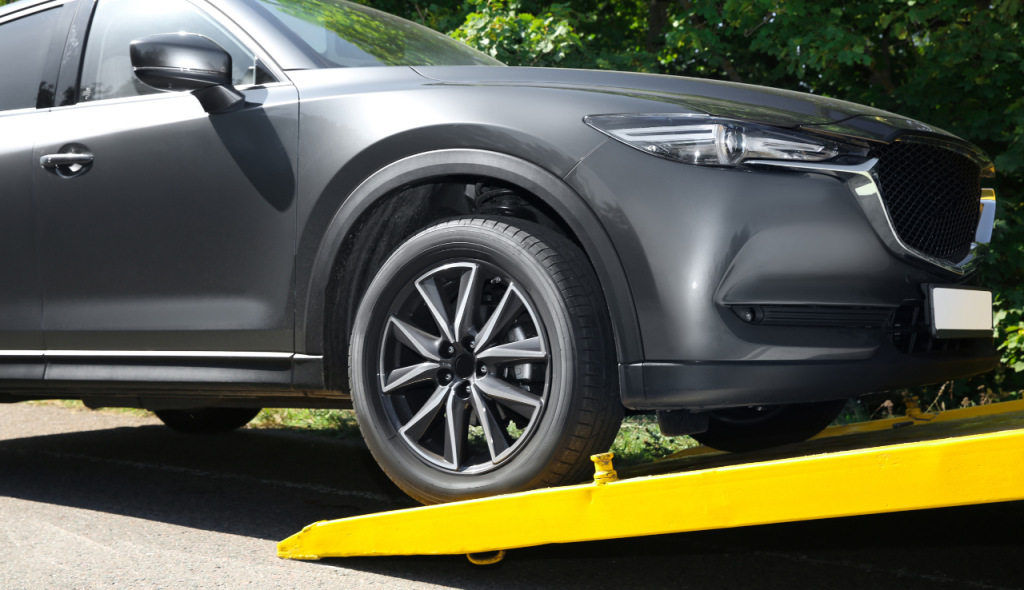
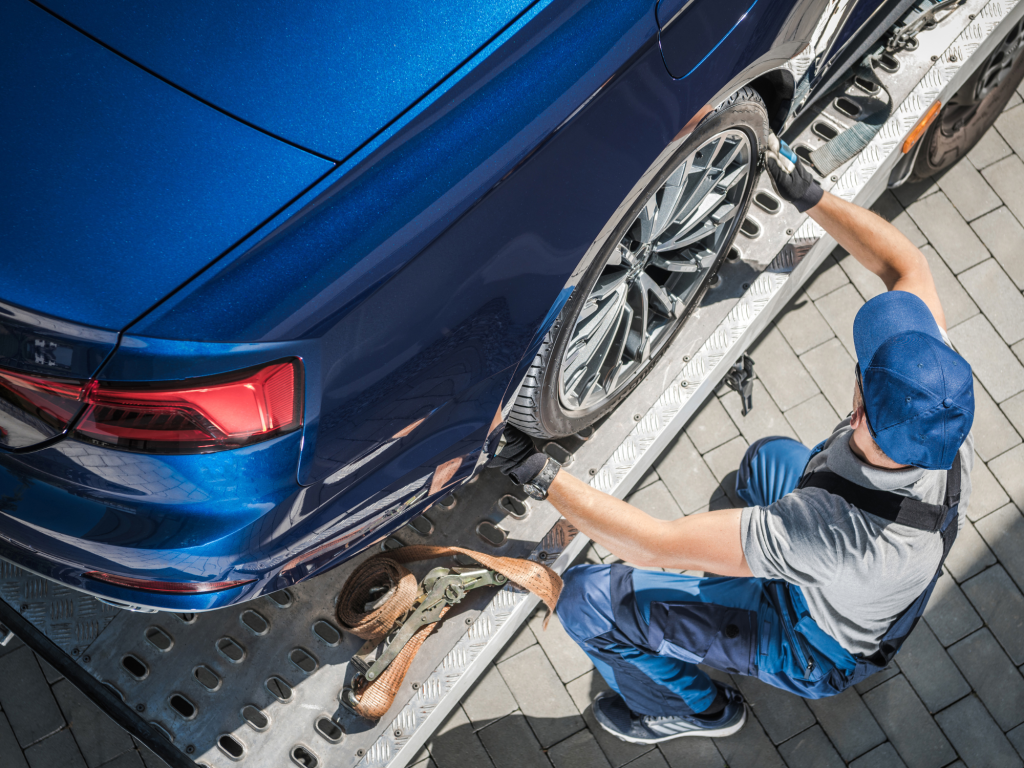
A properly equipped flatbed is generally the safer choice. It carries all four wheels off the road, avoids unnecessary rolling and gives the operator greater control during loading. That does not mean every flatbed setup is automatically safe. Ramp angle, winch technique and tie-down placement still matter.
Safe towing for lowered cars begins before loading
The best time to prevent damage is when booking the tow. Give the dispatcher practical information rather than assuming the vehicle’s appearance will explain everything when the truck arrives. Mention the make and model, the fault, whether it can roll and steer, and how low the car sits. If it has a front splitter, side skirts, adjustable suspension, wide wheels or an especially low exhaust, say so.
It also helps to explain where the vehicle is parked. A lowered car in a tight underground car park, on a steep driveway or beside a busy Melbourne road may need a different loading plan than one sitting level in a residential street. Access restrictions, low ceilings and traffic conditions can affect which truck is suitable and where the loading can be carried out safely.
Before the tow operator begins, remove loose items from around the vehicle and keep passengers clear of the loading area. If the car is stopped on a roadside, move to a safe position away from traffic where possible. Do not stand between the vehicle and the truck, and do not try to guide the car by pushing it while it is being winched.
The operator should check clearance and condition
A careful operator will assess the approach angle, look for low-hanging components and identify the safest winch point before moving the vehicle. They should also check whether the wheels are locked, whether the steering works and whether the car can be placed in neutral.
For modified cars, photographs of the vehicle’s condition before loading can be sensible, especially if it already has damage. This is not about creating extra fuss during a stressful breakdown. It is a straightforward way to keep the process clear and protect everyone involved.
How a lowered car should be loaded onto a flatbed
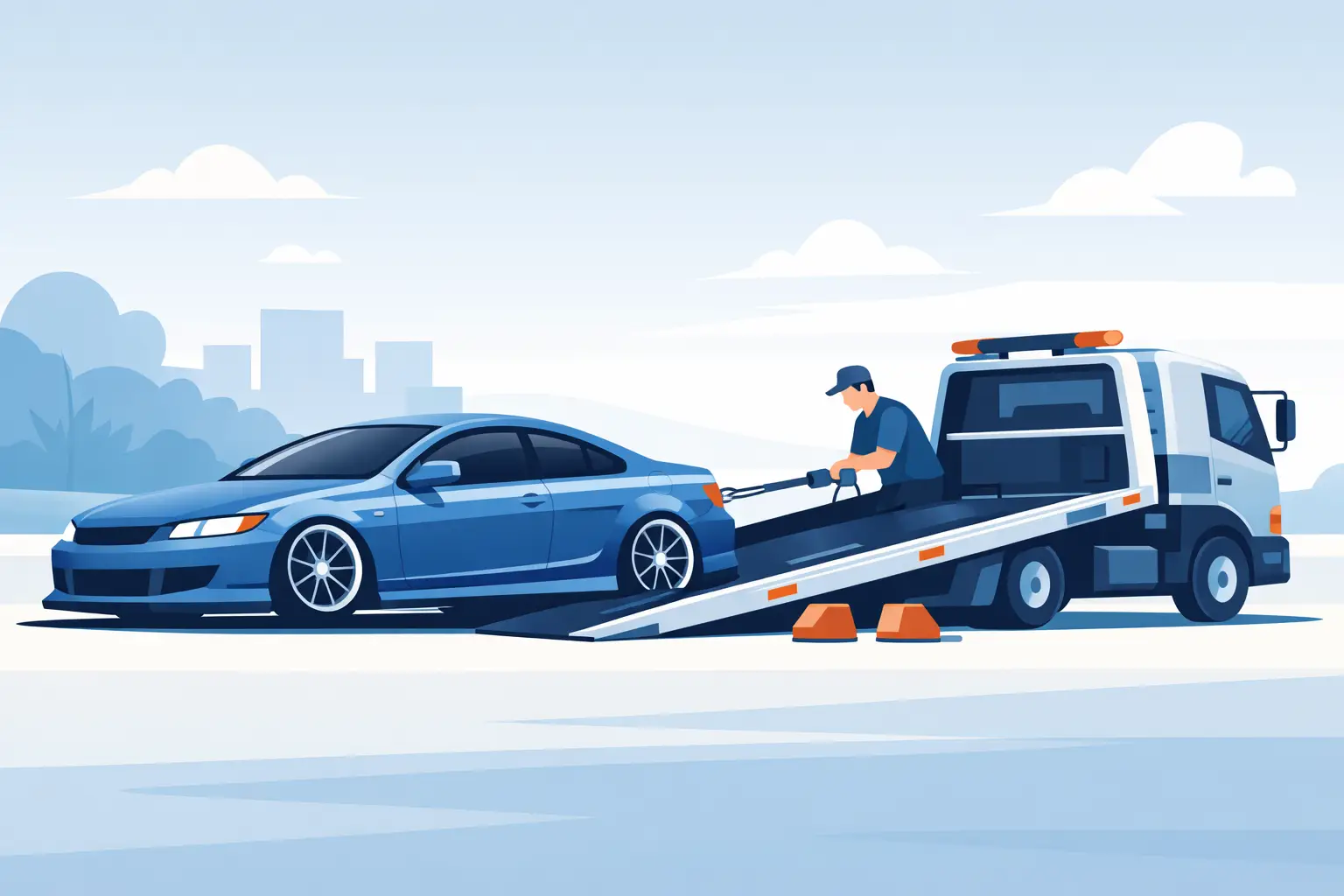
The key issue is reducing the angle between the road and the tray. Longer ramps, extended ramp sections or low-angle loading aids can create a gentler path for the front bumper and underbody. In some situations, ramp extensions or carefully placed blocks may be used to reduce the breakover angle further.
The car should be winched slowly and in a controlled manner, rather than driven aggressively onto the tray. Winching is particularly useful when a vehicle has a mechanical fault, limited clearance or a clutch, transmission or cooling problem that makes driving unsafe. Slow loading gives the operator time to stop if a component is close to touching.
The correct winch connection matters just as much as the ramp angle. A vehicle should only be pulled from a suitable manufacturer-approved recovery point or another appropriate structural point. Connecting a winch to a suspension arm, steering component, bumper reinforcement or cosmetic tow hook without checking suitability can cause expensive damage.
Some lowered cars cannot be loaded from the front due to clearance or the location of a fault. In those cases, loading from the rear may be safer, provided the vehicle design, parking position and towing plan allow it. There is no single method that suits every lowered vehicle. The right choice depends on clearance, drivetrain, damage, access and the vehicle manufacturer’s towing guidance.
Securing the vehicle without harming it
Once on the tray, the vehicle needs to be restrained securely for the entire trip – not just held in place well enough to leave the kerb. The preferred method is generally wheel straps positioned around the tyres, with the straps and attachment points clear of brake lines, bodywork and vulnerable suspension components.
Tyre straps allow the suspension to move naturally over road surfaces while keeping the vehicle stable on the tray. Chains or hooks placed incorrectly around suspension parts can mark, bend or overload components. This is especially relevant for cars with lowered coilovers, aftermarket control arms or low-profile tyres, where there is less room to work and less tolerance for poor placement.
The operator should confirm that the parking brake, transmission setting and restraint arrangement suit the vehicle. For EVs, hybrids and all-wheel-drive cars, towing procedures can vary significantly. Many must be transported with all wheels off the ground, and some have specific requirements for transport mode, electronic parking brakes or recovery points.
Common mistakes that put lowered cars at risk
The most common problem is treating a lowered car like any other breakdown tow. Short, steep ramps can catch the front lip. Rushing the winch can make a minor clearance issue worse. Using an unsuitable tie-down point may damage parts that look solid but are not designed for towing loads.
Another mistake is failing to disclose modifications. A tow provider cannot plan for a low splitter, air suspension fault or unusually low exhaust if they have not been told about it. Be upfront, even if the car only looks slightly lower than standard. A few details at the start can prevent delays and help the operator arrive prepared.
It is also wise not to insist on a cheap or quick method when the vehicle needs specialist handling. A short trip to a nearby mechanic can still cause damage if the loading process is wrong. The trade-off is simple: taking a little more time to load correctly is usually far less costly than repairing a cracked bumper, undertray or exhaust system.
What to ask when arranging a tow in Melbourne
When your car is immobilised, you do not need a long technical conversation. Ask whether a flatbed tow truck can be provided and explain that the vehicle is lowered. Confirm that the operator can use low-angle ramps or suitable loading aids where required, and ask for the price and estimated arrival time before dispatch.
If the vehicle is a performance car, modified street car, classic car or EV, mention that too. Clear communication helps the dispatcher allocate the right equipment rather than sending a general towing setup that may not suit the job. A dedicated breakdown towing provider such as Onigo Towing can assess the situation before arrival and focus on getting your vehicle safely to your home, mechanic or preferred destination.
A lowered car deserves patience at the kerb. Choose a provider that asks the right questions, uses appropriate flatbed equipment and is prepared to load the vehicle carefully. When clearance is limited, careful handling is not an extra – it is the service.