A motorcycle that will not start on a busy Melbourne road is more than an inconvenience. Leaving it unsecured while you search for a lift can put you, other road users and the bike at risk. Knowing how to transport a motorcycle safely helps you make the right call quickly, whether it needs to go to a nearby mechanic, your home or across Victoria.
The safest option depends on the bike, its condition, the distance and where it has broken down. A lightweight dirt bike can be moved differently from a large touring bike, electric motorcycle or prized classic. For a roadside breakdown, professional motorcycle towing on a purpose-equipped flatbed is usually the safest and least stressful choice.
Start by making the roadside safe
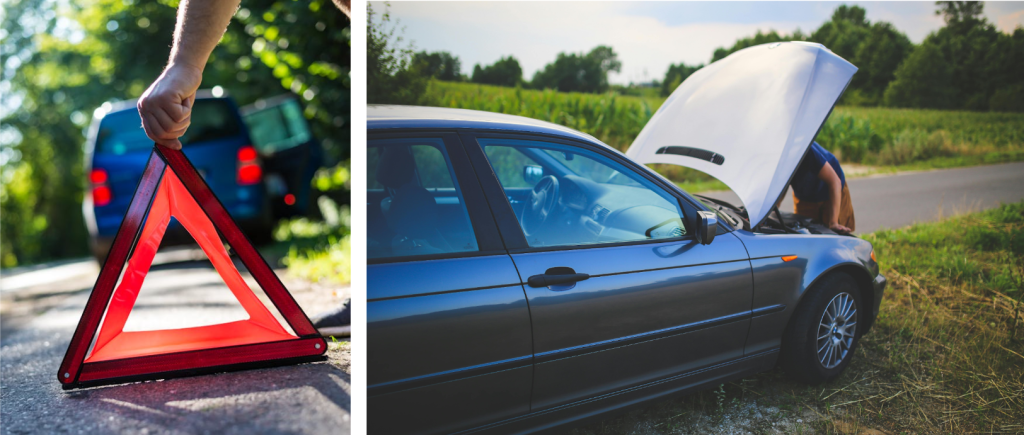
Before thinking about transport, move yourself out of danger. If the motorcycle can be safely rolled, get it clear of the traffic lane and onto a level, visible area. Avoid stopping on a blind bend, narrow shoulder or soft verge if there is any safer option nearby. Turn on hazard lights if fitted, wear high-visibility gear if you have it, and stand well away from moving traffic.
Do not keep trying to start a bike that has stalled due to an unknown mechanical fault. Repeated cranking can flatten the battery, while riding with an engine, clutch, brake, tyre or chain issue can turn a manageable breakdown into a serious repair. If there is fuel leaking, smoke, a burning smell or damaged wiring, keep clear of the motorcycle and do not attempt to load it yourself.
Take a few photos of the bike and its position if it is safe to do so. They can be useful for recording its condition before transport, particularly if the bike has fallen over or been damaged by a mechanical failure.
Choose the right way to transport a motorcycle
There are several ways to move a motorcycle, but they are not equally suitable for every situation. The best method is the one that keeps the motorcycle upright, properly restrained and protected from avoidable damage.
Flatbed motorcycle towing
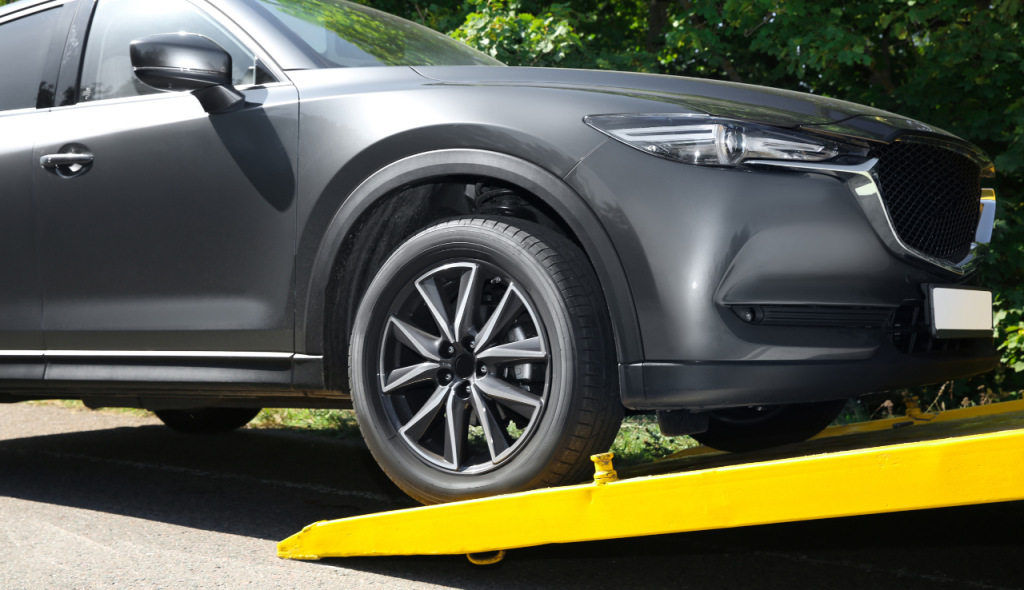
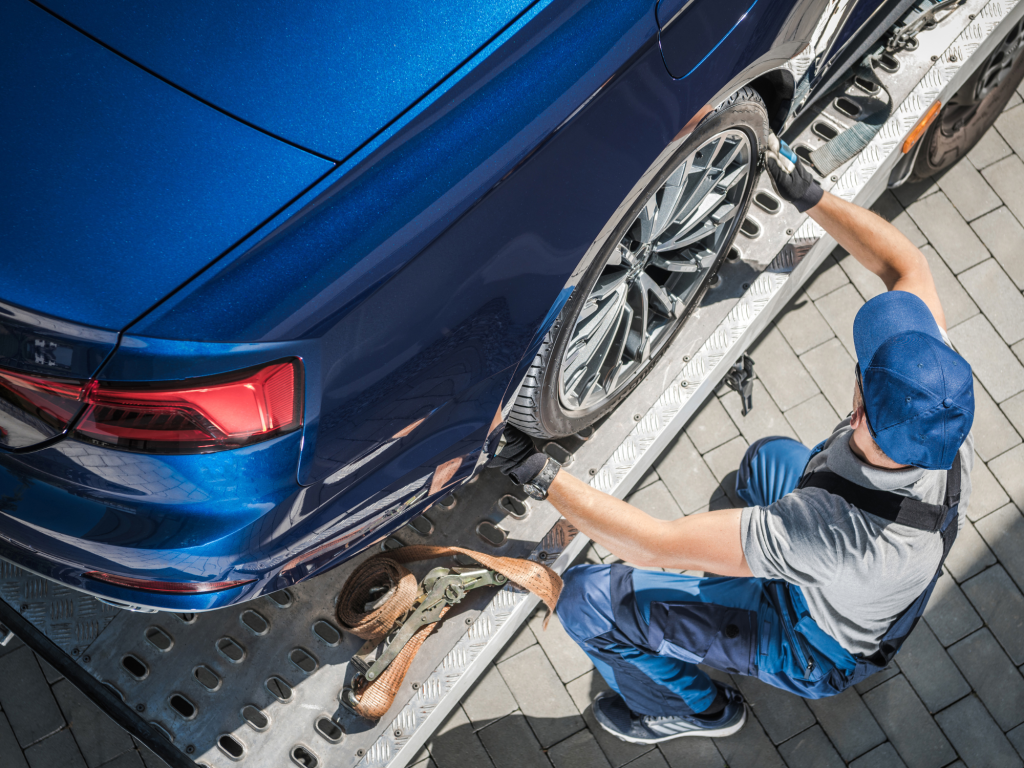
A flatbed tow truck is generally the preferred option for a broken-down motorcycle. The bike is loaded with a suitable ramp, positioned securely and restrained for the journey without either wheel touching the road. This avoids the risks of towing a disabled bike by rope, pushing it long distances or leaving it exposed on an open trailer without correct equipment.
It is particularly useful for motorcycles with engine faults, locked wheels, flat tyres, accident-related damage, low ground clearance or valuable paintwork and components. A professional operator should use motorcycle-appropriate restraints, protect contact points and check the bike again once it is loaded.
Motorcycle trailer transport
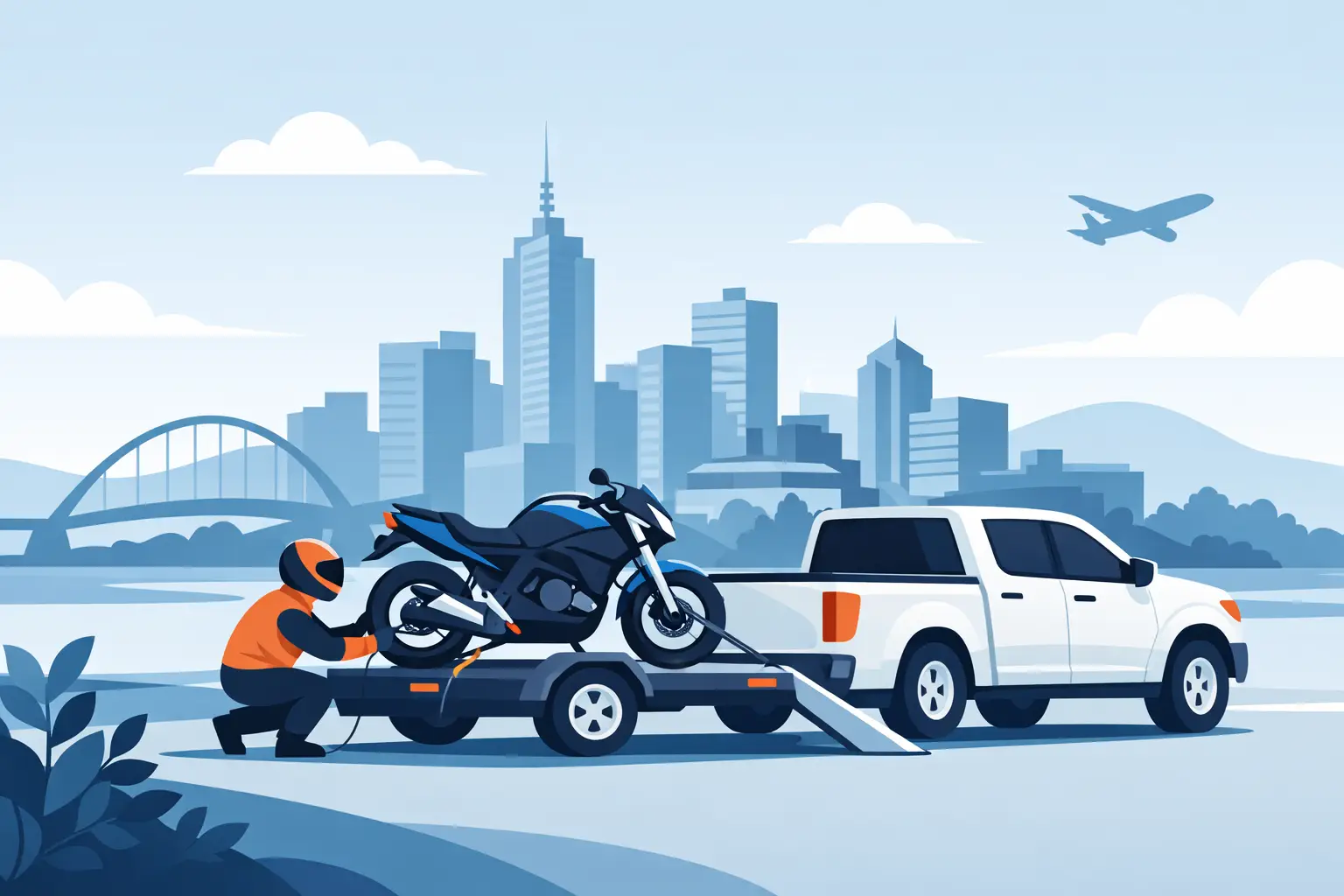
A purpose-built motorcycle trailer can work well when it has a wheel chock, rated anchor points and enough space to load the bike without forcing it into an awkward angle. The trailer must be legally registered, correctly hitched and suitable for the combined weight of the bike and equipment.
This option is sensible for planned trips when you have experience loading motorcycles. It is less ideal at the roadside, in wet weather, at night or where the breakdown location gives you little room to work safely. A standard box trailer without a chock or proper tie-down points is not a good substitute.
Ute or van transport
Some smaller motorcycles can be carried in a ute tray or van, provided there is enough length, payload capacity and approved anchor points. The bike still needs to be held upright in a wheel chock or against a secure front support, not balanced on its stand. Check that the loading ramp is rated for the bike and that its angle will not cause the underside to scrape.
Large cruisers, adventure bikes and touring motorcycles are often too heavy or tall for improvised loading. Trying to muscle a heavy bike up a narrow ramp is one of the quickest ways to drop it or injure yourself.
Why you should not tow a motorcycle with a rope
Towing a motorcycle behind a car with a rope, strap or chain is unsafe and should be avoided. The rider has limited control if the tow vehicle brakes suddenly, turns sharply or accelerates. A loose connection can also fall into the rear wheel, while a tight connection can destabilise the bike.
Even if the engine runs, a bike with a suspected mechanical fault should not be ridden to a workshop just to avoid a tow. Internal engine damage, overheating, brake problems and chain failures can all worsen on the road. Proper transport is usually cheaper than turning a breakdown into a major repair.
Preparing the bike for loading
If a towing provider is on the way, there are a few practical steps that help make loading safer and quicker. Remove loose luggage, helmets, mobile mounts or other accessories that could fall off in transit. Put the key somewhere accessible, and tell the driver if the steering is locked, the bike is in gear, the tyres are flat or a wheel will not turn.
Let the operator know about any special features before loading. This includes a very low fairing, custom exhaust, aftermarket handlebars, hard panniers, carbon components, a wide rear tyre or an electric drivetrain. The more clearly you explain the bike’s condition, the better the loading plan can be.
For a planned transport, keep the fuel level low where practical. A full tank adds unnecessary weight, and fuel can expand or spill if the bike is handled at an angle. Do not drain fuel at the roadside or tamper with the battery unless you know exactly what you are doing.
How a motorcycle should be secured
Correct tie-down technique matters more than the number of straps used. The motorcycle should remain upright, centred and unable to shift forward, backward or sideways. Its side stand is not a transport restraint and should not carry the bike through the journey.
A properly equipped setup normally uses a front wheel chock or secure wheel restraint, plus quality ratchet straps attached to strong, suitable points on the motorcycle and truck or trailer. Soft loops may be used to protect handlebars or other contact areas. The suspension is generally compressed enough to maintain tension without being forced down excessively.
Straps should not rub against sharp bodywork, brake lines, wiring, painted panels or fragile accessories. They should also be checked after the bike has settled during the first part of the trip. If the bike is being moved in wet weather, on uneven roads or over a long distance, careful restraint checks become even more important.
What to tell a motorcycle towing service
A clear phone call can prevent delays and help ensure the correct equipment is dispatched. Provide the exact location, including the nearest cross street, landmark or safe access point. If you are on a freeway or major arterial road, tell the dispatcher which direction you are travelling and where the bike is positioned.
You should also provide the make, model and approximate size of the motorcycle, describe the fault, and say whether it rolls freely. Mention if it is underground, inside a car park, behind a locked gate or in a location with height or access restrictions. Confirm where the bike needs to go and whether the workshop will be open when it arrives.
Ask for an estimated arrival time and an upfront price before dispatch. You should understand what is included, such as loading, transport distance and delivery, before the truck is sent. A reliable operator will communicate clearly rather than leave you guessing at the roadside.
Onigo Towing provides specialist breakdown transport across Greater Melbourne, using modern flatbed equipment and careful loading procedures for motorcycles and other vehicles that cannot be driven safely.
When professional transport is the better call
DIY transport may look cheaper at first, but it has real trade-offs. You need the right vehicle, a rated ramp, secure restraint points, quality straps and the confidence to load the motorcycle without dropping it. One damaged fairing, bent lever or loading injury can quickly outweigh the cost of professional help.
Call for professional motorcycle towing when the bike is disabled in traffic, the weather is poor, you are alone, the motorcycle is heavy, the tyres or wheels are damaged, or you are not completely confident about loading and tie-downs. This is also the sensible option for premium, classic, electric and heavily customised bikes where incorrect restraint can be expensive.
If you are waiting for assistance, stay visible, keep your mobile charged and remain in a safe location rather than standing beside the bike in traffic. A careful recovery starts with getting you out of harm’s way, then getting your motorcycle to the right place without adding to the problem.