A car that will not start in a servo car park at 6:30 am needs a different response from one that has lost drive on the Monash in peak traffic. That is the real issue in breakdown towing vs roadside assistance. Both services help stranded drivers, but they solve different problems, work under different limits, and suit different kinds of breakdowns.
If you are deciding who to call, the quickest answer is this: roadside assistance is designed to fix minor problems on the spot, while breakdown towing is designed to move an unsafe or non-drivable vehicle quickly and carefully. The right option depends on what has failed, where you are, and how soon you need the vehicle off the road.
What roadside assistance is meant to do
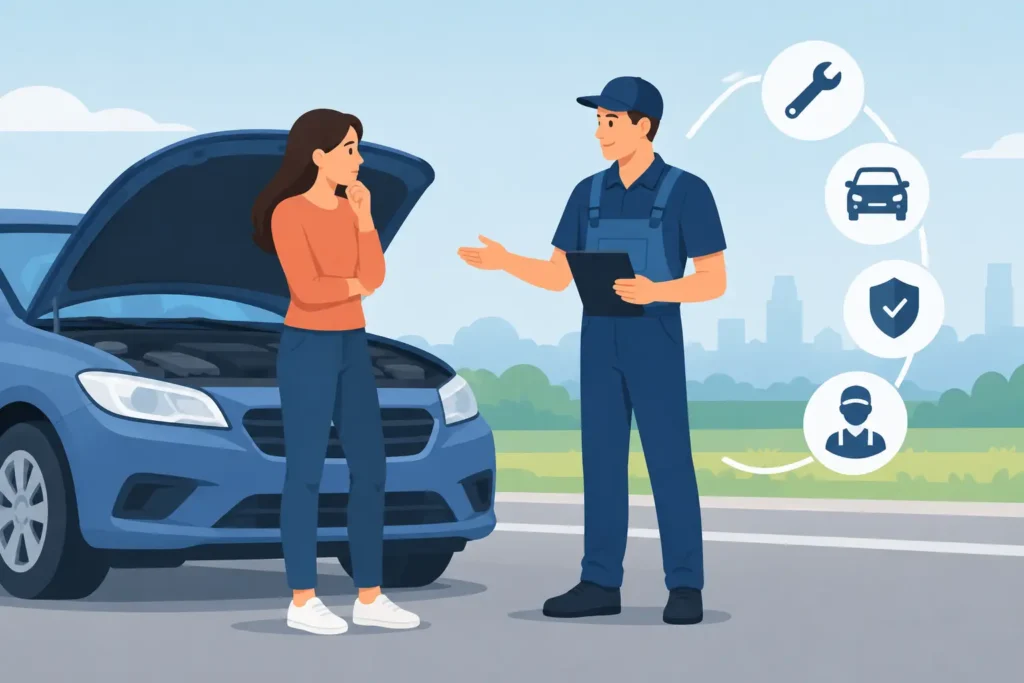
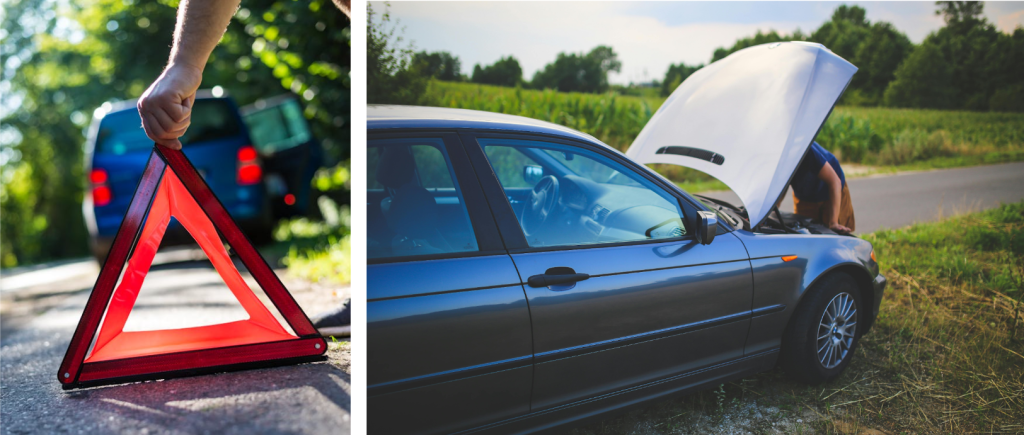
Roadside assistance is usually a membership-based service. It is built around simple faults that can often be sorted without transporting the vehicle. That might include a flat battery, a tyre change using your spare, a lockout, emergency fuel, or a basic inspection when a warning light appears.
For the right issue, it can be useful. If your battery is flat because the interior light was left on overnight, a jump-start may be all you need. If you have a puncture and a usable spare in the boot, a roadside technician can often get you moving again.
The limitation is that roadside assistance is not a full repair service. The technician is usually there to assess, test and carry out a short list of minor fixes. If the problem is more serious, or the vehicle cannot be safely restarted, the next step is often a tow anyway.
What breakdown towing is designed for
Breakdown towing is for vehicles that should not be driven, cannot be driven, or are unlikely to be fixed safely at the roadside. That includes non-starts that are more than a simple battery issue, transmission faults, overheating, suspension damage, clutch failure, electrical faults, EV issues, and engine problems.
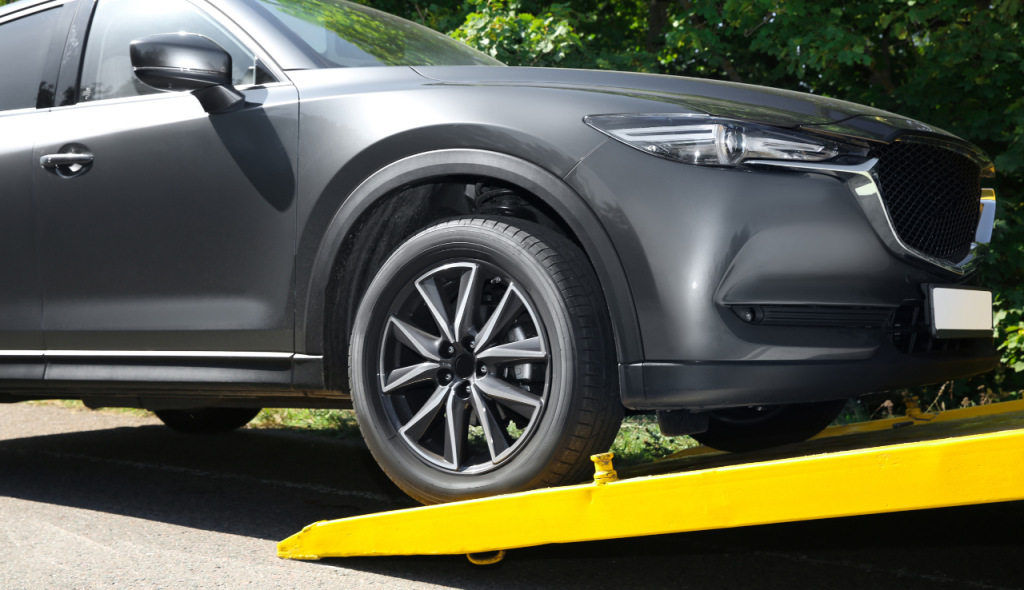
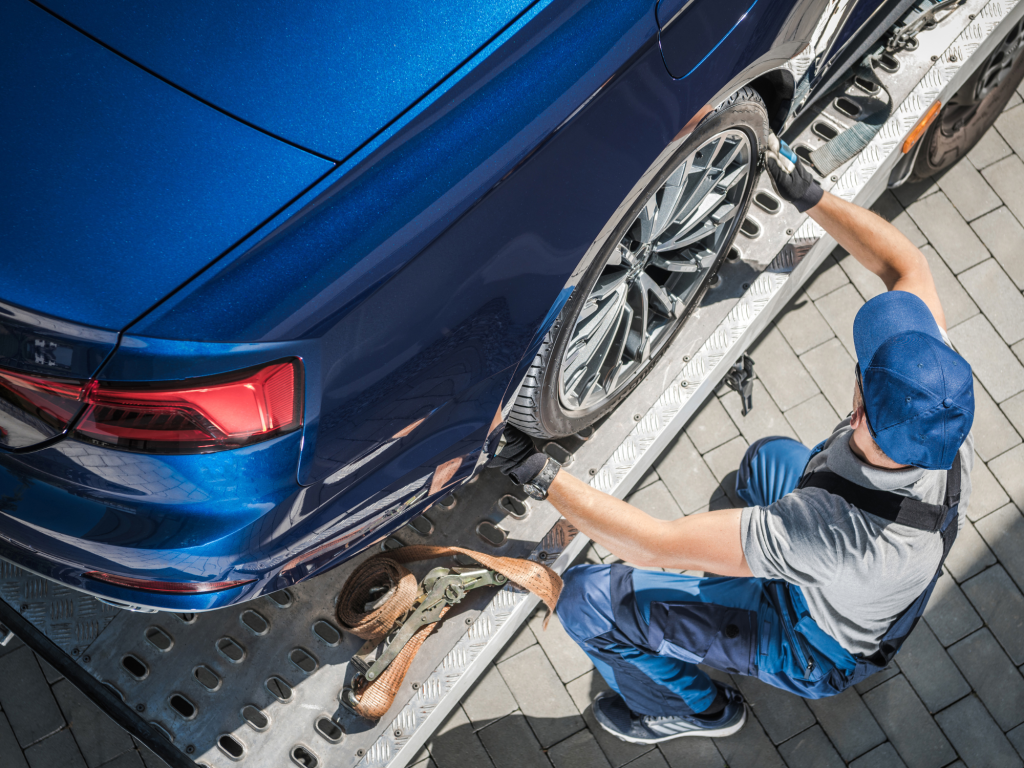
This is where a specialist towing operator has a different role. The job is not to keep trying quick fixes. The job is to get your vehicle loaded properly, secured correctly, and taken to the right destination without wasting time.
That destination might be your mechanic, your home, a dealership, a workshop, or another suburb entirely. For many drivers, that is the practical outcome they need most. When the car is not going to be safely mobile within minutes, transport becomes the priority.
Breakdown towing vs roadside assistance: the key difference
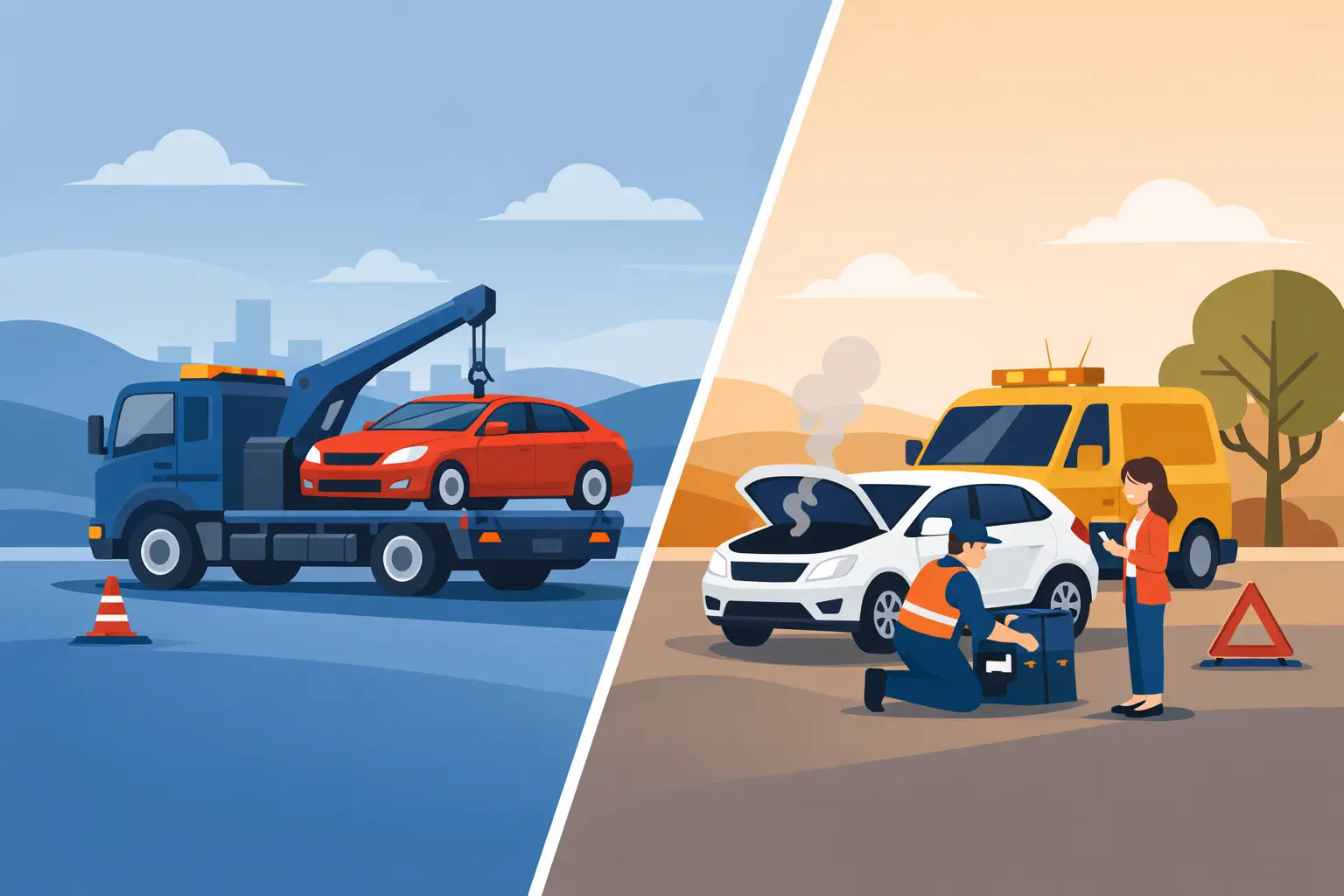
The simplest way to think about breakdown towing vs roadside assistance is this: roadside assistance tries to restore movement, while breakdown towing assumes movement is no longer the safe plan.
That distinction matters because roadside delays can become expensive and stressful. If your van is off the road during work hours, if your motorcycle has suffered a mechanical issue far from home, or if your EV is displaying a system fault and refusing to engage drive, waiting for repeated roadside attempts may not help.
A proper tow can be the faster option even when roadside help is technically available. It gets the vehicle to someone who can diagnose and repair it properly, instead of leaving you on the kerb while temporary checks rule out the obvious.
When roadside assistance makes sense
Roadside assistance is often the right first call when the fault is minor, the vehicle is in a safe location, and there is a realistic chance of a quick fix. A dead battery, an accidental lockout, or a simple tyre swap fit that category.
It can also make sense when you already have membership and are happy to wait within that provider’s timeframes. For drivers parked at home, at work, or somewhere low-risk, that may be perfectly reasonable.
The trade-off is urgency and scope. In busy periods, wait times can stretch. And if the technician confirms the vehicle still cannot be driven, you may then need to arrange towing as a second step.
When breakdown towing is the better call
Breakdown towing is usually the better call when the vehicle has clearly suffered a mechanical failure, is stuck in a risky location, or needs careful transport due to its type or condition.
If the engine is overheating, there is no point trying to limp it across Melbourne. If the gearbox has failed, the battery warning has become a total shutdown, or the vehicle has gone into limp mode and will barely move, getting it towed is often the safer and cheaper decision.
The same applies to vehicles that need extra care. Lowered cars, EVs, hybrids, motorcycles, performance vehicles and specialist vehicles are not ideal candidates for rough handling or improvised recovery. Proper loading equipment and secure tie-down procedures matter.
For commercial drivers, there is another factor: downtime. If your ute or van is part of your workday, the value is not only in getting roadside attention. It is in getting the vehicle where it needs to go with minimal delay and clear communication along the way.
Why the cheapest-looking option is not always the quickest
A lot of drivers compare these services on price alone. That is understandable when a breakdown has already disrupted your day. But the cheapest-looking option can become the slower, more frustrating one if it does not match the problem.
A roadside call-out that ends with no restart, followed by a separate tow booking, can mean extra waiting and extra stress. On the other hand, paying for a tow when all you needed was a battery boost may be unnecessary.
This is why a clear initial assessment matters. Describe the symptoms properly. Has the car lost power while driving? Is there smoke, fluid loss, a burning smell, or a warning that says stop safely? Has it failed to crank at all? Those details help determine whether roadside assistance has a fair chance or whether towing is the more practical response from the start.
Vehicle type changes the answer
Not every breakdown should be treated the same way. A small hatchback with a flat battery is one thing. A loaded work van with driveline trouble is another. A motorcycle that has stopped on a wet road shoulder needs different handling again.
EVs and hybrids also deserve special mention. When these vehicles shut down, the cause may not be something that can be reset roadside. They may also have manufacturer-specific handling requirements. Towing methods matter, especially if the vehicle cannot be rolled freely or has low ground clearance.
Owners of performance and prestige vehicles tend to understand this straight away. Careful loading is not a bonus. It is part of the service. The same should apply to any vehicle you rely on and want delivered without added damage.
What to expect from a proper breakdown tow
A professional breakdown towing service should keep things simple. You call, explain the issue and location, get a price and ETA, and know where the vehicle is going before dispatch. That clarity matters when you are already dealing with enough.
From there, the focus should be on safe loading, secure transport and straightforward communication. No vague promises, no confusion about destination, and no guesswork about cost after the truck arrives.
That is one reason specialist breakdown operators stand out. Their work is centred on mechanical failures and non-drivable vehicles, not split across every kind of towing job. In practice, that usually means a more focused response for stranded drivers who need action rather than a long process.
How to decide in the moment
Ask yourself one question first: is there a realistic chance this can be fixed safely where it sits? If yes, roadside assistance may be worth trying. If not, towing is usually the smarter move.
If the vehicle is blocking traffic, stranded on a busy road, showing serious warning signs, or refusing to drive normally, do not waste time hoping for a quick roadside fix. Prioritise safety and proper transport.
And if you are unsure, be honest about the symptoms when you call. A good operator will tell you what makes sense based on the fault, the location and the vehicle. That kind of straight answer is worth more than a vague promise.
For Melbourne drivers, the best choice is rarely about one service being better in every case. It is about getting the right response for the problem in front of you. When the issue is small, roadside help can do the job. When the vehicle is not safely drivable, breakdown towing is often the fastest path back to control. If you are stuck and need that handled properly, Onigo Towing is built for exactly that kind of call.