A car that will not start in a shopping centre car park, a van that loses power on a delivery run, or an EV showing a critical warning can quickly turn a normal day into a stressful one. Safe vehicle transport is about more than getting the vehicle off the road. It is about protecting people first, then moving the vehicle carefully to the right destination without creating further damage.
For Melbourne drivers, the best towing option depends on where you are, what has failed, the type of vehicle you drive and where it needs to go. A clear plan from the first call makes a difficult breakdown far more manageable.
Put safety first before arranging a tow
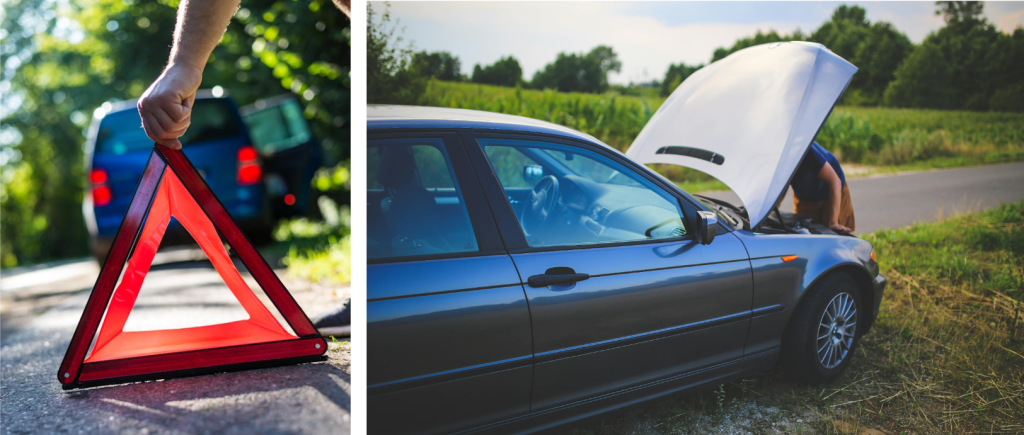
If your vehicle has stopped in traffic or on the side of a busy road, do not focus on the repair straight away. Your first job is to make the area as safe as possible. Pull as far from moving traffic as you can, switch on your hazard lights and stay alert to vehicles passing nearby.
If it is safe to leave the vehicle, move behind a barrier or well clear of traffic. On a freeway, major arterial road or narrow street, avoid standing beside the vehicle or attempting roadside repairs. Keep children and passengers away from the traffic side.
Before calling for assistance, it helps to have four details ready:
- Your exact location, including the suburb, nearest cross street, landmark or freeway exit
- The vehicle make, model, registration and whether it is driveable
- The reason it has stopped, such as a flat battery, overheating, warning light, flat tyre or mechanical fault
- The destination, whether that is a mechanic, dealership, home or secure storage location
These details allow the towing provider to send suitable equipment and give you a more useful estimated arrival time and price before dispatch.
Why the right vehicle transport method matters
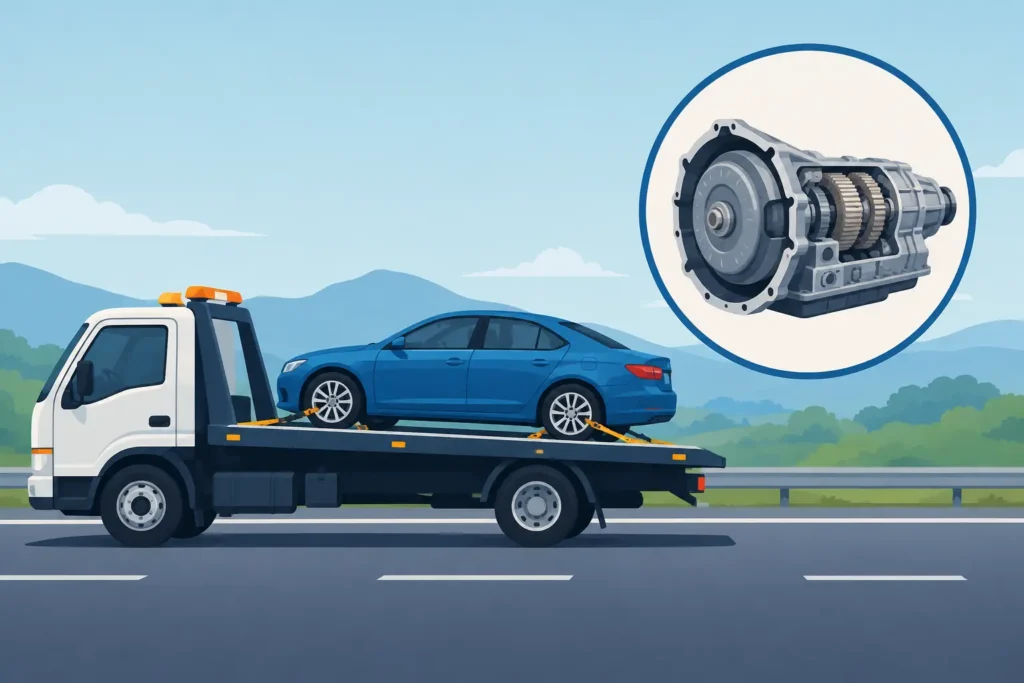
Not every breakdown should be handled the same way. A vehicle with a failed starter may roll freely onto a truck, while a car with transmission trouble, a locked wheel or steering damage needs a different loading approach. The towing method should suit the condition of the vehicle, not simply what is quickest.
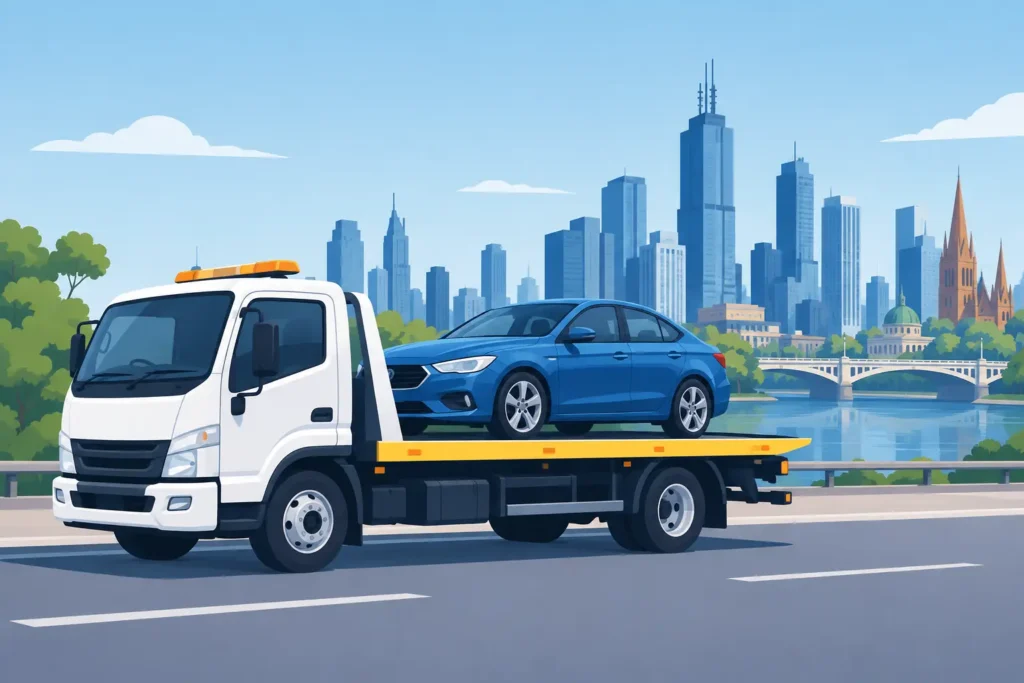
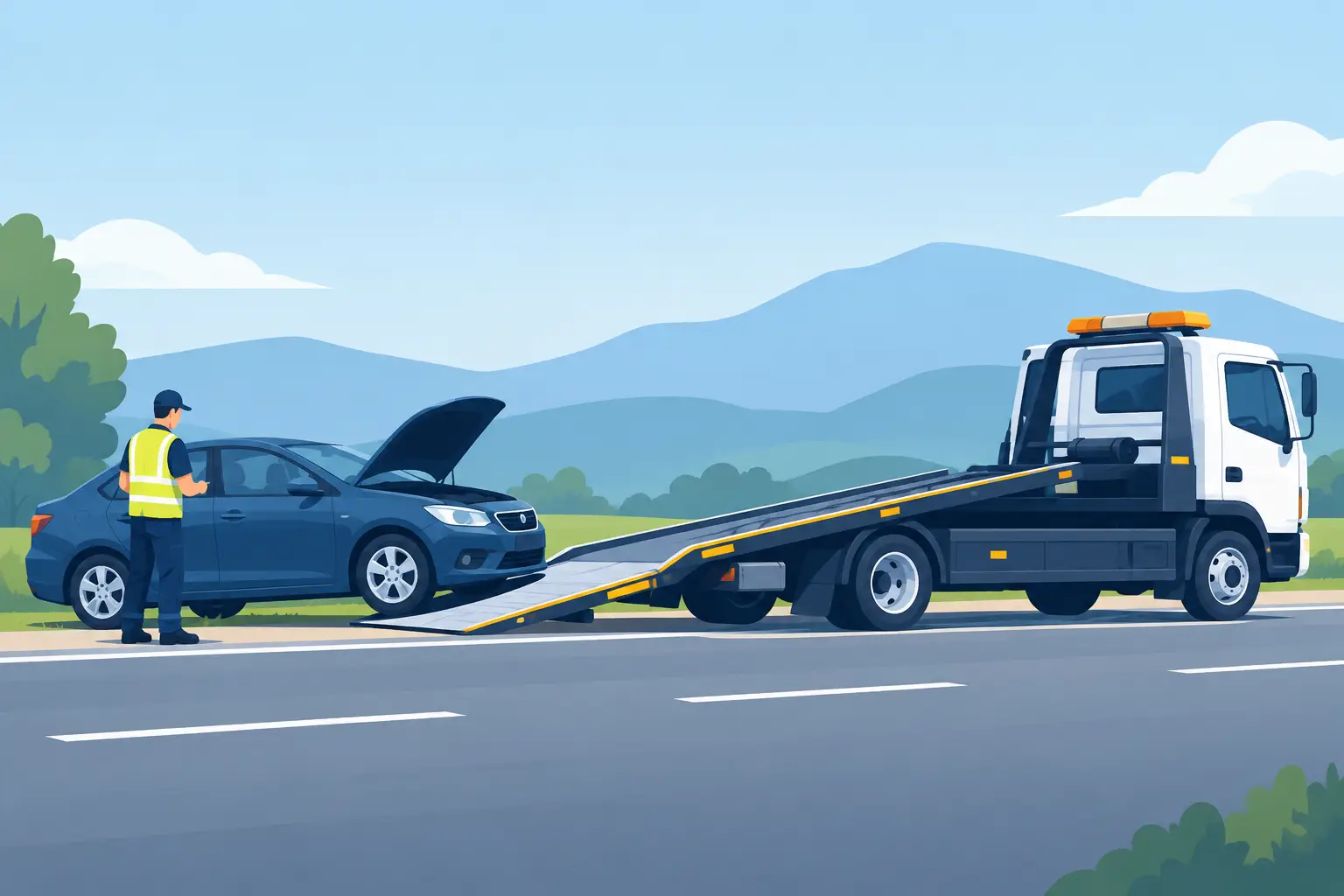
A flatbed tow truck is often the preferred option for breakdown towing because the entire vehicle can be loaded off the road. This helps prevent unnecessary wear on tyres, driveline components and suspension. It is particularly useful for low-clearance cars, performance vehicles, EVs, all-wheel-drive vehicles and cars that cannot be safely driven or rolled in the usual way.
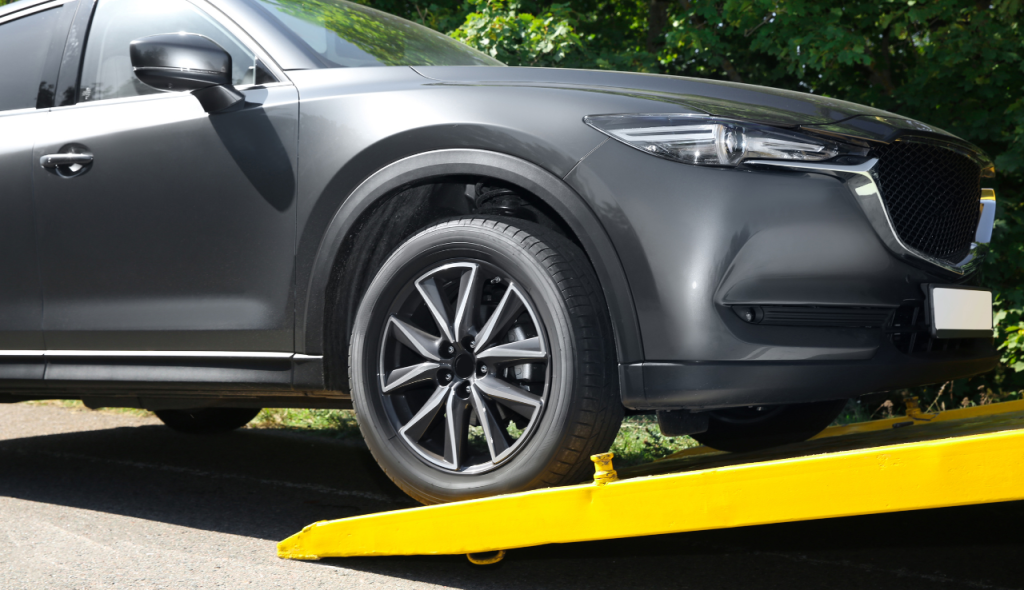
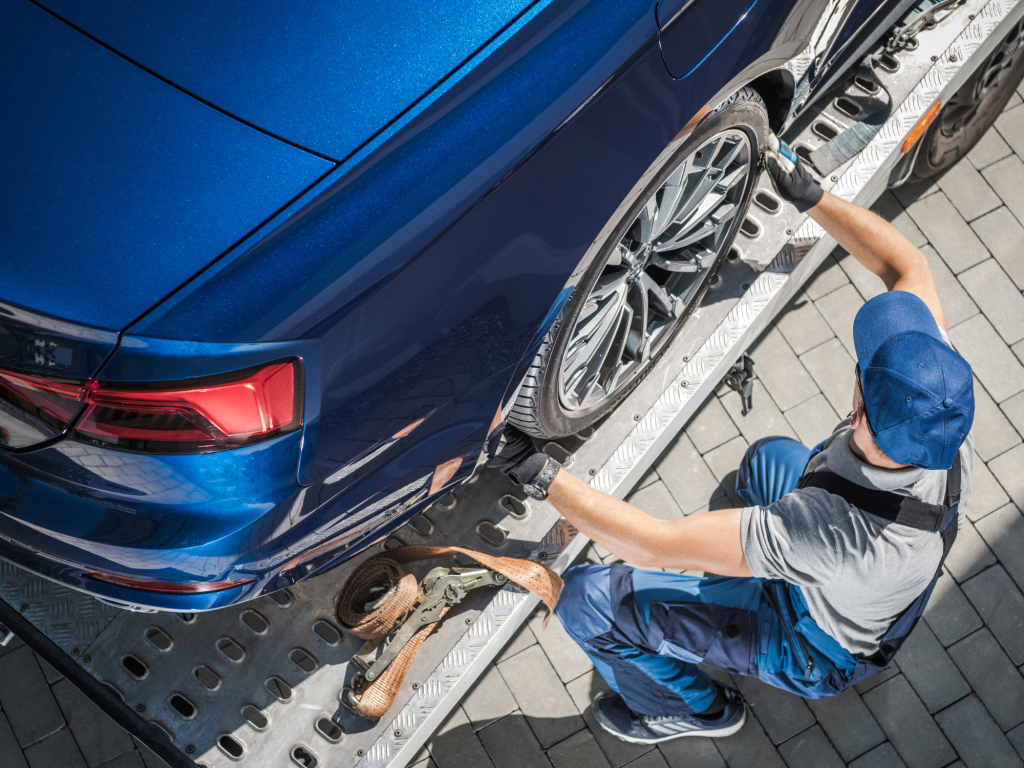
Careful loading is just as important as the truck itself. A professional operator assesses ground clearance, wheel position, access and whether the vehicle is in neutral before winching it onto the tray. Correct tie-down points and secure wheel restraints help keep the vehicle stable during transport, including through Melbourne traffic, roundabouts and uneven streets.
For motorcycles, speciality vehicles and lowered cars, ask specifically how the vehicle will be secured. The cheapest quote is not always the best value if it relies on a method that does not suit your vehicle.
EVs, hybrids and all-wheel-drive vehicles need extra care
Electric and hybrid vehicles can have unique transport requirements. A depleted traction battery, electrical fault or system warning does not always mean the vehicle can be towed with its wheels on the road. Manufacturers may specify flatbed transport to protect electric motors, drivetrain systems and battery components.
The same care applies to many all-wheel-drive and performance vehicles. If a vehicle cannot be shifted into neutral, has an electronic parking brake issue or has suffered suspension damage, tell the dispatcher before the truck arrives. That information changes how the operator plans the load.
A good provider will ask practical questions rather than making assumptions. If you are unsure of the fault, simply explain what happened, what warning lights appeared and whether the vehicle can move under its own power.
Choosing a towing provider after a breakdown
When you are stranded, it is tempting to accept the first option you find. A quick call is sensible, but take a moment to check that the service is suited to breakdown transport rather than general recovery work.
Ask whether the provider can handle your vehicle type, whether a flatbed is available where required and whether the quoted price includes loading, travel and delivery to your chosen destination. If the vehicle is in an underground car park, tight driveway or restricted-access location, mention this immediately. Height limits and access restrictions can affect the type of truck that can attend.
Clear communication is a strong sign of a reliable service. You should know what is happening, what it will cost and what information is needed from you. Be cautious of vague pricing or a provider that cannot explain how your car will be moved.
Onigo Towing focuses on breakdown towing across Greater Melbourne, with dispatch support for cars, motorcycles, vans, light trucks, EVs, hybrids and speciality vehicles. The goal is straightforward: provide a suitable truck, careful handling and clear pricing before the job begins.
Prepare your vehicle for transport
Once help is on the way, a few simple checks can save time at collection and reduce the chance of confusion at delivery. Take valuables, work equipment, garage remotes and important documents from the cabin. If the vehicle is being taken directly to a mechanic outside business hours, leave the keys only where the workshop has instructed you to do so.
Take photos of the vehicle before it is loaded, especially if it is a newer, prestige or speciality vehicle. This is not about expecting a problem. It is a sensible record of the vehicle’s condition at the time of the breakdown.
Let the operator know about any issues that affect loading. This includes a flat tyre, damaged wheel, leaking fluid, steering lock, missing key, low front bumper, modified suspension or a vehicle stuck in park. Do not try to force the car into neutral or override an electronic brake unless you know the correct procedure. A rushed workaround can cause more damage than the original fault.
If you are sending the vehicle to a workshop, call ahead where possible. Confirm that the mechanic can receive it, has space available and knows the reason for the tow. There is little benefit in organising prompt transport only to find the destination is closed or inaccessible.
Understand what affects the price
Vehicle transport pricing is not one-size-fits-all. The distance from your location to the destination matters, but so do the vehicle type, accessibility, time of day and the condition of the vehicle. A car parked safely on a wide suburban street is generally simpler to collect than a locked, non-rolling vehicle in a basement car park.
Long-distance and interstate transport will also need more planning than a local tow to a nearby mechanic. For those jobs, confirm collection timing, delivery arrangements, handover contacts and whether the vehicle needs to arrive by a particular date. If the vehicle is not driveable, make sure the destination has the equipment and staff to unload it safely.
Upfront pricing gives you a chance to make an informed decision before the truck is dispatched. It also avoids the frustration of finding unexpected charges after your vehicle is already loaded. If anything about the quote is unclear, ask before agreeing to the tow.
Where should a broken-down vehicle go?
The nearest workshop is not always the right destination. If your regular mechanic knows the car and can inspect it promptly, a slightly longer tow may save time and repeat transport later. For warranty concerns, a dealer may be the better choice. If the problem happens late at night, taking the vehicle home or to secure storage can be more practical than leaving it at a closed workshop.
Commercial vehicles need a different calculation. A van or light truck that is vital to tomorrow’s work may need to go to a workshop with the right diagnostic equipment, even if it is farther away. Explain the urgency when booking so the transport plan supports the next repair step.
The key is to choose a destination before the truck arrives, while leaving room to adjust if the workshop cannot accept the vehicle. A calm, informed decision at the roadside can prevent a second tow and more downtime later.
When a breakdown interrupts your plans, you do not need to solve the mechanical fault from the kerb. Focus on staying safe, share accurate details and choose vehicle transport that treats your car, bike or work vehicle with the care it deserves.