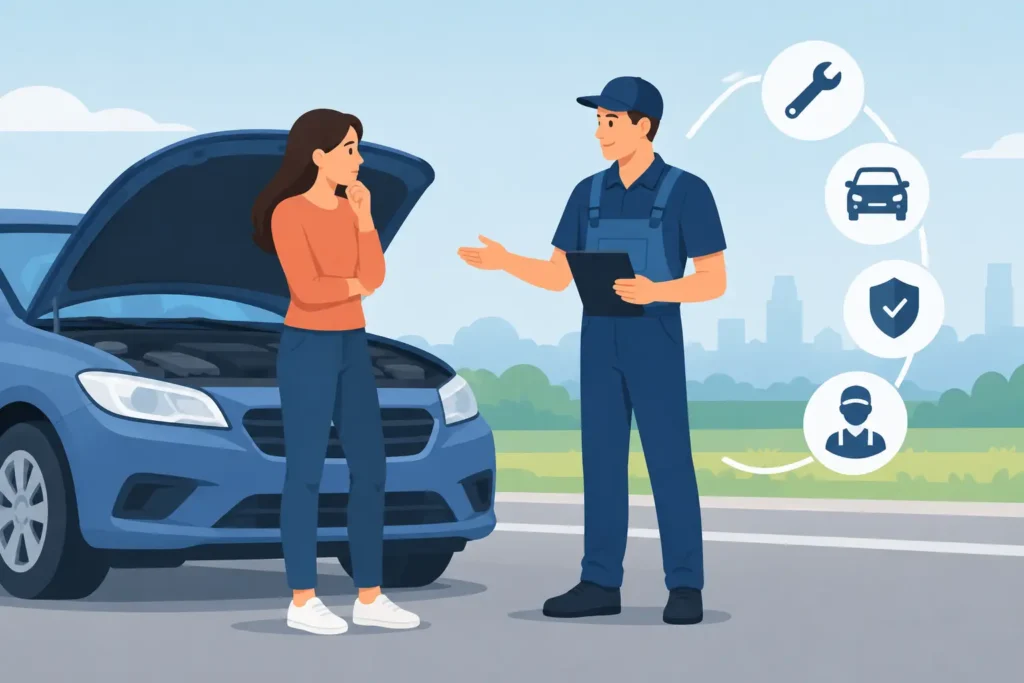
A tow truck can only get to you quickly if the driver can find you quickly. If you are searching for how to share breakdown location details while your car will not start, has overheated, or has stopped on the road, focus on two things first: getting yourself to a safe position and giving an accurate pin, road name or landmark.
In Greater Melbourne, a few metres can make a real difference. Freeways have multiple ramps and carriageways, industrial estates can have similar street names, and a map pin can sometimes land on the wrong side of a divided road. Clear location details help your towing provider send the right truck to the right place without unnecessary delays.
Get safe before sharing your location
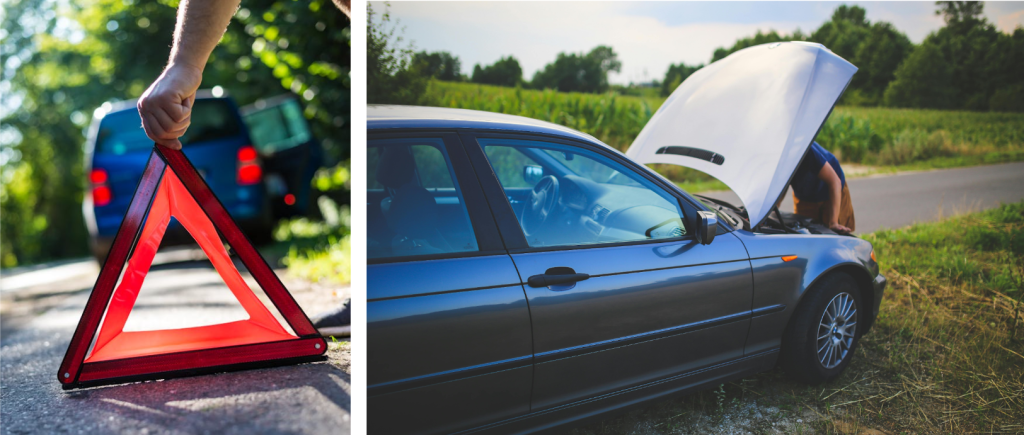
If the vehicle can be moved safely, pull as far left as practical and out of moving traffic. Turn on your hazard lights, apply the handbrake and keep clear of traffic. On a busy road, freeway or narrow street, do not stand between your vehicle and passing cars.
If you are in immediate danger, call 000 first. A broken-down vehicle on a live lane, around a blind bend, or in another high-risk position may need police or emergency assistance before towing can be arranged.
Once you are safe, have your mobile, vehicle registration and destination ready. You do not need to diagnose the fault perfectly. A simple description such as “the battery is flat”, “the engine will not start”, or “the temperature warning came on” gives the dispatcher useful context and helps them plan the job.
How to share breakdown location from your phone
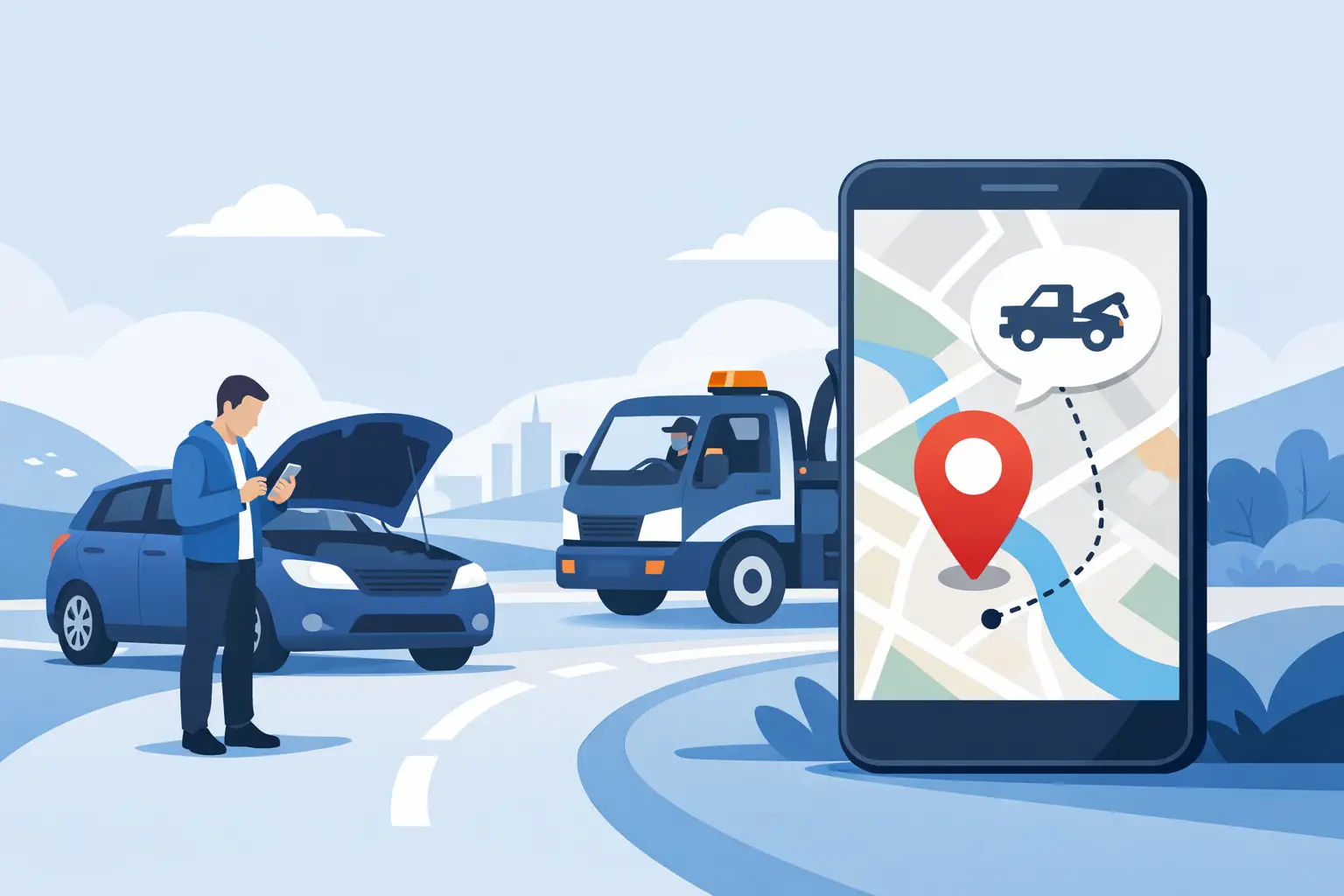
The most reliable option is usually to share a dropped pin from your map app. Open Google Maps or Apple Maps, press and hold your current position until a pin appears, then use the Share option to send the location by SMS or through the messaging method requested by the towing company.
Before you send it, check the pin against what you can see around you. Look at the road name, nearby intersections and which side of the road the pin is sitting on. If the pin is slightly off, send it anyway, but add a short message explaining the correct access point.
For example, “Pin is close, but I am on the city-bound side of the Monash, just after the Warrigal Road exit,” is far more useful than a pin on its own. The driver needs to know which carriageway they can reach, not just the general area.
If your phone battery is low, send the pin first, then make the call. Turn down your screen brightness and keep the phone available in case the driver needs to confirm your exact position.
Send these details with the pin
A location pin is a strong start, but a few extra details prevent confusion. Tell the dispatcher the road or suburb shown on your map, the nearest cross street or landmark, and whether you are travelling towards the city, away from the city, north, south, east or west.
Also mention where the vehicle is positioned: on the shoulder, in a car park, at a service station, in a driveway, basement, loading zone or on the street. Access matters. A tow truck may need a different approach for a tight laneway, a shopping centre car park or an underground garage with low clearance.
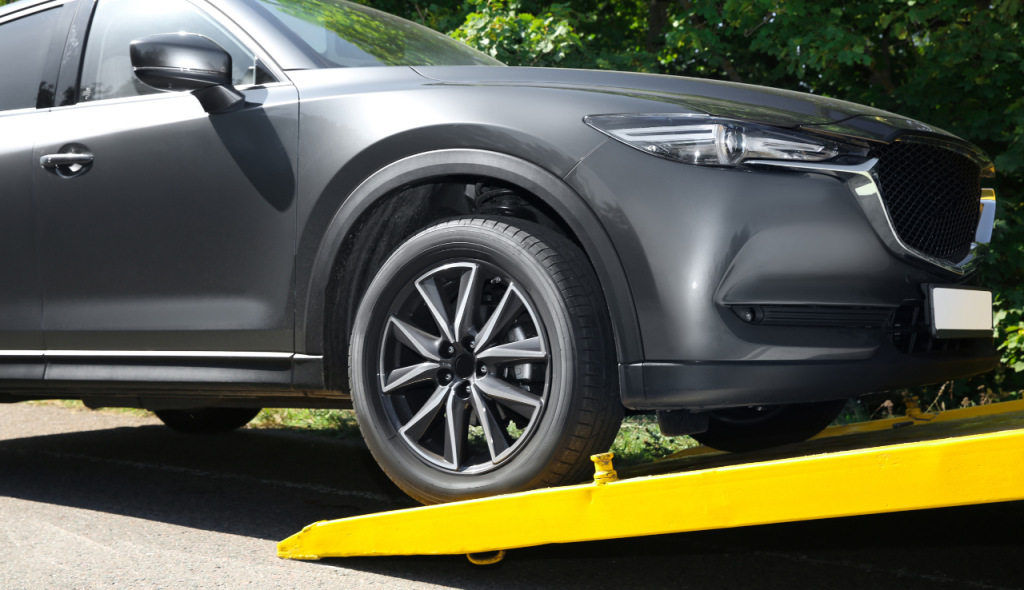
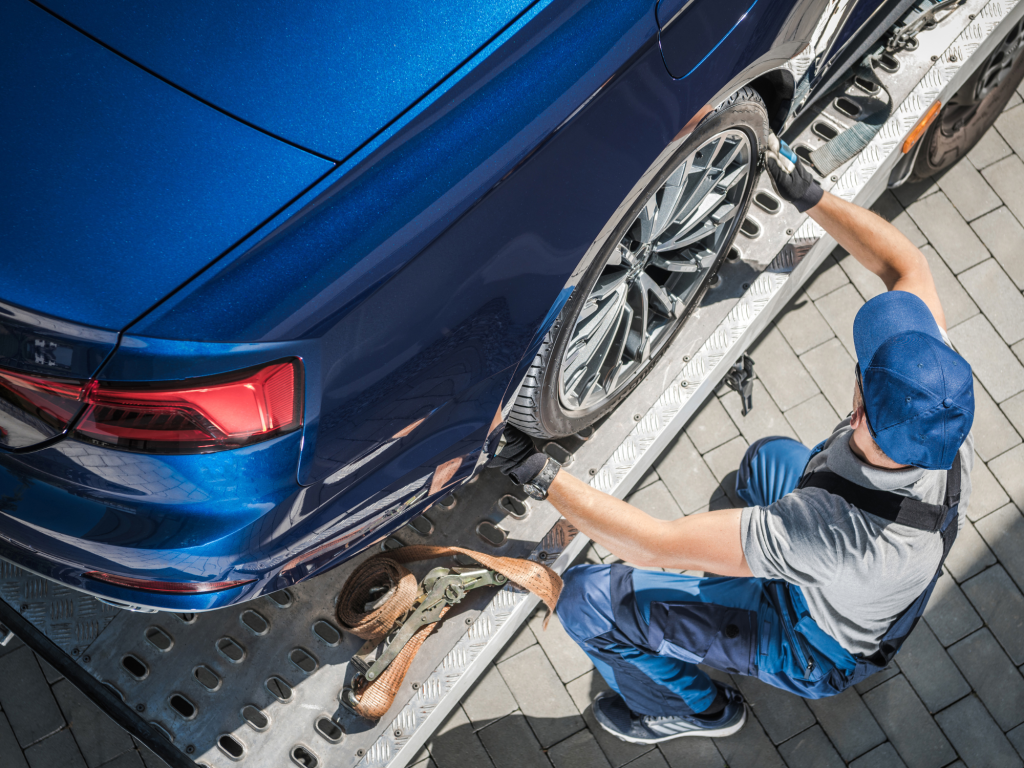
Finally, describe the vehicle clearly. Include its make, model, colour and registration. If it is an EV, hybrid, motorcycle, lowered car, performance vehicle, van or light truck, say so at the time of booking. This helps ensure suitable equipment and careful loading arrangements are organised before dispatch.
If you cannot share a map pin
Not every breakdown happens with a charged smartphone and good reception. You can still give a useful location by working from the details around you.
Start with the exact street name and suburb. Then add the nearest intersecting road, a numbered property, shop, petrol station, train station, bridge or other obvious landmark. If you are on a freeway, look for the closest exit, overpass, kilometre marker or roadside sign. These details are often enough for an experienced local driver to narrow down your position.
Be specific about the direction of travel. “Near the Kings Way exit” could place you on either side of a major road. “West Gate Freeway, outbound, before the Montague Street exit” is much clearer.
Do not guess if you are unsure. Say what you can see and explain that you are not certain of the suburb or road name. A dispatcher can ask practical follow-up questions and check the information against their map. Guessing a location can send the truck several kilometres away.
Common location mistakes that delay a tow
The most common issue is sending a pin from where you stopped earlier rather than where the vehicle is now. This can happen after rolling into a service station, walking to a safer spot or moving off a freeway ramp. Check that the pin represents the vehicle, not your current walking location.
Another problem is naming the suburb but not the road. Melbourne’s outer suburbs can cover large areas, and some estate roads look alike. A street number, intersection or business name can save valuable time.
Drivers also sometimes forget to say they are on a divided road. A tow truck may be able to see your vehicle across the median but need several minutes to reach the correct side. State the carriageway and direction upfront.
Avoid relying solely on a what3words-style reference, a photo of the road, or a vague message such as “near the shops”. These can help as supporting information, but they are not a replacement for a map pin, road name and travel direction.
Stay available after you share the location
Keep your phone nearby with the ringer on. A driver may call to confirm a gate, freeway exit, car park entrance or the side of the road. If you have to leave the vehicle for safety, let the dispatcher know where you will be waiting and whether the keys are with you.
If your location changes, update the towing company immediately. This is especially relevant if police direct you to move, roadside assistance helps you roll into a safer area, or you arrange for someone else to meet the tow truck. A quick update is better than having the driver arrive at an empty roadside spot.
For scheduled towing from home or a mechanic, share the correct pickup address and mention access restrictions before the truck arrives. Locked gates, steep driveways, low trees, narrow entrances and basement height limits can all affect the safest loading plan.
A quick script to use when calling
When you are stressed, it helps to keep the call simple: “I am in a [vehicle make, model and colour], registration [number]. I have broken down at [road and suburb], [direction of travel or side of road], near [landmark or cross street]. I have sent a map pin. The vehicle is [brief fault or condition], and I need it towed to [destination].”
That gives the dispatcher the essential operational information in one clear message. At Onigo Towing, this kind of detail helps the team provide a realistic ETA and upfront price before dispatch, rather than leaving you uncertain at the roadside.
A clear location is not about getting every detail perfect. Send the best pin you can, add the road, direction and a visible landmark, then stay somewhere safe and keep your phone close. That is usually all a towing driver needs to start getting to you.