A motorcycle that will not start in a car park, has a flat tyre on the freeway, or develops a mechanical fault mid-ride needs more than a quick lift. Understanding how motorcycle flatbed towing works can make a stressful roadside situation feel far more manageable. The aim is simple: keep the bike upright, stable and protected from the moment it is loaded until it reaches your mechanic, home or chosen destination.
For most breakdowns, a flatbed is one of the safest transport options. Your motorcycle is carried completely off the road rather than being towed behind a vehicle with one wheel rolling. That reduces wear, avoids unnecessary movement and gives the operator far more control over the loading and tie-down process.
Why a flatbed is used for motorcycle breakdowns
Motorcycles are lighter than cars, but they are not simple to move. Their balance, suspension, bodywork, handlebars, brake components and side stand all need consideration. A poor tie-down point or rushed loading approach can cause damage even when the trip itself is short.
A flatbed truck provides a level carrying surface and allows the bike to travel securely in an upright position. It is particularly suitable when the motorcycle cannot be ridden, has steering or wheel damage, has a puncture, has suffered a chain issue, or is an EV motorcycle with a fault that should be assessed by a specialist.
It also suits higher-value bikes, custom motorcycles and performance models where clearance and cosmetic condition matter. That does not mean every motorcycle requires the same setup. A cruiser, adventure bike, scooter and sports bike have different weights, shapes and safe attachment points. A capable operator assesses the bike before choosing the loading method.
How motorcycle flatbed towing works step by step
The process starts before the truck arrives. When you call for assistance, the dispatcher should ask where you are, what motorcycle you have, what has gone wrong and where it needs to go. Details such as a locked steering head, a flat tyre, a missing key, an underground car park or a bike stuck in gear can affect the equipment and approach required.
Clear information also helps provide an accurate price and ETA before dispatch. If you are in a dangerous position, such as on a busy Melbourne road, let the operator know straight away so they can advise you on the safest place to wait.
1. The site and bike are checked
On arrival, the tow operator checks the motorcycle and the surrounding area. They look at traffic flow, surface conditions, available room and whether the bike can roll freely. They also identify existing marks or damage where practical, especially if the bike has already fallen over or broken down after a mechanical issue.
The operator will confirm the destination and discuss any relevant handling needs. For example, a bike with a low fairing, damaged front wheel or non-functioning ignition may need a different loading arrangement from a motorcycle that simply has a dead battery.
2. The flatbed is positioned for safe loading
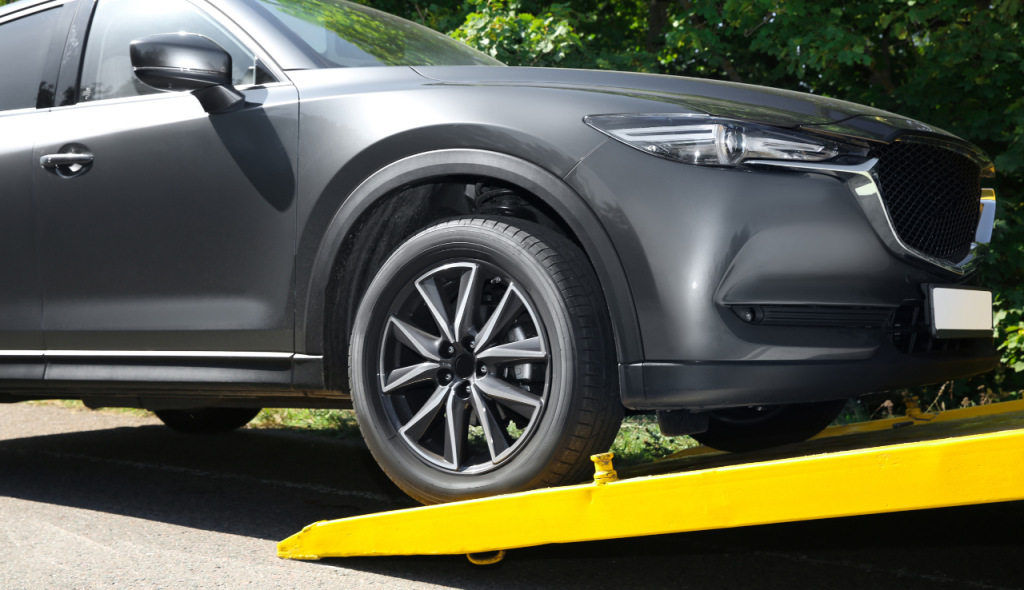
The truck is parked to create a stable, controlled loading path. The tray is lowered or tilted, and loading ramps are positioned where needed. Good positioning matters because a motorcycle should not be forced up a steep or unstable angle.
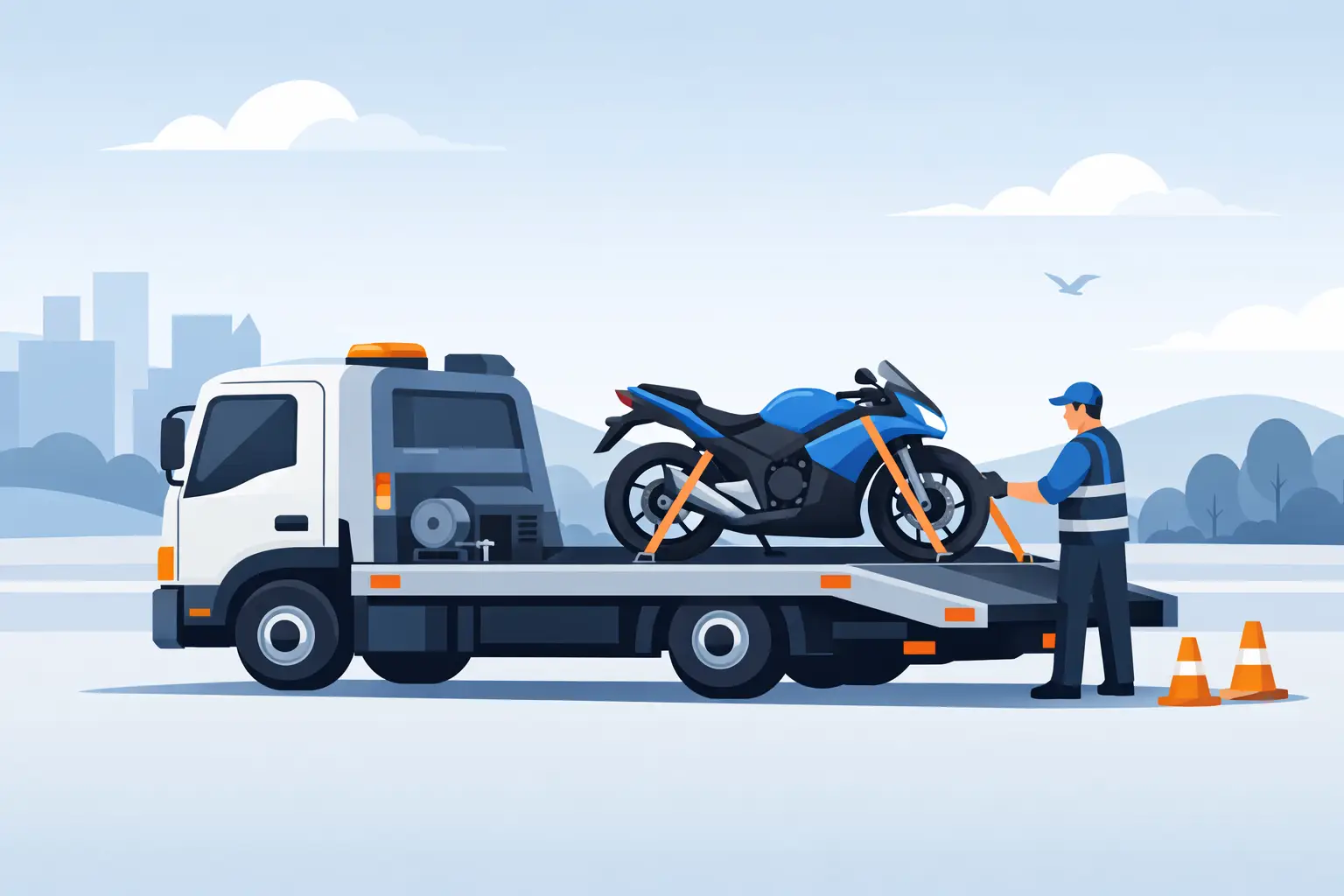
If the bike can be rolled safely, it may be guided up the ramp with the operator controlling it. If it cannot roll or has damage that makes rolling unsafe, a winch can be used. The winch pulls the bike gradually onto the tray while the operator keeps it aligned and upright. This is slower than simply pushing it, but that is often the point. Careful loading is safer loading.
3. The motorcycle is secured upright
Once on the flatbed, the motorcycle is positioned so its weight is balanced and there is clearance from rails, equipment and other objects on the tray. The front wheel may be placed in a wheel chock or secured against a suitable stop to prevent it moving forward or sideways.
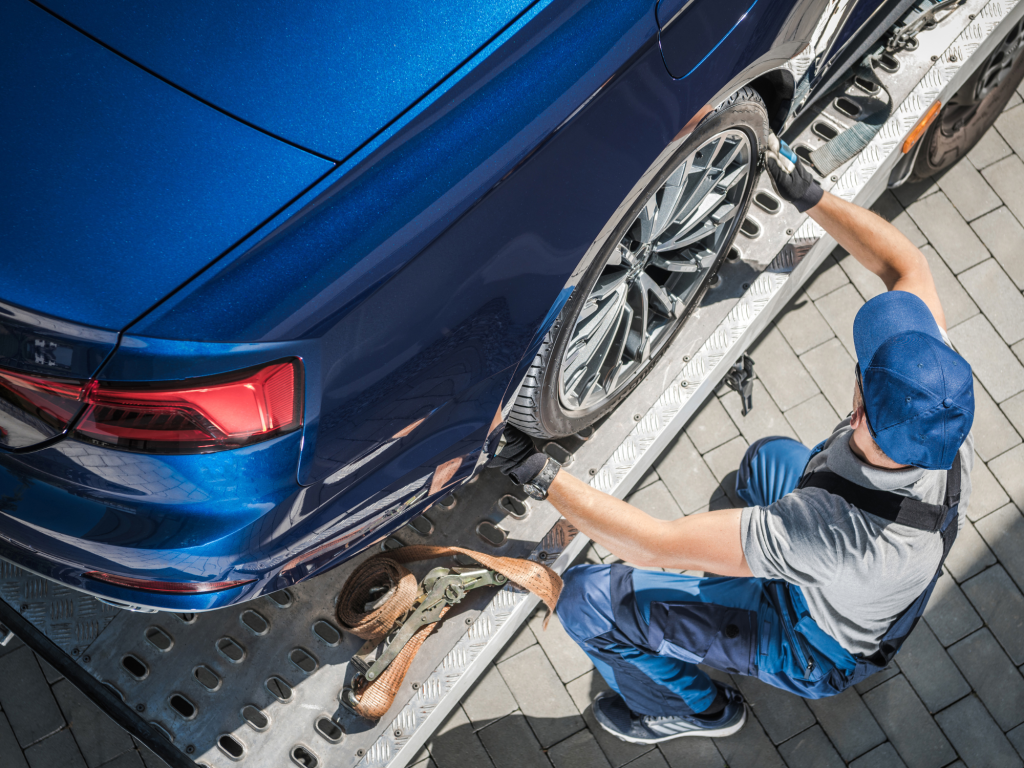
Soft straps and rated tie-downs are then attached to strong, appropriate points on the motorcycle. Depending on the bike, this may involve the handlebars, lower triple clamp area, frame or other manufacturer-suitable locations. Straps should not be carelessly run across painted panels, brake lines, cables or fragile accessories.
The suspension is usually compressed slightly to keep tension in the straps, but it should not be excessively loaded. Too little tension can let the bike shift. Too much can place unnecessary stress on seals, components or bodywork. The right balance comes from experience and proper equipment.
Additional straps are used to control front-to-back movement and keep the rear of the motorcycle stable. Before the truck moves, the operator checks that the bike is upright, the straps are secure and no metal hardware is rubbing against vulnerable surfaces.
4. The load is checked during transport
A properly secured motorcycle should not sway or lean as the truck travels. However, transport conditions can change. Road vibration, bumps and turns place different forces on the load, so a professional operator remains aware of the bike throughout the trip and checks securement when appropriate.
Flatbed towing is not a licence to rush. Smooth braking, controlled cornering and sensible route choices all help protect the motorcycle. This is especially relevant on longer Melbourne trips, during wet weather or when travelling to a workshop outside the immediate area.
5. The bike is unloaded at the destination
At the mechanic, home or storage location, the operator first checks that there is a suitable place to unload. The tray is lowered, straps are released in a controlled order and the motorcycle is guided down safely.
If you are leaving the bike at a workshop after hours, ask ahead about their preferred drop-off location and whether they need keys, security information or contact details left with the vehicle. A straightforward handover avoids your bike being left where it blocks access or is exposed unnecessarily.
What you can do while waiting for the tow truck
Your first priority is personal safety. Move yourself away from traffic where possible, stand behind a barrier if one is available, and keep clear of the loading area once the truck arrives. Do not try to lift a fallen motorcycle alone if you could be injured or if traffic is close by.
If it is safe, have your keys, helmet and destination details ready. Tell the dispatcher if the bike has a locked steering head, an immobiliser issue, no key, aftermarket luggage, very low ground clearance or damage that prevents it rolling. Removing loose items from panniers or a top box can also reduce the risk of anything shifting during transport.
You do not need to supply your own straps or direct the loading process. In fact, it is better not to attach straps yourself unless asked. The towing operator needs to use equipment they know is rated, in good condition and suitable for the bike.
Flatbed towing versus motorcycle trailers and wheel-lift towing
A motorcycle trailer can be a good option when it has an appropriate wheel chock, ramps and secure tie-down points. It is commonly used for planned transport. Yet for an urgent breakdown, a flatbed often offers greater flexibility because the tow truck can be positioned and operated with the situation in mind.
Wheel-lift or dolly-style towing may be suitable in limited circumstances, but it is generally less desirable for a disabled motorcycle. One wheel may remain on the road, and any existing tyre, wheel, drivetrain or steering issue can make that a poor choice. For bikes with unknown mechanical problems, a flatbed keeps both wheels off the road and avoids adding kilometres to components that may already be compromised.
The best method depends on the bike, the breakdown, access conditions and travel distance. The key question is not which option is quickest to set up, but which one will move the motorcycle safely without creating another problem.
Questions to ask before booking motorcycle towing
Before you confirm a tow, ask for the price, expected arrival window, destination arrangements and whether the operator is equipped to transport motorcycles on a flatbed. Upfront answers matter when you are stranded and trying to make a decision quickly.
It is also reasonable to ask how the motorcycle will be secured, particularly if you own a rare, customised or high-value bike. A professional provider will explain the process clearly rather than making vague promises. They should also ask useful questions about access and the condition of the motorcycle.
For a breakdown in Greater Melbourne, Onigo Towing focuses on clear communication, careful flatbed handling and a practical plan for getting your motorcycle where it needs to be. When the ride ends unexpectedly, the right tow should feel like the problem is being handled properly from the first call.