A breakdown can turn an ordinary Melbourne drive into a roadside problem quickly. This guide to emergency vehicle towing explains what to do first, what details a tow operator needs, and how to make sure your car, motorcycle, van or EV is moved safely to the right destination.
The priority is not diagnosing the fault on the shoulder of a busy road. It is getting yourself out of danger, arranging appropriate transport and knowing what will happen before the truck is dispatched.
Start with safety, not the vehicle
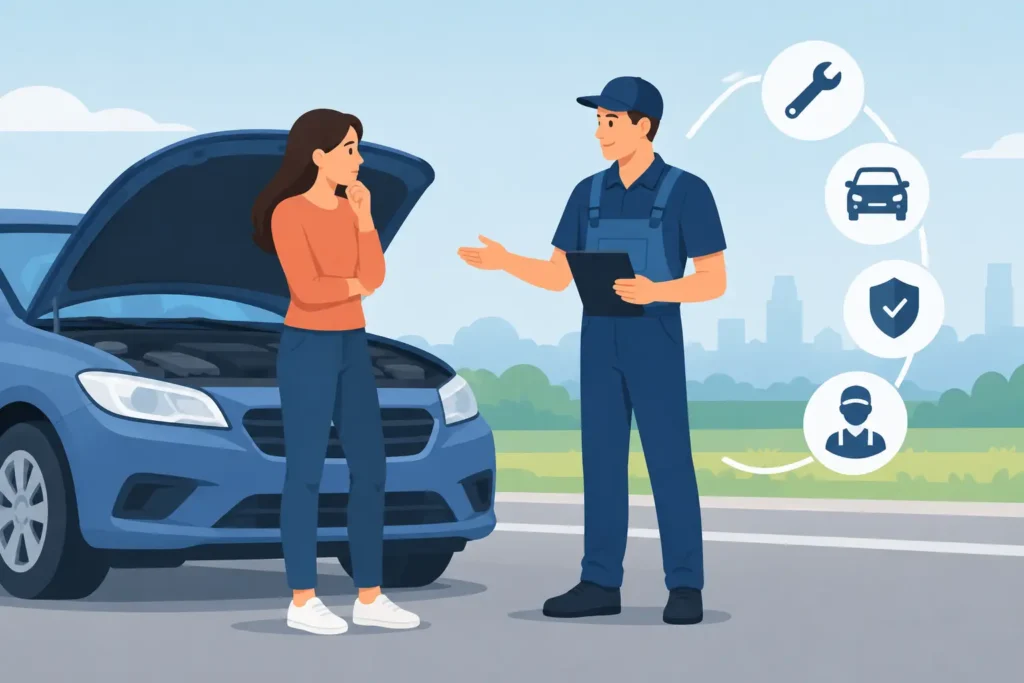
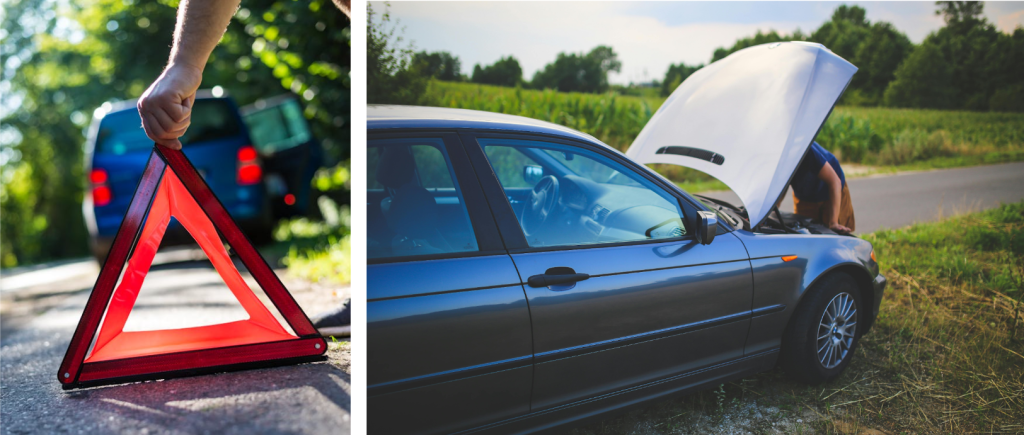
If your vehicle loses power, will not start or develops a fault while driving, indicate early and move as far from traffic as conditions safely allow. Use your hazard lights and, where practical, park in a visible position away from moving traffic. On freeways, narrow roads or blind corners, do not attempt roadside repairs unless it is clearly safe to do so.
If you are stopped in a live lane, have been involved in a collision, smell fuel or see smoke, call emergency services first. Towing can wait until the immediate hazard is managed. For a typical mechanical breakdown, remain clear of traffic, keep passengers away from the road and avoid standing between your vehicle and passing cars.
At night or in poor weather, visibility matters even more. Keep your mobile charged where possible, switch on interior lighting only if it helps you safely locate documents or belongings, and do not walk along a freeway trying to find assistance. A clear location and a working phone are far more useful.
Give the tow operator the right information
A fast response starts with accurate information. When you call for emergency towing, have your location ready. The nearest cross street, suburb, freeway exit, landmark or a pin from your maps app can all help. If you are on a motorway, tell the dispatcher which direction you are travelling and look for the closest exit number or kilometre marker.
The operator will also need the vehicle make, model and registration, plus the type of problem. Say whether the vehicle is a non-start, has a flat battery, a mechanical fault, overheating issue, tyre damage, electrical warning or another issue that means it should not be driven. Mention if it is lowered, has locked wheels, cannot be put in neutral, is in a car park with height restrictions, or has been loaded with tools, stock or personal items.
This is particularly relevant for EVs, hybrids, performance cars and motorcycles. Some vehicles need a flatbed, specialist tie-down points, wheel dollies or extra care around low bumpers and underbody battery packs. A provider that knows this before arrival can send suitable equipment rather than trying to solve the problem at the roadside.
You should also nominate the destination. It may be your preferred mechanic, a dealership, your home or a secure workshop. If the workshop is closed, ask whether the vehicle can be left there safely and how the keys should be handled. For long-distance or interstate transport, confirm collection and delivery arrangements before booking.
What safe emergency vehicle towing looks like
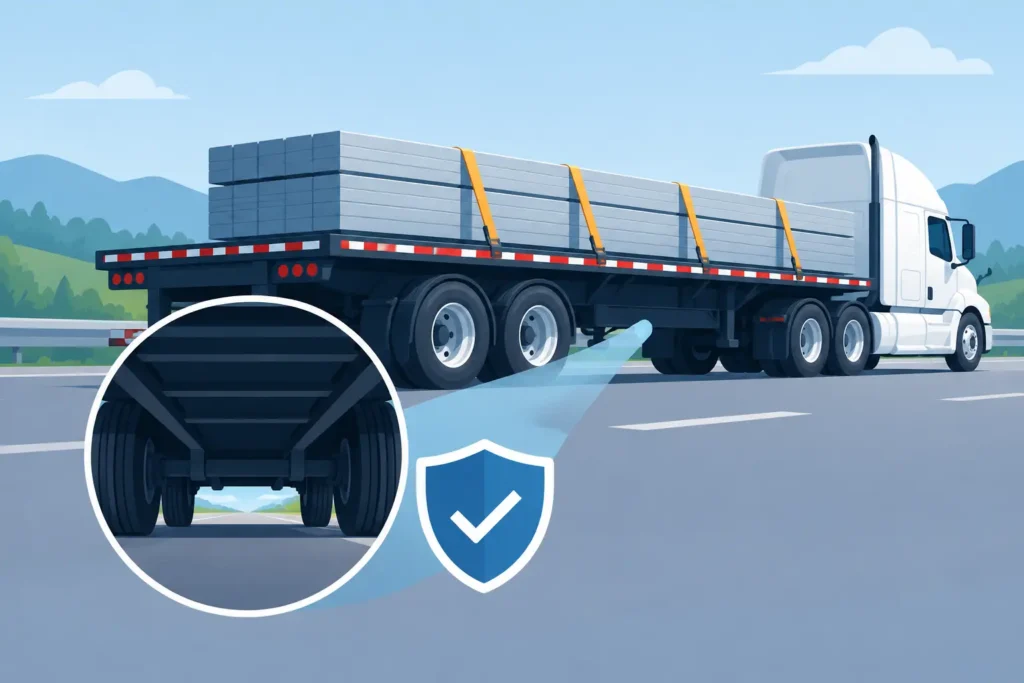
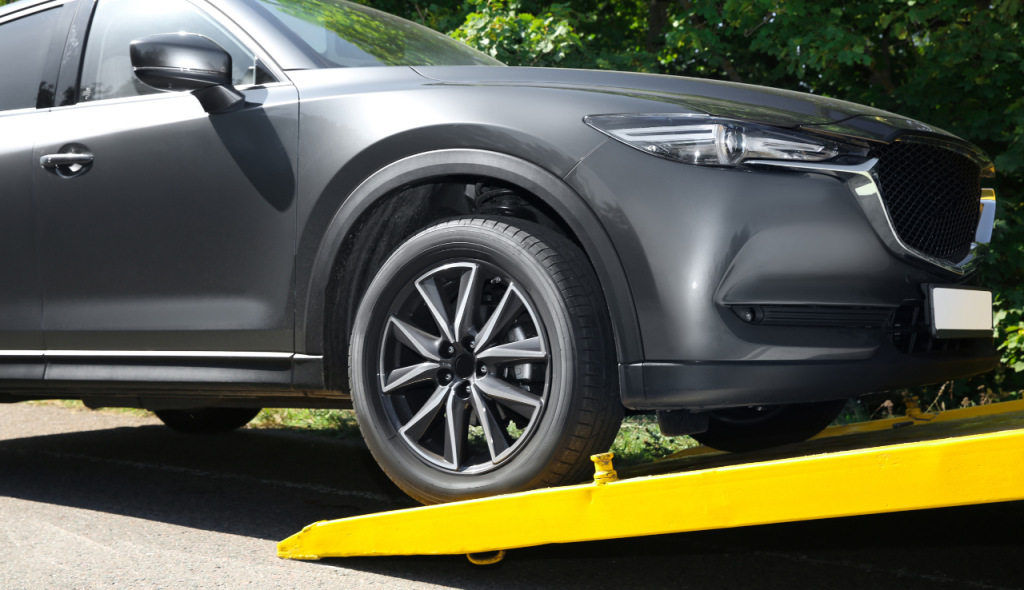
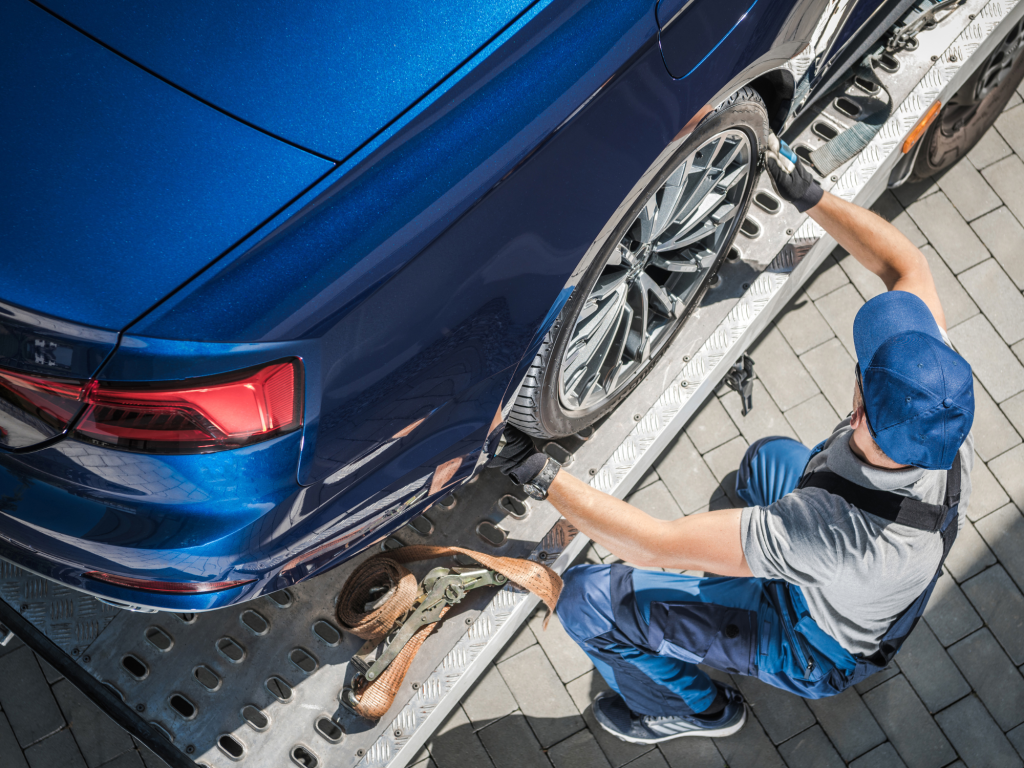
For most breakdowns, a flatbed tow truck is the safest option. The vehicle is loaded onto a tray and secured for transport, rather than being pulled with driven wheels on the road. This reduces wear and avoids the risks associated with towing modern automatic, all-wheel-drive, hybrid and electric vehicles incorrectly.
Careful loading is not just about the truck. The driver should assess the approach angle, ground clearance, wheel condition and whether the vehicle can roll freely. Low vehicles may need ramps or blocks to prevent scraping. A vehicle with a damaged suspension, locked steering or seized wheel may need different loading methods.
Once on the tray, the vehicle should be secured at appropriate wheel or manufacturer-approved points. Loose straps, rushed loading and unsuitable hooks can cause damage that was not part of the original breakdown. If you own a speciality vehicle, tell the operator about any unusual tie-down requirements, air suspension settings or immobiliser instructions before loading starts.
Motorcycles need their own approach. They should be upright, stable and secured using suitable restraints, with care taken around fairings, handlebars and suspension. A motorcycle should not be treated as a small car. The same applies to vans and light trucks, where weight, load security and access can affect the right towing setup.
Questions to ask before you book a tow
A breakdown is stressful, but you do not need to accept vague answers. Ask for an estimated arrival time, the total expected price and whether there are additional charges for distance, tolls, after-hours work, difficult access or special equipment. Clear, upfront pricing before dispatch helps you make a decision without surprises later.
It is also reasonable to ask what type of truck will attend and whether the operator can tow your particular vehicle. This matters if you drive an EV, an all-wheel-drive vehicle, a lowered performance car, a motorcycle, a commercial van or a vehicle that will not roll.
If you have roadside assistance or insurance cover, check whether you need to contact them before arranging a tow. Some policies require prior approval or limit the distance covered. That does not mean you should delay getting safe, especially in an unsafe location, but it can prevent confusion over reimbursement.
Be careful with quotes that sound unusually low but leave out key details. The cheapest call-out is not always the lowest final cost if the price changes after the truck arrives. A straightforward quote should explain what is included and identify any likely variables before the job begins.
Prepare your vehicle for collection
While waiting, collect valuables, medications, work equipment and anything you will need before the vehicle reaches the workshop. Check the glovebox, centre console and boot. If the car is going to a mechanic after hours, keep your keys, service notes and contact details organised according to the workshop’s instructions.
Do not leave loose items in the cabin if they could move during transport. For a van or ute, secure tools and cargo where possible. Let the tow driver know about anything heavy or unusual in the vehicle, as it may affect loading and weight distribution.
If the vehicle can be safely placed in neutral, do so only when appropriate for its transmission and fault condition. Do not force a gear selector, release an electronic park brake without understanding how to reapply it, or attempt to override safety systems. Modern vehicles can be damaged by well-meant shortcuts. The tow operator can advise what is needed when they arrive.
Take a few photos of the vehicle before loading, particularly if it has existing damage or is a high-value vehicle. This is a sensible record, not an accusation. It also helps you explain the original fault and condition to your mechanic.
A guide to emergency vehicle towing for EVs and hybrids
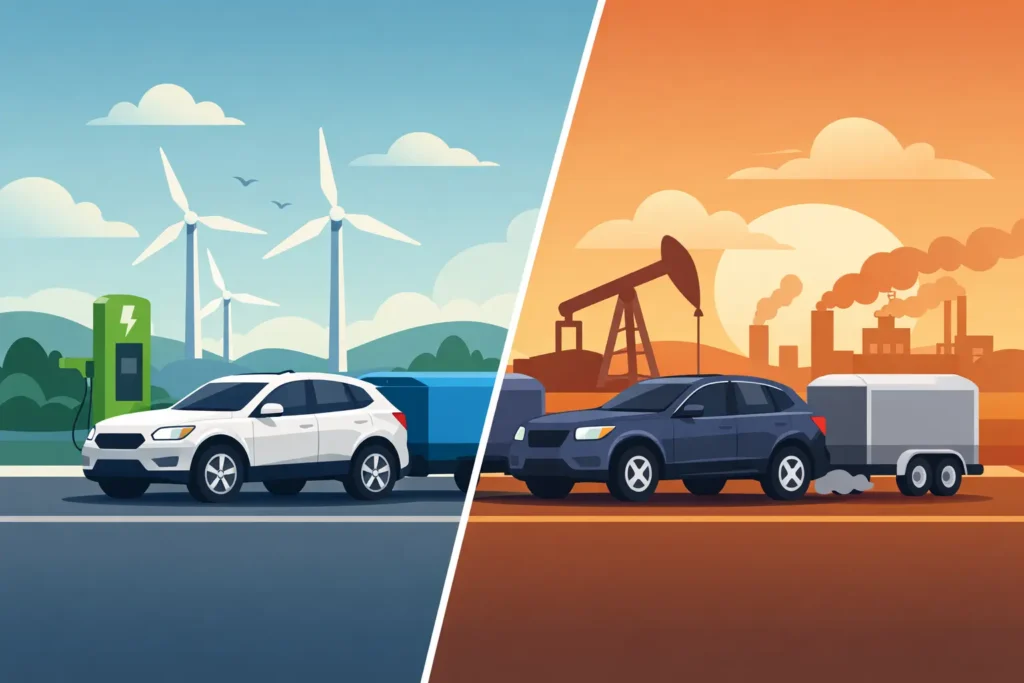
Electric and hybrid vehicles deserve special attention because their batteries, high-voltage systems and drivetrain layouts differ from conventional cars. A flatbed is generally the preferred method for a disabled EV or hybrid. Dragging or wheel-lifting an EV without following manufacturer guidance can damage the drive system or create a safety issue.
Tell the dispatcher if the vehicle has displayed battery, charging or high-voltage warnings, has been involved in water exposure, or has suffered an impact underneath. Do not touch orange high-voltage cables or attempt to disconnect components yourself. If there is smoke, heat, a burning smell or visible battery damage, move well away and call emergency services.
Not every EV fault requires a tow. A depleted battery may be resolved through charging if the vehicle is in a safe location and compatible charging is available. But if the car will not select gear, has a warning that prevents driving, or is stranded in an unsafe place, towing is the safer call.
Choose a breakdown towing specialist
Accident recovery, impound work and breakdown towing are different jobs. For a mechanical failure, a specialist breakdown operator is focused on getting to you, loading the vehicle carefully and taking it where you need it to go. That focus can make a real difference when your day is already off track.
In Greater Melbourne, Onigo Towing provides 24/7 breakdown towing for cars, motorcycles, vans, light trucks, EVs, hybrids and speciality vehicles. The practical standard to look for is simple: clear communication, a realistic ETA, suitable equipment and a confirmed price before dispatch.
When your vehicle stops, take a breath, get to the safest available position and make the call with clear details. A calm, properly organised tow gets your vehicle off the road and puts you back in control of the next step.