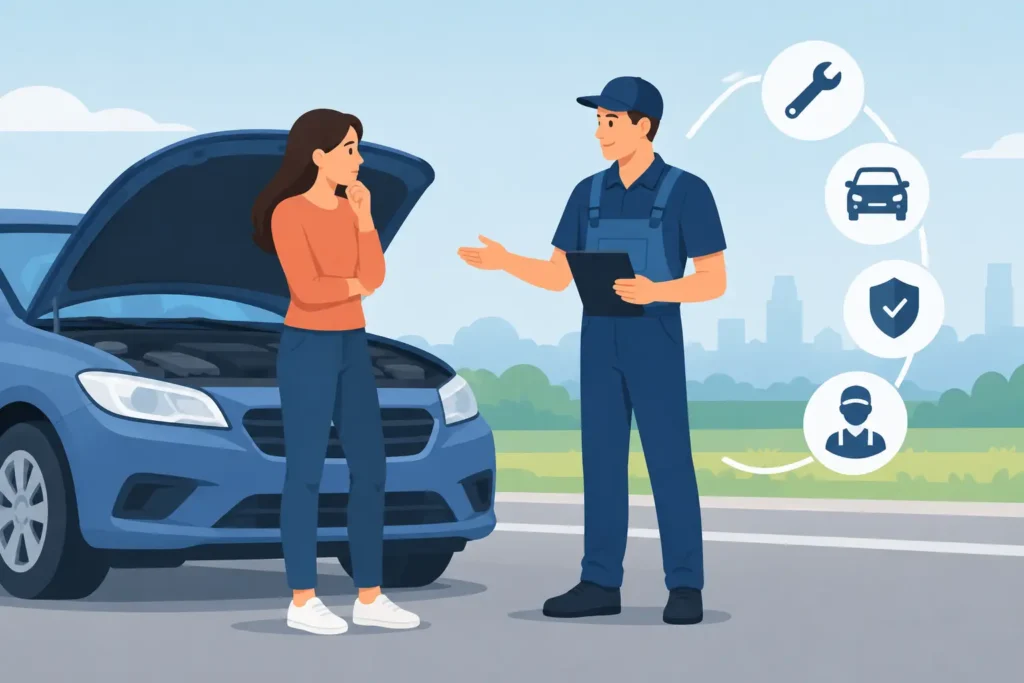
A breakdown rarely gives you much warning. One minute you are driving normally, the next you are losing power, hearing a new noise, or watching warning lights come on. If you are wondering what to do after vehicle breakdown, the priority is not diagnosing the fault on the spot. It is getting yourself, your passengers, and your vehicle out of further danger as quickly as possible.
Panic usually makes roadside problems worse. Drivers sometimes keep pushing a struggling vehicle to the next exit, stand too close to traffic, or accept the first vague towing offer they get. A better approach is simple – make the scene safe, assess whether the vehicle should stay put or be moved, and arrange proper transport to a mechanic, your home, or another secure destination.
What to do after vehicle breakdown on the road
If the vehicle is still rolling, try to steer it to the safest available spot. That might be the shoulder, a service lane, a side street, or a car park. If you can avoid stopping on a bend, near a crest, or in a narrow lane, do so. Visibility matters. Other drivers need time to see you and react.
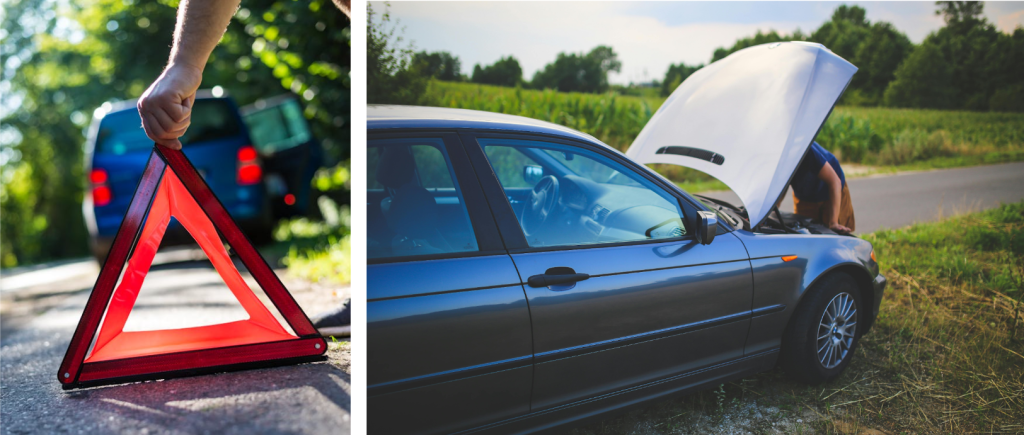
Once stopped, switch on your hazard lights immediately. Put the vehicle in park, apply the handbrake, and turn the wheels away from moving traffic if you are parked on a slope or close to the road edge. If it is dark, raining, or visibility is poor, this step becomes even more important.
Whether you should get out depends on where you have broken down. On a quiet suburban street, it may be reasonable to exit carefully on the side away from traffic. On a busy arterial road or freeway, staying inside with your seatbelt on can be safer than standing near fast-moving vehicles. It depends on the location, the traffic speed, and whether you can reach a safe area well clear of the road.
If you have a warning triangle and it is safe to place it, use it. If doing so means walking close to high-speed traffic, skip it. No roadside safety step is worth taking unnecessary risks.
Call for help before you try to fix anything
Many breakdowns look minor at first. A car that will not restart could be a flat battery, but it could also be an alternator fault, starter issue, electrical problem, or something more serious. A warning light may seem manageable, but driving on with overheating, oil pressure loss, transmission issues, or severe vibration can turn a repairable problem into major damage.
That is why one of the most practical answers to what to do after vehicle breakdown is knowing when not to touch the vehicle at all. If there is smoke, a burning smell, fluid leaking heavily under the car, or signs of overheating, shut it down and leave it off. Do not keep cranking the engine. Do not remove the radiator cap. Do not assume you can limp it a few more kilometres.
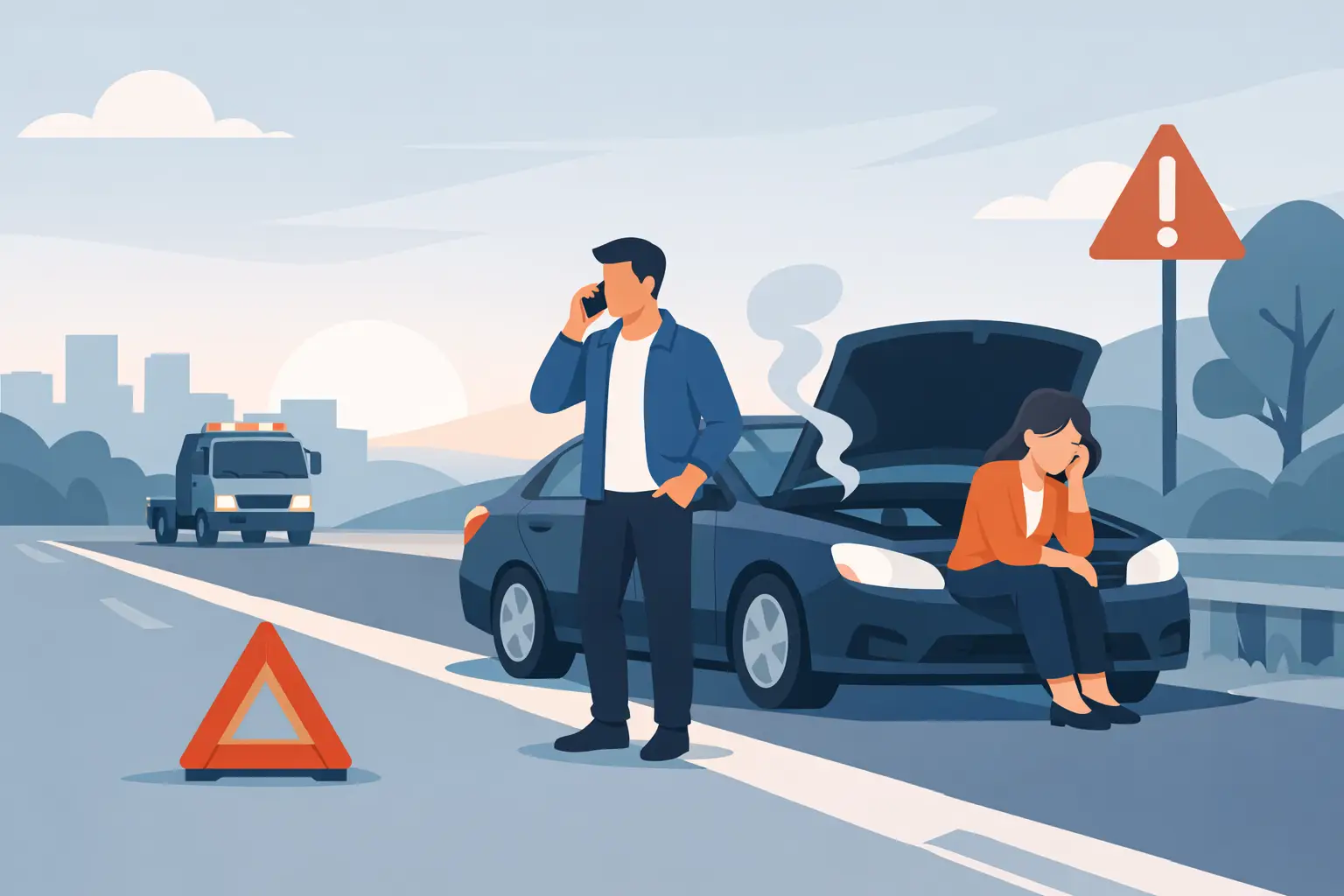
If you are unsure, call for roadside help or a breakdown towing service and describe exactly what happened. The more specific you are, the easier it is to decide whether the vehicle might be safely attended on site or needs transport. Mention your location, the type of vehicle, whether it can roll freely, and any obvious symptoms such as no-start, battery failure, loss of power, overheating, or steering issues.
Share the right details when booking towing
Clear information saves time. When you call, have your exact location ready, or as close to exact as possible. A nearby street sign, cross street, service station, or landmark can help if you are stressed or unfamiliar with the area.
You should also mention the vehicle type and anything that affects loading. That includes lowered cars, motorcycles, vans with tools or stock inside, EVs, hybrids, locked steering, flat tyres, transmission faults, or if the car is stuck in an underground car park. These details matter because the right equipment and loading method depend on the vehicle and the fault.
This is where choosing a breakdown-focused operator makes a difference. A service that handles mechanical failure callouts every day is more likely to ask the right questions, give you a realistic ETA, and explain pricing before dispatch. That clarity matters when you are already dealing with enough.
Protect yourself while you wait
After the call is made, your next job is to stay safe and easy to find. Keep your mobile charged if possible and stay available for updates. If conditions are unsafe where you are parked, move to a secure area away from traffic, ideally behind a barrier or well off the roadway.
If you are with children, older passengers, or pets, keep everyone together and out of harm’s way. In bad weather, staying in the vehicle may be safer in some locations, but only if the vehicle itself is not exposed to impact from passing traffic. Again, it depends on where you are stopped.
If you are broken down at night, leave the hazard lights on if your battery can support them. If the battery is already flat, preserve what power remains for essential communication. If someone offers informal help, be cautious. Most people mean well, but you do not need to accept towing or repairs from anyone who cannot clearly identify themselves and explain what they are doing.
Choosing where the vehicle should go
A common mistake after a breakdown is sending the vehicle to the nearest place without much thought. Sometimes that is the right call, but not always. If your trusted mechanic is a little further away, or if you would rather have the car dropped at home and deal with repairs the next morning, that can be the better option.
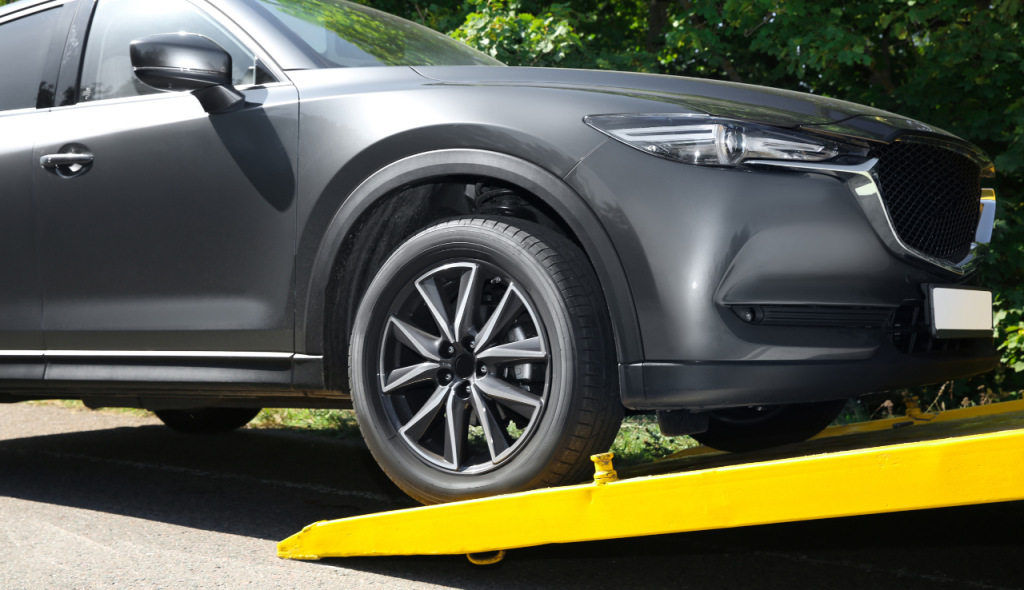
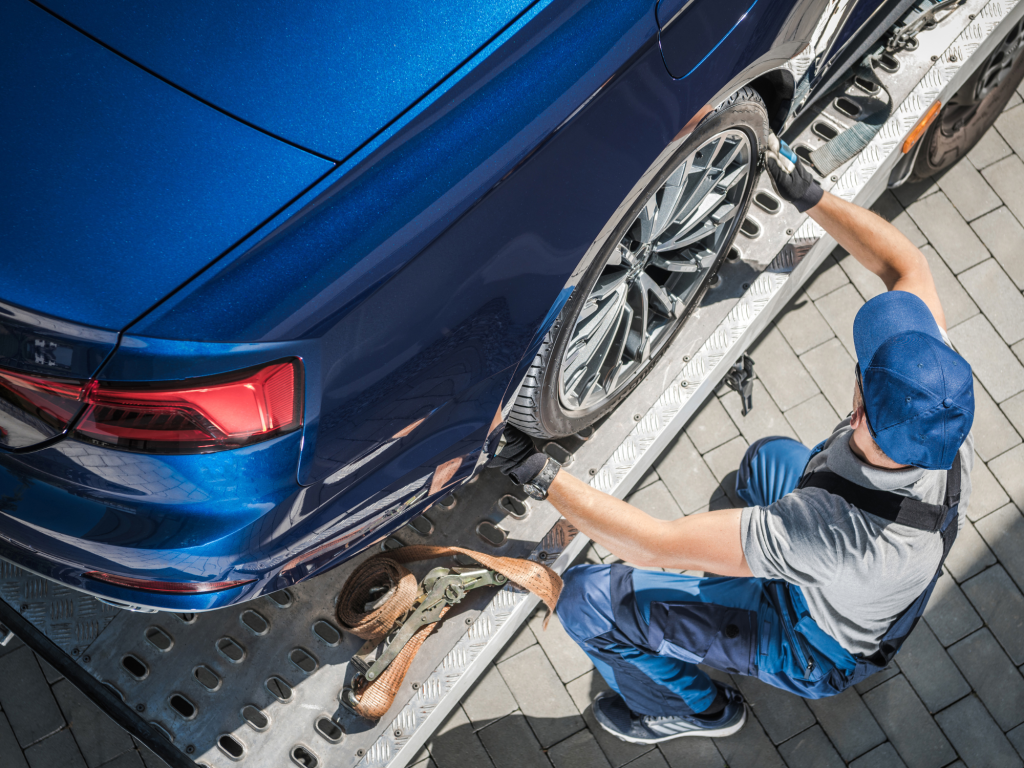
The best destination depends on the fault, the time of day, and what happens next. If the workshop is closed, there is no point rushing the vehicle there unless secure drop-off is confirmed. If you drive a specialist vehicle, EV, performance car, or motorcycle, careful handling may matter as much as speed. Flatbed transport is often the safer choice for breakdowns, especially when you do not want further wear or loading damage.
For business vehicles such as vans, utes, and light trucks, downtime matters. In those cases, getting the vehicle to the right repairer quickly can be worth more than simply choosing the closest option.
Be careful with insurance and roadside cover assumptions
Many drivers assume their insurer or motoring club will sort everything instantly. Sometimes they do. Sometimes they do not, especially if wait times are long, your cover is limited, or the breakdown falls outside the included distance or service type.
Before you rely on cover, check what is actually included. Some policies cover towing only to the nearest repairer. Others may not suit long-distance transport, specialty vehicles, or urgent response timing. If you need help now, the cheapest path on paper is not always the least stressful in practice.
If you arrange private towing, ask for the price before dispatch, not after loading. You should know the estimated arrival time, the likely destination cost, and any extra charges that could apply due to after-hours service, access issues, or unusual vehicle requirements.
What not to do after vehicle breakdown
Some of the biggest costs after a breakdown come from rushed decisions. Do not keep driving a vehicle that is overheating, grinding, losing fluids, or showing major warning lights. Do not let anyone hook up your vehicle without confirming who they are, where it is going, and what the charge will be. Do not leave valuables in plain sight if you have to leave the vehicle unattended.
It is also wise not to guess your way through modern vehicle faults. With EVs and hybrids in particular, incorrect handling can create safety risks and expensive damage. Even with standard petrol or diesel vehicles, towing methods need to match the drivetrain and condition of the car.
If your breakdown happens in Melbourne traffic
Melbourne breakdowns have their own pressure points. Busy roads, hook turns nearby, narrow inner-suburban streets, sudden weather changes, and peak-hour congestion all affect how quickly a scene can become risky. A car that stalls in a quiet lane at 11 am is one thing. The same issue on a major road at 5.30 pm is very different.
That is why speed matters, but calm communication matters just as much. A good operator will tell you what to expect, ask the right location questions, and make sure the truck arriving is suitable for the vehicle you have. For breakdown jobs, careful loading is not a bonus. It is part of the service.
If you need urgent help in Greater Melbourne, a breakdown specialist such as Onigo Towing can make the process simpler by giving you a clear price, a realistic ETA, and transport arranged around the actual problem rather than a one-size-fits-all approach.
The main thing to remember is this – once your vehicle has broken down, your first win is not getting it running again on the roadside. It is making safe decisions under pressure, so the problem stays a breakdown and does not turn into something bigger.