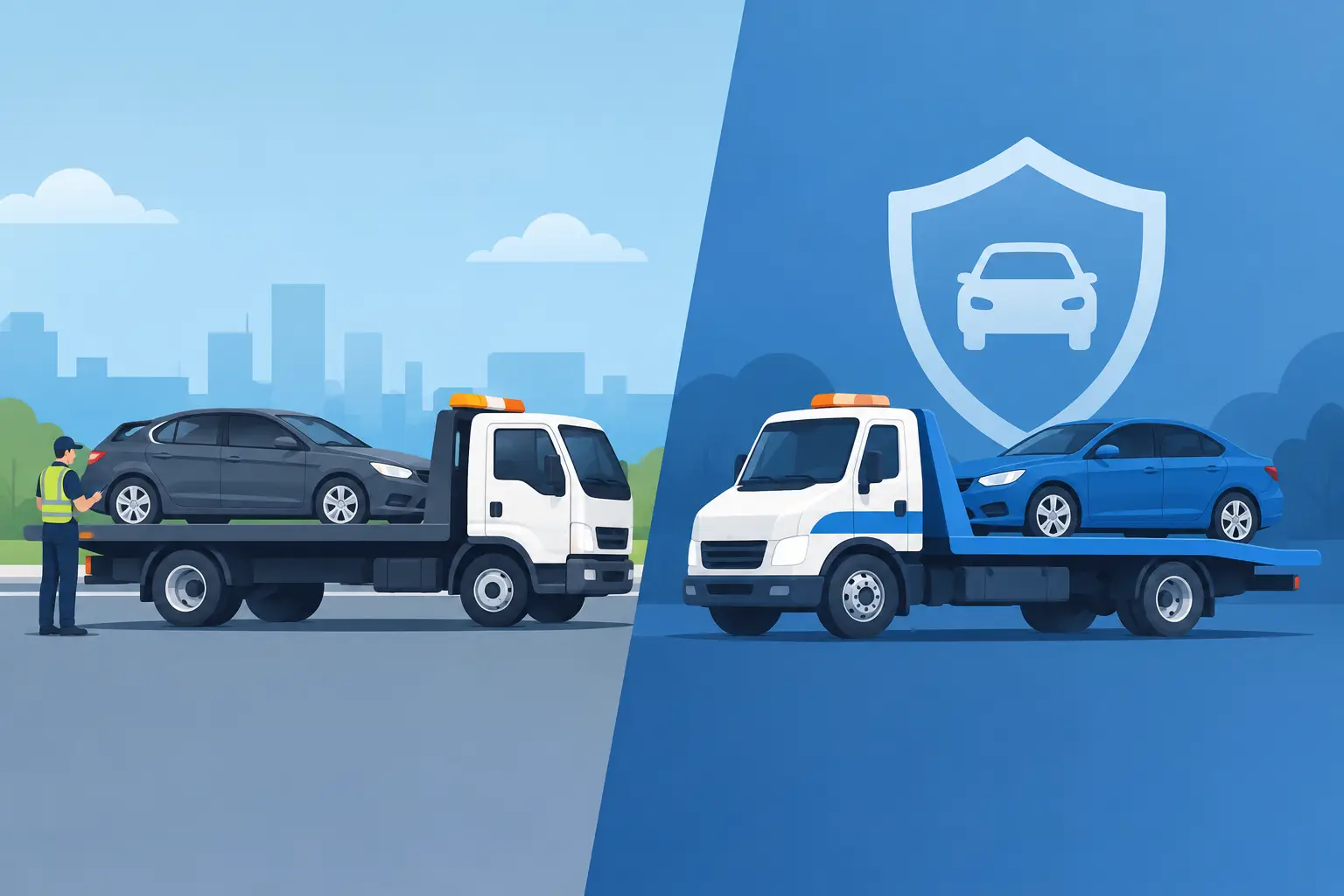
A flat battery outside work, an overheating engine on the Monash, or a van that will not restart between jobs creates one immediate question: who should arrange the tow? Private towing versus insurer towing can change how quickly help is dispatched, where your vehicle can go, what you pay upfront and how much control you have over the process.
For Melbourne drivers dealing with a mechanical breakdown, the best option depends on the cover you hold, the urgency of the situation and the type of vehicle being moved. The aim is not simply to get a truck there. It is to get the right equipment, clear information and safe transport to the destination you need.
What private towing means after a breakdown
Private towing means you contact and engage a towing provider directly. You receive a quote, agree to the job and arrange collection without first going through your insurer or roadside-assistance provider.
This can be the straightforward choice when you do not have towing cover, have already used your annual towing allowance, or need transport that sits outside your policy conditions. It can also suit drivers who want their car taken directly to a preferred mechanic, their home, a dealership or another location rather than the nearest approved repairer.
With a dedicated breakdown towing provider, you should be able to confirm the price and estimated arrival time before dispatch. Explain the vehicle type, the fault if known, your location, its destination and any access issues. Mention if it is an EV, hybrid, low-clearance performance car, motorcycle, loaded work van or light truck. Those details affect the loading method and the truck sent to you.
The main benefit is control. You choose the provider, destination and timing, subject to safe access and availability. A good operator will also tell you clearly what is included in the price and whether distance, tolls, difficult access or after-hours conditions affect the quote.
How insurer towing usually works
Insurer towing is often provided through a roadside-assistance benefit or an insurance policy benefit. These are not always the same thing. Comprehensive car insurance may include towing after an insured event such as an accident, while a separate roadside-assistance membership may offer towing for mechanical failures such as a flat battery, tyre issue or non-start.
When you call the insurer or assistance provider, they normally assess your entitlement and send a contracted operator. The policy may set a maximum towing distance, a destination rule, a call-out limit or an annual usage limit. Some benefits tow your vehicle only to the nearest repairer; others allow a nominated repairer within a stated kilometre limit.
This route may reduce or remove your immediate towing cost if the job is covered. However, the dispatch process can involve call queues, eligibility checks and contractor allocation. During busy periods, the available provider may not be the closest one, and the destination flexibility may be limited.
Before authorising a tow, ask the provider exactly what is covered. Confirm the maximum distance, whether the tow applies to a mechanical breakdown, whether passengers can travel with the truck and whether excess kilometres are charged to you. If the vehicle is stranded in an unsafe location, tell them that straight away.
Private towing versus insurer towing: the practical differences
The decision is rarely about one option being universally better. It is about which arrangement solves your specific problem with the least delay and uncertainty.
Speed and dispatch control
Private towing can be faster when you speak directly with a local breakdown specialist that has an available flatbed nearby. You can receive an ETA based on current traffic, truck location and the access conditions at your breakdown site.
Insurer towing can be quick too, particularly when the insurer’s network has capacity nearby. But it is dependent on the insurer’s dispatch process and contracted network. If you are on a tight schedule, such as a courier with a loaded van or a parent stranded with children, ask for a realistic ETA rather than assuming the service is immediate.
Upfront cost and reimbursement
An approved insurer tow may be included under your cover, which is a clear advantage. Yet included does not always mean unlimited. A policy could cover the first 20, 50 or 100 kilometres and leave you responsible for the remaining distance. It may also exclude certain situations, such as a repeated breakdown, an unregistered vehicle or a vehicle used for commercial work.
Private towing is generally paid directly by the vehicle owner or driver, but the cost should be transparent before the truck is sent. If you intend to seek reimbursement later, do not assume your insurer will pay just because you have a receipt. Check first whether private towing is permitted and what documentation is required.
Destination choice
This is often the deciding factor. An insurer may direct the vehicle to the closest suitable repairer or one of its approved locations. That can make sense if you need immediate assessment and have no preferred mechanic.
A private tow gives you more say. You may want the vehicle delivered to your trusted workshop across Melbourne, parked securely at home until morning, or transported to a dealership that understands your particular model. For a specialty vehicle or an EV requiring a specific technician, that flexibility can matter more than the initial saving.
Vehicle handling and equipment
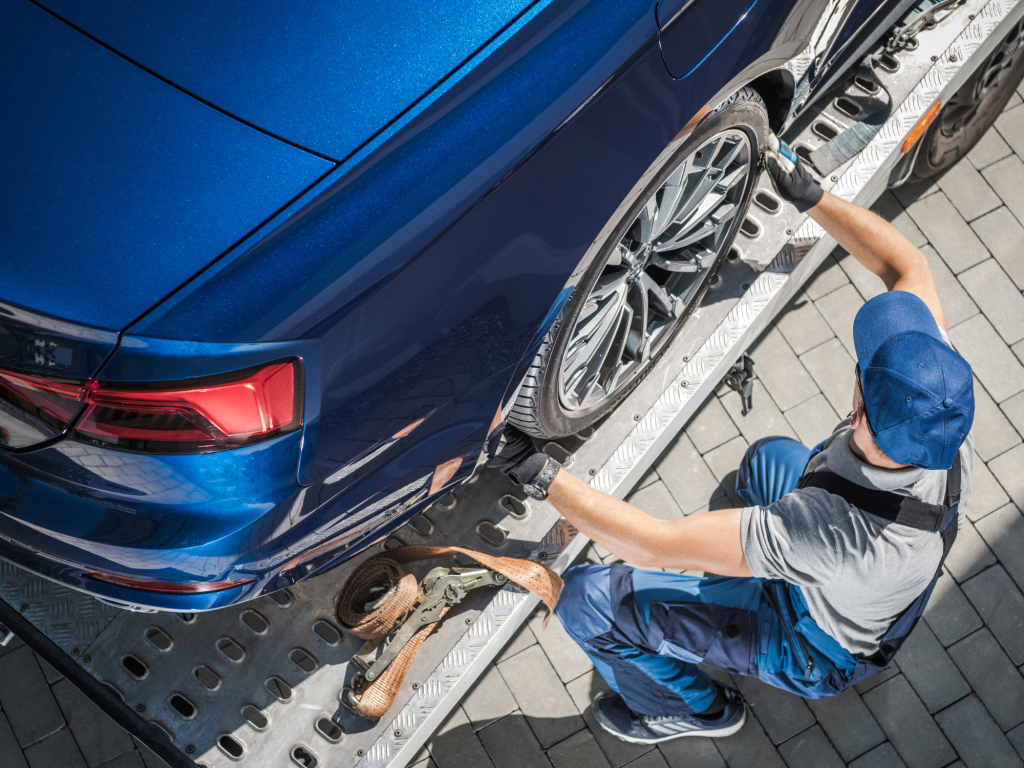
Not every breakdown is a standard sedan on a clear suburban street. Low vehicles, motorcycles, EVs, hybrids, utes with tools in the tray and light commercial vans require appropriate loading and restraint methods.
Whether the tow is private or insurer-arranged, ask what equipment will be used. A modern flatbed is often the preferred option for vehicles that should not be dragged or have driven wheels left rolling. Tell the dispatcher about ground clearance, wheel damage, steering lock, electronic faults, modified suspension and whether the vehicle can be placed in neutral.
The insurer’s contractor may be fully capable, but you should still communicate the vehicle’s requirements. If you arrange privately, choose a provider that regularly handles breakdown towing and is prepared to discuss the loading plan before arriving.
When insurer towing is likely to make sense
Use your insurer or roadside-assistance provider when the service is clearly covered, the destination rule suits you and the quoted arrival time is acceptable. It is particularly useful for a routine mechanical issue where a tow to the nearest local repairer will solve the immediate problem without an extra bill.
It can also be the sensible first call when a collision may lead to an insurance claim. Accident recovery has different reporting, assessment and claims considerations from ordinary breakdown transport. Follow your insurer’s instructions and, if required, obtain a claim reference before authorising work.
When arranging a private tow may be the better call
Private towing may suit you when the insurer’s wait is too long, the included distance will not reach your chosen destination, or your policy does not cover the fault. It can also be a practical option outside standard workshop hours, when you need the vehicle moved from a restricted location, or when you want a specialist flatbed for a valuable, low-clearance or non-running vehicle.
For business drivers, the value may be in certainty. A work van stopped on the roadside can mean missed deliveries, lost appointments and a difficult day for staff. A confirmed price, direct ETA and delivery to the right workshop can be worth more than a limited towing benefit that does not meet the job.
Onigo Towing focuses on breakdown transport, so drivers can speak directly with a local dispatcher about the vehicle, destination, price and expected arrival before a truck is sent.
What to do before any tow truck arrives
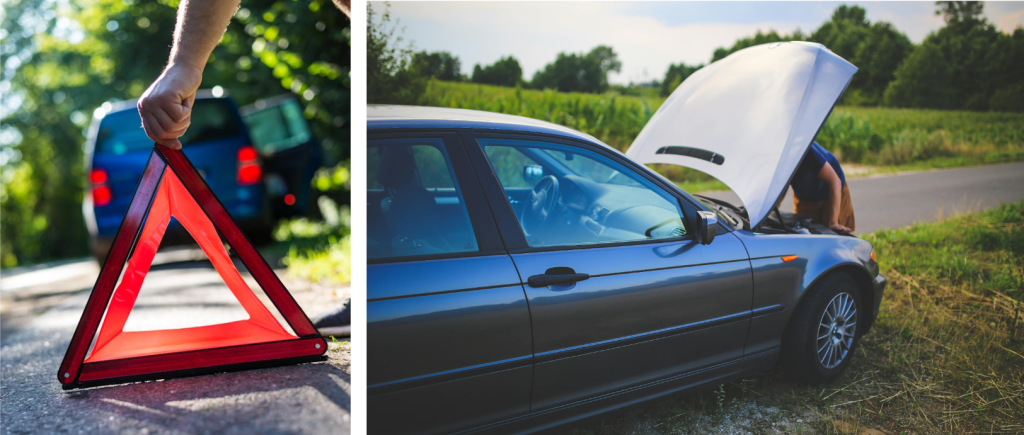
First, get yourself and passengers as safe as possible. If the vehicle is driveable enough to move out of traffic, pull over safely and switch on hazard lights. On a busy road, stand well clear of moving vehicles and follow any directions from emergency services or road authorities.
Then have your registration, exact location and destination ready. A nearby landmark, cross street, car park level or kilometre marker can save time. Remove valuables from the cabin, take photographs if there is existing damage, and keep your keys and mobile with you unless the driver advises otherwise.
If you are using insurer towing, record the job or reference number. If arranging a private tow, confirm the all-in price, ETA and destination in clear terms. Ask whether you can travel with the vehicle if that matters to you, as this depends on the truck setup and safety requirements.
A breakdown already disrupts your plans. The most helpful next step is to choose the towing arrangement that gives you a clear answer on timing, cost, vehicle care and where your car will end up. Once those four points are settled, you can focus on getting safely off the roadside and back to your day.