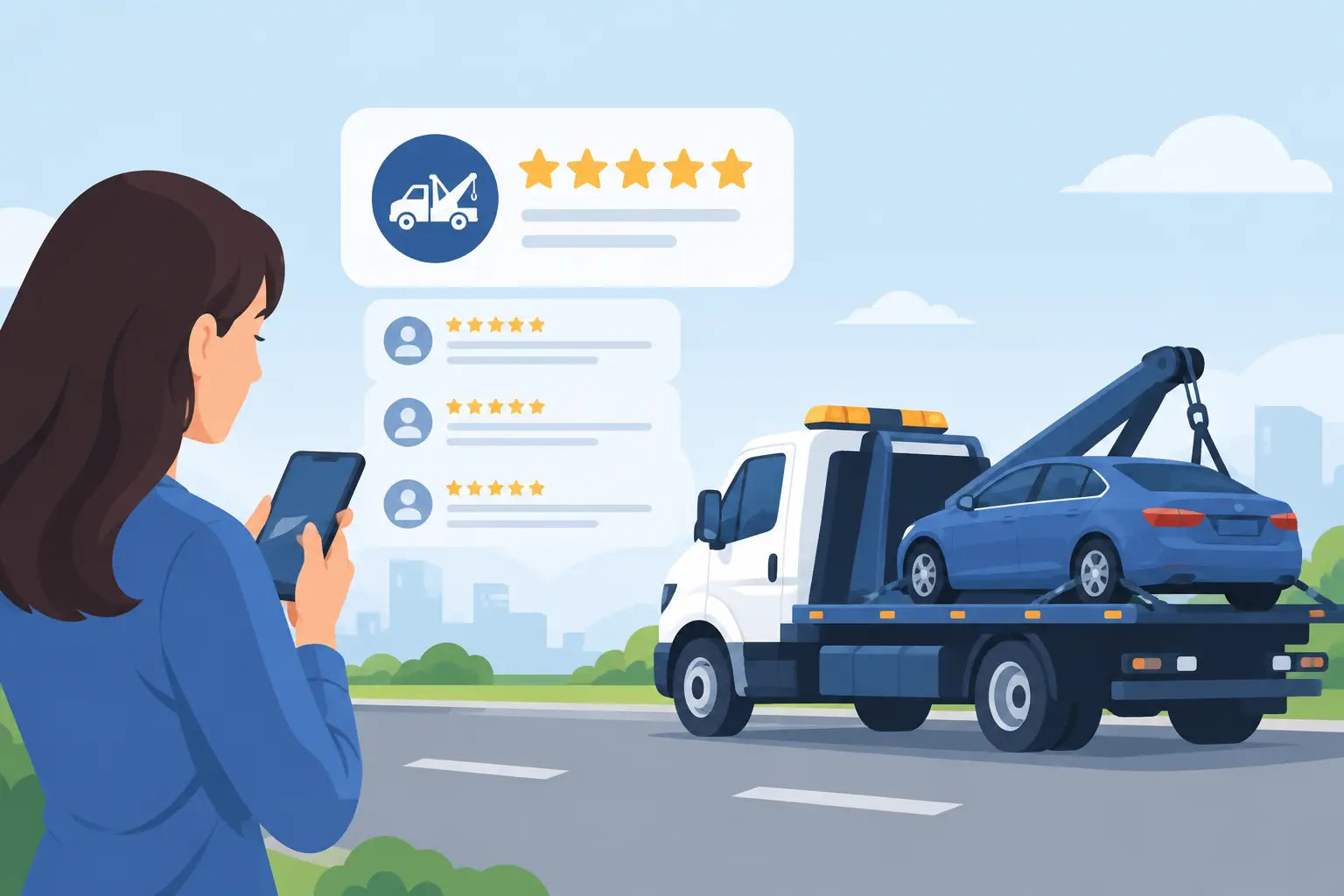
A flat battery outside a shopping centre, an overheating engine on the Monash, or a van that will not restart before the morning run creates the same immediate problem: you need to trust a towing company before they arrive. Towing provider ratings can help you make that call with more confidence, but only when you know what to look for beyond the star score.
A five-star average is a useful starting point. It is not the whole story. The reviews that matter most describe what happened after a driver was stranded: how quickly the provider responded, whether the quoted price held up, how the vehicle was loaded, and whether the customer was kept informed.
Why towing provider ratings matter in a breakdown
Breakdown towing is not a service most drivers plan in advance. You may be parked on a narrow street, stuck in a car park, or waiting on the roadside with passengers. In that situation, a rating is a quick signal of whether a company has handled similar jobs properly before.
The best feedback is specific. A review saying that a tow truck arrived within the promised window, the driver explained the loading process, and the vehicle reached the nominated mechanic safely tells you far more than a simple “great service”. It points to an operator with a process, not just a polished profile.
Ratings are particularly useful if your vehicle needs extra care. Motorcycle owners, EV and hybrid drivers, owners of lowered or performance cars, and businesses with loaded vans all have legitimate concerns about loading angles, tie-downs and transport methods. Reviews can show whether the provider understands those concerns and takes them seriously.
Look past the overall star rating
An overall score is worth checking, but context matters. A provider with a strong rating built from recent, detailed local reviews is generally a safer choice than one with a high score based on a small number of vague comments from years ago.
Check how recent the reviews are
Recent feedback is more likely to reflect the company’s current dispatch capacity, equipment and service standards. Towing operations can change quickly. A business may have expanded its fleet, changed its coverage area, or shifted its focus from breakdown work to other types of towing.
Look at reviews from the last few months and see whether they consistently mention prompt communication and reliable attendance. One slow response during an exceptionally busy period can happen. A repeated pattern of customers chasing updates should make you cautious.
Read for the details that affect your job
When you are comparing towing provider ratings, search for reviews that sound like your situation. If your car will not start at home, reviews about non-starts and careful driveway collection are relevant. If you are on a major Melbourne road, comments about roadside safety, realistic ETAs and communication matter more.
For a long-distance tow, pay attention to reviews that mention accurate quotes and delivery coordination. For a motorcycle, look for evidence of secure restraint and specialist handling. The right provider is not always the one with the most reviews. It is the one whose reviews show they regularly manage the kind of transport you need.
Notice how complaints are handled
No service business can promise that every job will go perfectly. Traffic, roadworks, severe weather and peak breakdown periods can affect arrival times. What separates a dependable operator is how they respond when something changes.
Read any lower-rated feedback carefully. Is the complaint about an issue that was clearly explained at the time, or does it point to a genuine failure in communication or pricing? Then look at the provider’s response. A professional reply should be calm, factual and focused on resolving the concern, rather than defensive or dismissive.
The signs of a reliable breakdown towing review
The strongest reviews often repeat the same practical themes. They do not need to use technical language. If several customers independently describe the same positive experience, that is meaningful.
Look for four clear signals:
- Accurate arrival updates: The customer was given a realistic ETA and advised if traffic or another delay affected it.
- Clear pricing before dispatch: The quote was explained upfront, including where the vehicle was being collected from and delivered to.
- Careful loading and transport: The reviewer mentions secure loading, a flatbed where suitable, or confidence that their vehicle was handled properly.
- Helpful communication: The driver or dispatcher answered questions, confirmed the destination and made a stressful situation easier to manage.
These details are more useful than broad claims about being cheap or fast. A low advertised price can become expensive if the final bill includes unexpected additions. Likewise, a very short ETA is not helpful if it is unrealistic for the truck’s location or Melbourne traffic conditions.
Match the rating to the service you need
Not every towing company is set up for every job. Some operators divide their work between accident recovery, impound work, roadside recovery and general transport. Others focus mainly on mechanical breakdowns. Neither approach is automatically better, but the fit matters when you are stranded.
If your vehicle has suffered a mechanical fault, a breakdown-focused provider may be better prepared to manage the practical details: confirming whether the car rolls, whether the steering is locked, whether it is parked underground, and which repairer is receiving it. This information affects the truck required, the loading method and the time needed on site.
For EVs and hybrids, reviews should give you confidence that the provider understands safe transport requirements. A damaged battery is a different situation from a normal non-start, and the towing method may need to change. Be direct when booking. Tell the dispatcher what warning lights are showing, whether the car can be placed in neutral, and whether there is any visible damage underneath.
The same applies to specialty vehicles. A lowered car, prestige vehicle or motorcycle should not be treated as an afterthought. Good reviews often mention the care taken with clearances, straps and loading. If the feedback is too generic, ask the provider exactly how they plan to transport your vehicle before approving the job.
Questions to ask after reading ratings
Reviews help narrow your options, but a quick phone call should confirm the essentials. You do not need a long conversation. Ask for the price, the likely arrival time and whether that price covers the destination you have nominated.
It also helps to confirm the vehicle type and condition. Tell the dispatcher if it is an EV, a motorcycle, a ute with tools in the tray, a van with stock, or a vehicle that cannot roll or steer. Mention height restrictions if you are in an underground car park. Clear information allows the provider to send the right equipment rather than discovering a problem at the kerb.
A trustworthy operator should give straight answers. They may need to qualify an ETA because peak-hour traffic, distance or a difficult collection point can affect timing. That is better than making a promise they cannot keep. Honest information gives you a realistic plan for getting yourself, your passengers and your vehicle to safety.
Be careful with ratings that look too good to be true
Ratings should support your decision, not replace common sense. Be wary of profiles with a sudden cluster of identical five-star comments, no written feedback, or reviews that do not mention towing at all. The same caution applies to a business that will not provide a clear business name, quote or contact details over the phone.
You should also avoid choosing solely on the lowest price. A legitimate quote needs to account for the collection location, vehicle type, destination and any access issues. If one price is dramatically lower than every other estimate, ask what is included and whether there are additional charges for after-hours work, tolls, difficult access or extra kilometres.
For Melbourne drivers, local experience matters too. A provider familiar with Greater Melbourne can give a more realistic assessment of travel time and access conditions. That practical knowledge is often reflected in reviews from nearby suburbs, particularly where customers mention clear communication from dispatch through to delivery.
Use reviews to feel prepared, not pressured
When your vehicle stops, it is easy to feel forced into the first option that answers the phone. Taking two minutes to read towing provider ratings and ask a few direct questions can protect you from avoidable surprises. Focus on recent, specific feedback about punctuality, pricing, communication and vehicle care.
If you need a breakdown tow, choose the operator that gives you a clear price and ETA, listens to the details of your vehicle, and treats getting you safely off the road as the first priority. That is the reassurance you need before the truck is even on its way.