A flat EV on the side of a busy Melbourne road creates a different kind of pressure. The driver may be worried about battery condition, the vehicle’s low clearance, where it can be towed, and whether a rushed loading job could cause further damage. This EV flatbed towing case study follows a representative mechanical breakdown scenario and shows why the towing method matters as much as the response time.
The vehicle in this example is a late-model electric SUV that has stopped after displaying a drivetrain warning. It will not enter drive, cannot be safely moved under its own power, and is parked near a clearway period. The driver needs a tow to their preferred EV-qualified repairer, not a general roadside assessment or accident recovery.
For this type of job, the priority is simple: get the vehicle off the road safely, load it without forcing damaged systems to work, and keep the driver informed from the first call through to delivery.
The Breakdown Call: Getting the Right Details First
A good EV tow starts before the truck is dispatched. The driver gives the make and model, their location, the warning messages shown, whether the car can roll, and the destination. Those details help determine whether a standard flatbed can load the vehicle directly or whether extra equipment is needed for a non-rolling wheel, locked park position, or very low front bumper.
In this case, the driver confirms the SUV is in a supermarket car park in Melbourne’s inner suburbs. There has been no collision, no smoke, no exposed wiring and no sign of battery damage. That distinction is important. A mechanical or electrical fault can usually be handled as a breakdown tow, while a vehicle with visible battery damage, heat, fumes or fire risk needs a more controlled response and guidance from emergency services.
The dispatcher also confirms the repairer’s address, access hours and whether the driver wants to travel with the vehicle. Clear, upfront pricing and an estimated arrival time are provided before the truck is sent. When a driver is already stranded, uncertainty around price and timing only adds to the stress.
Why a Flatbed Was the Right Choice
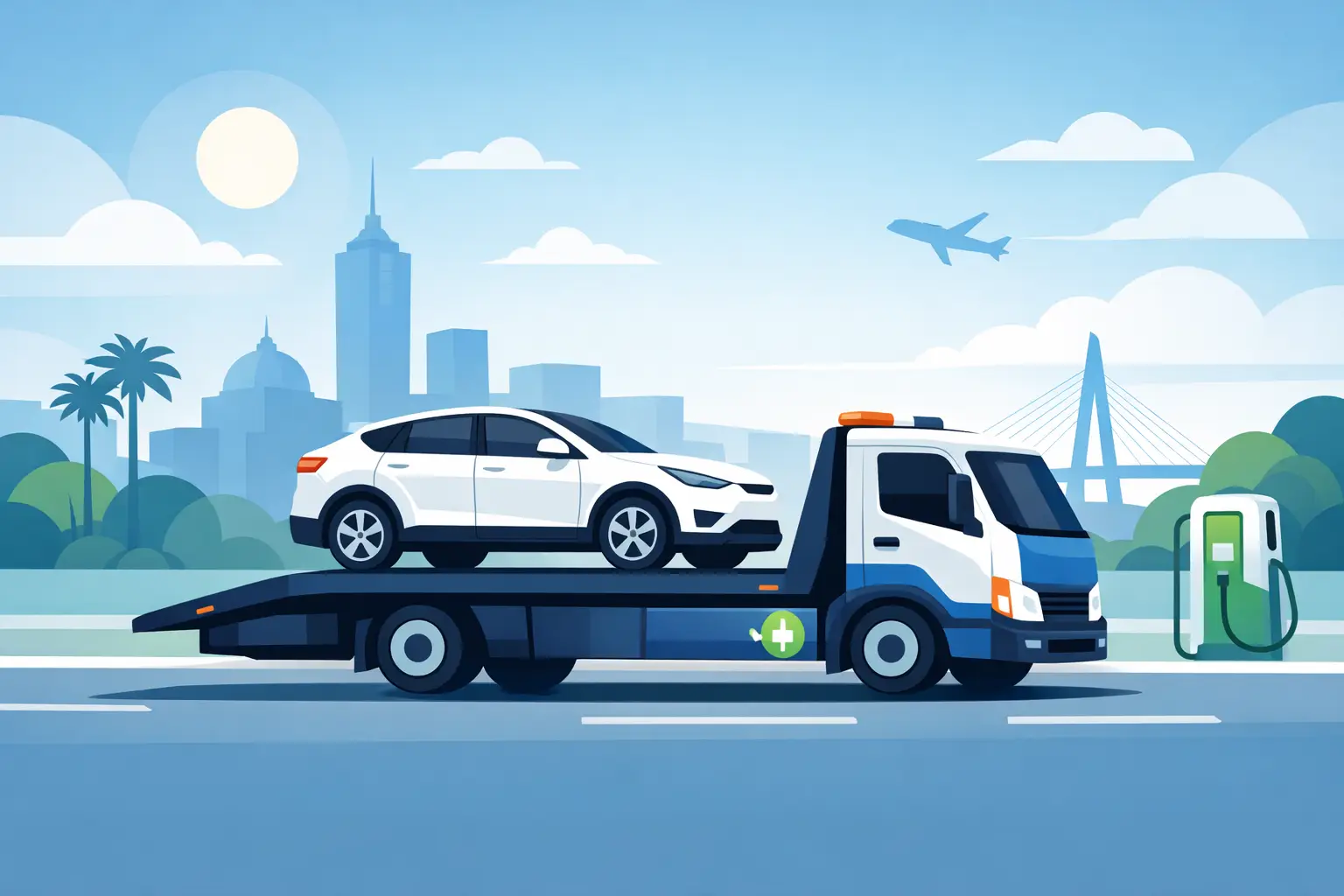
For most electric vehicles, a flatbed is the safest and most practical towing option. It keeps all four wheels off the road during transport, avoiding the risk of turning a vehicle’s drive wheels when its systems are disabled or when the manufacturer does not permit it.
This is not just a preference for careful owners. EVs often have specific transport instructions, electronic parking brakes, low-mounted battery packs and underbody panels that need protection. Trying to pull a non-operational EV with two wheels on the ground can be inappropriate for the model and may create avoidable risk.
The flatbed also gives the operator more control during loading. The tray can be lowered to reduce the ramp angle, while suitable loading aids can be used where clearance is tight. Once on the deck, the vehicle is secured for transport rather than left relying on its own brake or park functions.
There are exceptions. If an EV is in a tight underground car park, on a steep driveway, or has wheels that will not rotate, the loading plan may need to change. That is why an honest conversation at booking matters. The right operator will ask questions rather than promise a one-size-fits-all solution.
Low Clearance Changes the Loading Plan
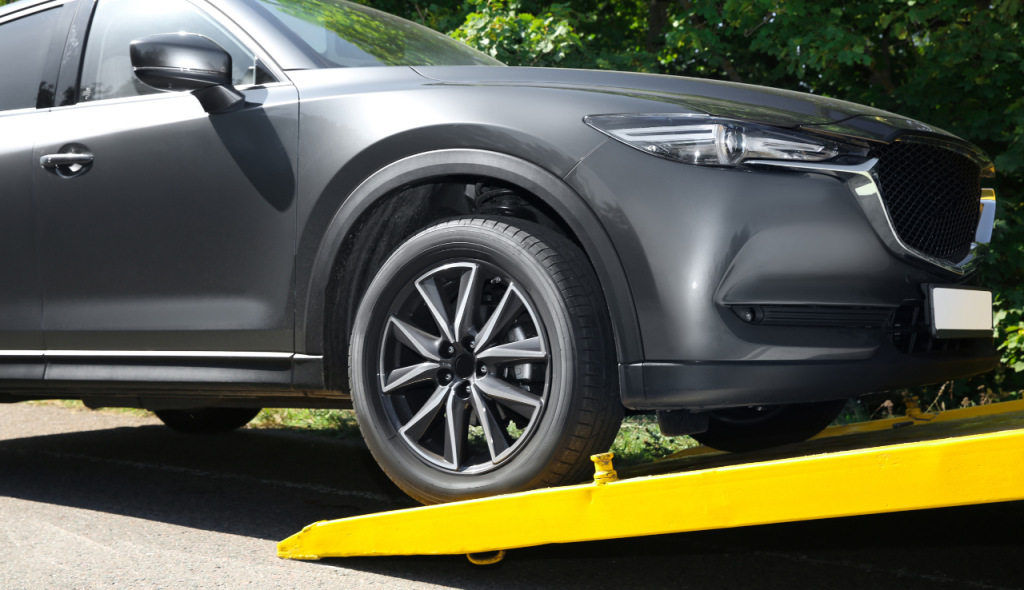
The SUV in this case has low front clearance and an extended underbody battery enclosure. A rushed approach could scrape the bumper, undertray or battery shield while the vehicle transitions from ground level to the tray.
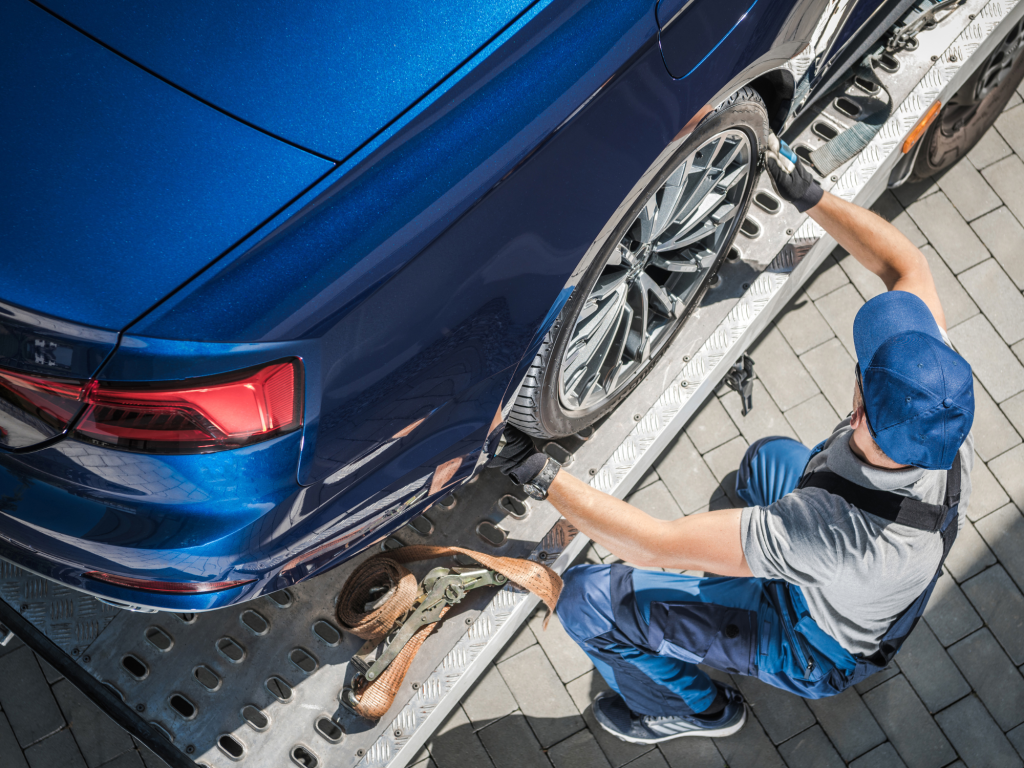
The operator positions the flatbed on level ground where possible, checks surrounding traffic and footpath access, then lowers the tray to create a gentler approach. Loading ramps or low-clearance aids are used as required. The vehicle is moved slowly and watched closely at the key change in angle.
This takes a little longer than simply winching a conventional car onto a steep tray. It is time well spent. Careful loading is cheaper, safer and far less disruptive than dealing with damage caused during a hurried tow.
EV Flatbed Towing Case Study: Securing the Vehicle
Once the SUV is fully on the flatbed, the focus shifts from getting it aboard to keeping it stable. The operator confirms the vehicle is centred, checks clearance around the bodywork and uses appropriate wheel restraints. The aim is to secure the wheels without placing pressure on sensitive underbody components, suspension parts or battery areas.
For a broken-down EV, it is also sensible to avoid assumptions. Some models have designated towing points, transport modes or instructions for releasing the parking brake. Others require the vehicle to be placed in a particular state before it can be winched. Where the vehicle allows it, manufacturer guidance is followed. Where it does not, the operator adapts the method to prevent forcing the car or dragging a locked wheel.
In this scenario, the SUV’s park system will not release normally. Rather than dragging the vehicle, the operator uses the appropriate loading method to manage the non-rolling condition. The driver is told what is happening and why. That communication is small but valuable: it reassures the owner that the extra time is about protecting their vehicle, not creating a delay.
Before departure, the operator completes a visual condition check with the driver. Existing marks or damage are noted, the destination is reconfirmed, and the driver receives an update on the expected delivery time. For owners of EVs, performance cars and other high-value vehicles, this process provides useful peace of mind.
Transport and Delivery to the Repairer
A careful tow does not end when the flatbed leaves the breakdown location. Melbourne traffic, roadworks, low bridges and repairer access all affect the route. The operator chooses a practical route that keeps the load secure and avoids unnecessary complications, while giving the driver an update if timing changes.
At the workshop, the vehicle is unloaded slowly onto level ground where possible. The operator checks that the repairer can receive the vehicle and positions it where the workshop requests. If the vehicle still cannot be placed into drive, it is moved with the same caution used at collection.
The driver in this case receives confirmation once the SUV is delivered. They have not had to arrange multiple vehicles, explain the fault repeatedly, or worry about whether their EV has been dragged behind a tow truck. They can focus on the repair diagnosis and next steps.
What This Case Study Shows Melbourne EV Owners
The lesson is not that every EV breakdown requires the same process. It depends on the model, fault, location, clearance, wheel condition and manufacturer requirements. But the basic standard should remain consistent: assess first, use the correct equipment, load with care, secure properly and communicate clearly.
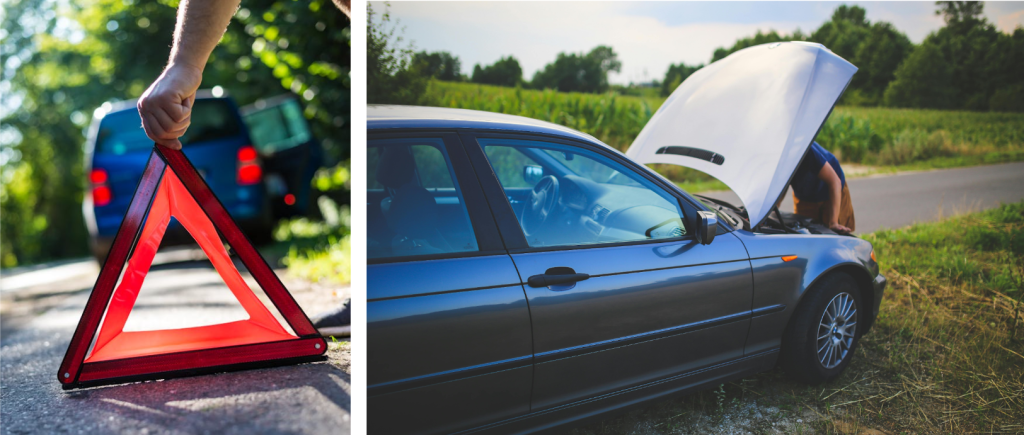
If your EV stops in traffic, move to a safe location only if the vehicle will do so without warning lights that tell you to stop immediately. Turn on hazard lights, keep clear of traffic where it is safe, and avoid trying to improvise a tow with another vehicle. Do not connect straps to random suspension or underbody points. A modern EV is heavy, electronically complex and often lower than it looks.
When you call for help, have your location, vehicle model, fault message and preferred destination ready. Mention if the car is in an underground car park, has a locked wheel, is very low, or shows any signs of battery damage. These details help the dispatcher send the right flatbed and prepare the operator before arrival.
Onigo Towing handles breakdown towing across Greater Melbourne with a focus on careful flatbed transport, clear ETAs and upfront pricing. For an EV that will not move, the right response is not just the fastest truck available. It is a prepared operator who treats your vehicle as a specialised transport job from the moment the call comes in.
A breakdown is frustrating enough. With the right flatbed plan, it does not need to become a second problem for your EV.