A lot can go wrong if an EV is towed the wrong way. Unlike many petrol or diesel vehicles, electric vehicles often cannot be rolled with two wheels on the road without risking damage to the drivetrain, motor, battery systems or regenerative braking components. That is why people ask, is flatbed towing safer for EVs? In most breakdown situations, yes – and for many EVs, it is not just safer but the correct method.
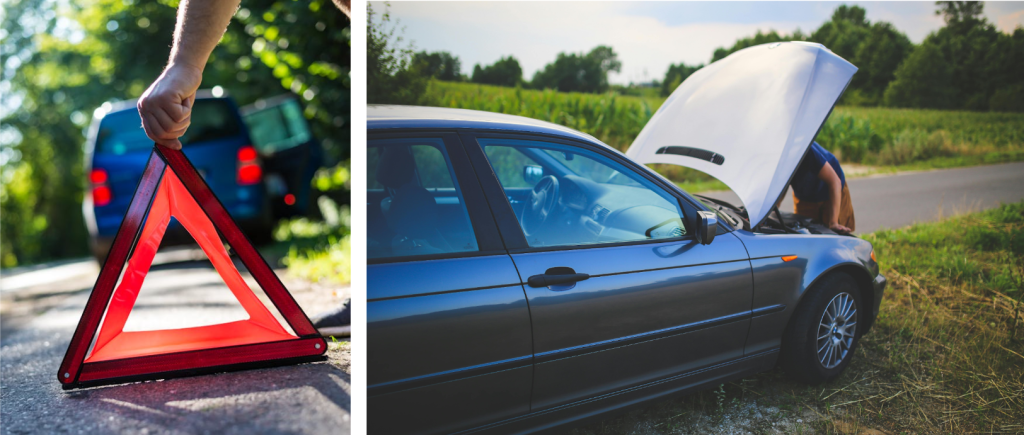
If your EV will not start, shows a drivetrain warning, has a flat 12V battery, or is stuck in park, the towing method matters straight away. The wrong setup can turn a simple breakdown into a much more expensive repair.
Is flatbed towing safer for EVs in real breakdowns?
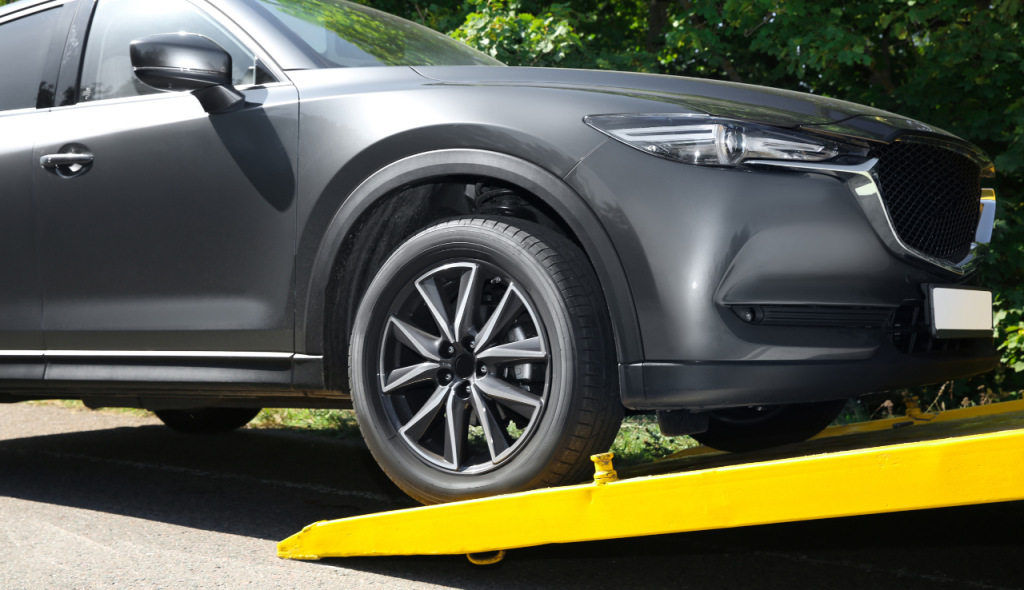
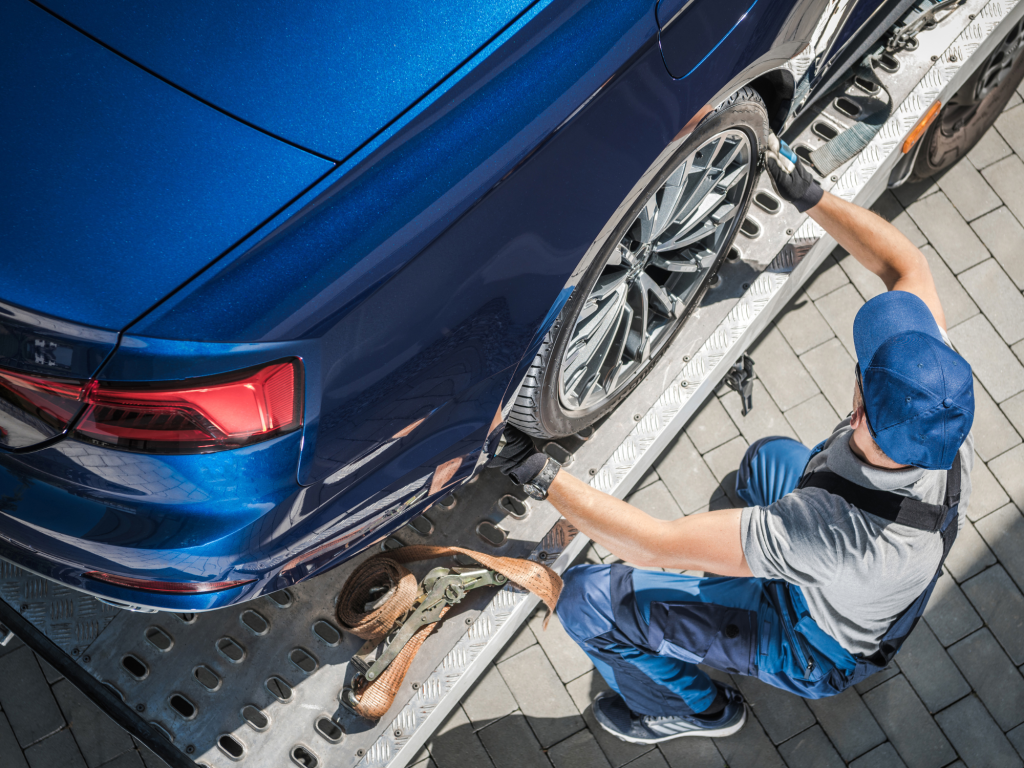
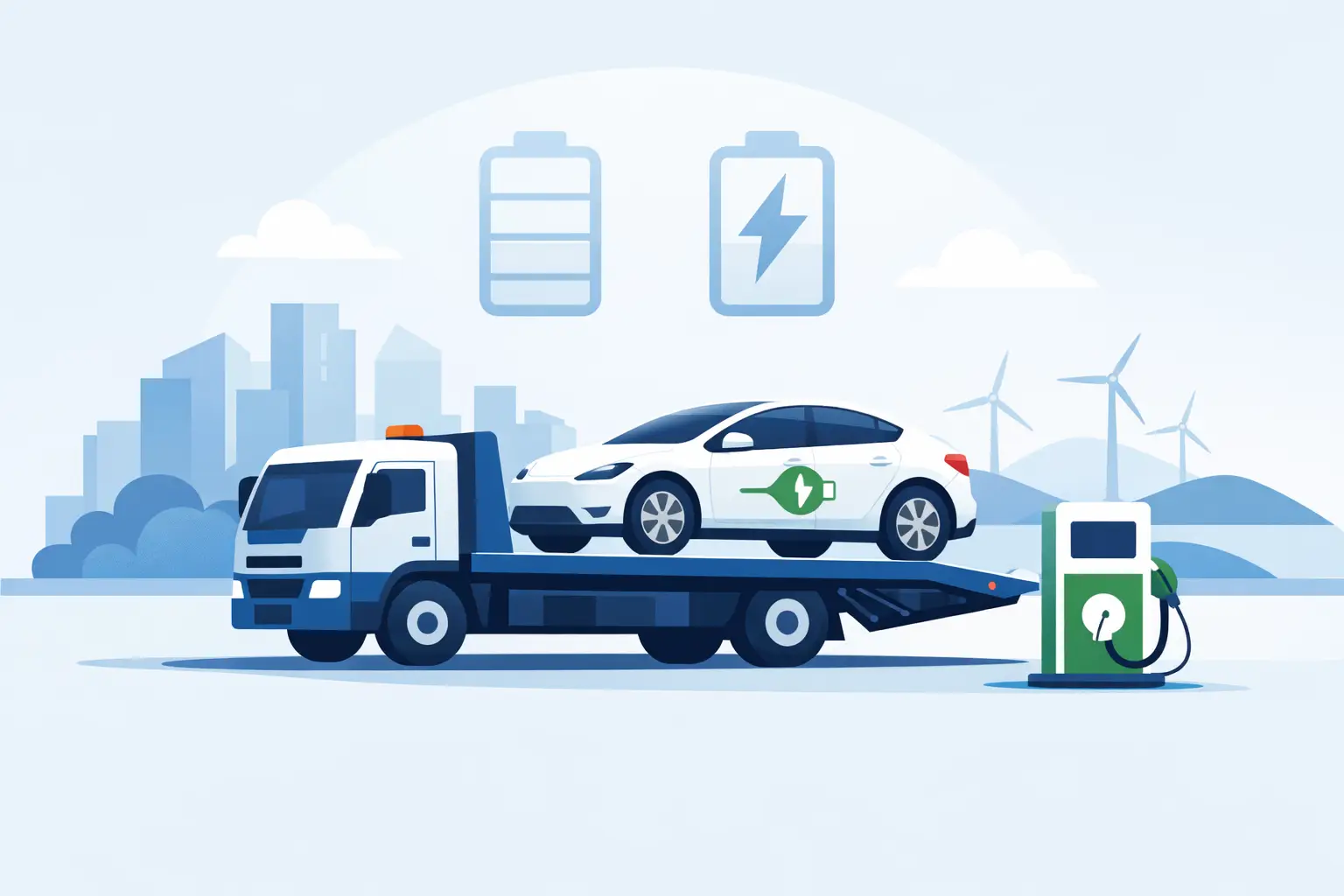
In practical terms, flatbed towing is usually the safest option for EVs because all four wheels are lifted off the road and secured on the tray. That avoids unwanted wheel rotation during transport, which is a key issue with many electric vehicles. With no wheels turning on the road, there is less chance of damaging the motor, transmission components, wheel bearings, tyres, or systems tied to regenerative braking.
This matters even more when the vehicle cannot be placed properly into transport mode or neutral. Some EVs need battery power to release the electronic park brake or shift out of park. If the vehicle has lost power completely, trying to drag or dollie it into a standard tow position can create extra risk. A flatbed gives the operator more control over loading and securing the car without forcing mechanical parts to move in ways the manufacturer does not allow.
That said, not every EV breakdown looks the same. Vehicle design, battery condition, wheel configuration and the exact fault all play a part. The safest answer is usually to follow the manufacturer’s towing instructions first, then match the tow method to the vehicle’s condition.
Why EVs are different from conventional vehicles
Many drivers assume towing is towing, but EVs are built differently where it counts. Instead of relying on a combustion engine and traditional gearbox, they use electric motors, high-voltage battery systems, power electronics and software-controlled braking and drive modes. Those systems change what can happen when the car is moved with the wheels on the ground.
In some EVs, wheel movement can cause the motor to generate electricity even when the vehicle is switched off. That may sound harmless, but if the car is not set up for it, the power generated has nowhere safe to go. The result can be overheating or damage to electrical components. This is one reason many EV manufacturers warn against towing with the drive wheels on the road.
There is also the issue of electronic parking systems. A flat 12V battery can leave the car locked in park with the handbrake engaged. On a conventional tow, that can mean wheels dragging or skidding. On a flatbed, there are safer ways to winch and position the vehicle using skates, soft straps and controlled loading techniques.
When flatbed towing matters most
Flatbed towing becomes especially important when an EV has a drivetrain fault, collision-related wheel damage, steering lock, suspension issue, or complete loss of power. In those situations, the vehicle may not roll freely, and forcing it to move can do more harm than the original fault.
It is also the safer choice for all-wheel drive EVs. Because power delivery can be managed across multiple motors or axles, there is less room for guesswork. Keeping all four wheels off the road removes the uncertainty.
Long-distance transport is another case where flatbed towing makes sense. Even if a short tow might technically be possible under certain conditions, longer distances increase the chance of heat build-up, tyre wear, alignment strain and transport complications. A flatbed keeps the vehicle stable from pickup to drop-off.
For owners of newer or higher-value EVs, flatbed towing also offers better protection for bodywork and wheels. Low-clearance vehicles, heavy battery packs and specialised underbody designs need careful loading angles and correct tie-down points. A proper tray setup helps avoid scraping bumpers, damaging aero panels or securing the car in the wrong place.
Is there ever a time when flatbed is not essential?
There are some situations where an EV may be moved short distances using other methods, but this depends entirely on the manufacturer instructions and the condition of the vehicle. Some models allow limited wheel-lift towing with dollies. Others permit very short relocation under strict conditions. But these are exceptions, not assumptions.
The problem is that roadside breakdowns are rarely tidy. You may not know whether the car is in transport mode, whether the parking brake has released properly, or whether a fault has affected the drivetrain. In that context, flatbed towing is the safer default because it reduces the number of variables.
For a stranded driver, that is usually the most practical answer as well. You do not want a debate on the side of the road about what might be possible. You want the car loaded carefully, transported safely and delivered without creating a second problem.
The risks of towing an EV the wrong way
The biggest risk is drivetrain damage. If the drive wheels rotate while the system is inactive or not configured for towing, internal components can be harmed. Depending on the make and model, that may involve the electric motor, reduction gear, inverter-related systems or braking hardware.
There is also the risk of dragging a locked wheel. If the vehicle is stuck in park or the electronic handbrake is engaged, towing without proper loading equipment can flatten tyres, damage brakes and leave marks on the road surface. It is not just bad for the car – it is also less safe during recovery.
Improper tie-down methods are another issue. EVs can be heavier than comparable petrol cars because of the battery pack, and they often have specific jacking points and underbody protection. Using the wrong anchor points can damage battery shielding, suspension parts or trim underneath the vehicle.
This is why specialist breakdown towing matters. It is not enough to show up with a truck. The operator needs to understand how to handle a non-start EV, how to check whether it can roll, and how to load it without causing avoidable damage.
What to expect from a safe EV tow
A safe EV tow starts with the right questions. What model is it? What fault has appeared? Is it fully dead, or just not driving? Can it be placed in neutral or transport mode? Are any wheels locked? These details help determine the safest loading plan before the truck even arrives.
From there, the process should be calm and methodical. The vehicle is assessed, loaded at the correct angle, secured using suitable tie-down points, and transported with all four wheels off the road where required. Good communication matters too. If you are already dealing with a breakdown, you should not be left guessing what happens next.
For Melbourne drivers, that is often the real difference between a stressful tow and a straightforward one. Fast response is important, but so is careful handling. A rushed job can cost more than the breakdown itself.
How drivers can avoid towing mistakes
If your EV breaks down, the safest move is to tell the towing provider exactly what the car is doing. Mention any warning lights, whether the vehicle has lost all power, and whether it can roll. If you know the manufacturer has specific towing instructions, say so.
It also helps to avoid trying to force the car into neutral or moving it manually unless the owner’s manual says it is safe. EVs can behave differently from one model to another, and what works on one vehicle can be a mistake on another.
Most importantly, ask how the vehicle will be transported. If the answer is vague, keep asking. A proper breakdown towing service should be clear about the method, the equipment being used and the likely ETA. That clarity matters just as much as speed.
At Onigo Towing, this is exactly why flatbed transport is such a key part of EV breakdown work. When a vehicle is not driving as it should, careful loading and the right equipment are what protect it.
The short version is simple: with EVs, safer usually means less rolling, less guesswork and more control. If your car is stranded, a flatbed is often the option that protects both the vehicle and your peace of mind.